


The global data center market size was estimated at USD 347.64 billion in 2024 and is projected to surpass around USD 1,008.65 billion by 2034 with a CAGR of 11.24%.

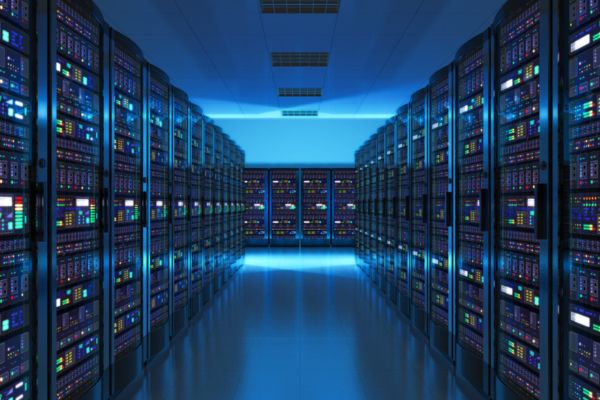
The global data center market has emerged as a crucial backbone for the modern digital economy. With the massive growth in cloud computing, artificial intelligence (AI), the Internet of Things (IoT), big data analytics, and 5G networks, the demand for high-capacity, reliable, and secure data storage and processing facilities has surged. A data center comprises a network of physical or virtual servers used by organizations to store, manage, process, and disseminate large amounts of data. These facilities include hardware infrastructure (servers, networking equipment, storage systems), cooling and power systems, and advanced security frameworks. The industry has evolved from traditional on-premise enterprise data centers to modern models like colocation facilities, hyperscale data centers, and edge computing nodes.

As businesses increasingly migrate to cloud-based services and hybrid IT environments, demand for robust, scalable, and efficient data center infrastructure continues to rise. Additionally, the growth of remote work, digital payments, streaming services, and AI-powered solutions further accelerates the need for data centers globally.
Growth Factors
Several key factors contribute to the rapid growth of the data center market worldwide:
- Explosion of Data Generation
The proliferation of connected devices, IoT sensors, social media platforms, and e-commerce activities has led to an unprecedented surge in data generation. Enterprises require massive data storage and real-time processing capabilities, which has directly fueled the expansion of data centers. - Rising Cloud Adoption
Businesses are increasingly moving their workloads to cloud-based environments, relying on cloud service providers (CSPs) like Amazon Web Services (AWS), Microsoft Azure, Google Cloud, and Oracle Cloud. This migration drives demand for hyperscale data centers capable of supporting diverse workloads with scalability and reliability. - Emergence of 5G Networks
The global rollout of 5G networks has a profound impact on data centers. 5G supports ultra-low latency and massive device connectivity, which requires data centers to be located closer to end-users, thus driving the growth of edge data centers. - AI and Machine Learning Integration
AI-driven applications such as natural language processing, recommendation engines, autonomous vehicles, and predictive analytics require immense computational power and storage. As a result, data centers are evolving to support AI workloads, utilizing GPUs and specialized hardware. - Digital Transformation Across Industries
Sectors such as banking, healthcare, manufacturing, education, and retail are rapidly digitizing their operations. Digital transformation initiatives drive demand for secure, scalable, and resilient data storage and processing capabilities. - Remote Work and Digital Collaboration Tools
The COVID-19 pandemic accelerated the adoption of remote work, video conferencing, and collaboration tools. This shift has continued post-pandemic, contributing to sustained demand for cloud services and data center capacity. - Government and Regulatory Compliance
Data localization laws, cybersecurity regulations, and privacy frameworks such as GDPR (Europe) and CCPA (California) require organizations to host data within certain jurisdictions, boosting regional demand for data centers.
Drivers of the Market
- Hyperscale Data Center Growth:
Driven by technology giants like Google, Microsoft, Amazon, Meta, and Alibaba, hyperscale data centers offer massive compute power and storage capabilities. These players continually invest billions into expanding global data center footprints. - Edge Computing Surge:
With the need for low-latency services in gaming, autonomous vehicles, healthcare diagnostics, and industrial automation, edge data centers are gaining traction. These smaller, distributed centers process data closer to the source, enhancing efficiency. - Sustainability and Green Initiatives:
Sustainability is becoming a key driver. Data centers are focusing on renewable energy, water-efficient cooling systems, and energy-efficient designs to meet corporate ESG (Environmental, Social, and Governance) goals and reduce their carbon footprint. - Hybrid and Multi-cloud Demand:
Companies increasingly adopt hybrid models, combining on-premise, private, and multiple public cloud services. This diversification drives demand for flexible and interconnected data center services. - Cybersecurity and Data Sovereignty:
With rising cyber threats and geopolitical tensions, businesses prioritize secure, compliant, and sovereign data centers to ensure the safety and integrity of their operations.
Regional Insights
North America
North America, particularly the United States, is the largest data center market globally, holding nearly 38%–40% of the market share. The presence of major hyperscale operators, technological advancements, and strong internet infrastructure fuels growth. Northern Virginia is considered the largest data center hub in the world, alongside other key markets like Dallas, Silicon Valley, Chicago, and Phoenix. High demand for AI processing and enterprise cloud solutions continues to drive expansion in this region.
Europe
Europe holds a significant market share, led by the FLAP-D markets (Frankfurt, London, Amsterdam, Paris, Dublin). The region emphasizes sustainability, green energy adoption, and compliance with stringent data protection laws such as GDPR. Investments are increasing in emerging markets like Spain, Italy, and Eastern Europe, driven by cloud adoption and government support for digital infrastructure.
Asia-Pacific
Asia-Pacific is the fastest-growing data center market globally. Countries like China, India, Japan, Singapore, Australia, and South Korea are experiencing a surge in demand for digital infrastructure. India, in particular, is a standout with policies promoting data localization and significant investments from both domestic and international cloud providers. The growth of e-commerce, OTT platforms, and digital banking further fuels demand.
Latin America
Latin America is an emerging market for data centers, with Brazil, Mexico, Colombia, and Chile leading investments. Growing internet penetration, mobile adoption, and enterprise digitalization are driving demand for colocation and cloud data centers in this region.
Middle East & Africa (MEA)
MEA is witnessing rapid growth due to smart city initiatives, digital transformation, and government investments. Countries like the UAE, Saudi Arabia, and South Africa are developing data center hubs to support growing cloud demand, financial services, and AI-driven applications.
Opportunities in the Market
- Edge Data Centers
The proliferation of IoT devices, autonomous technologies, and real-time applications creates significant opportunities for edge data center growth. Companies that can deploy smaller, modular, and localized data centers will be at an advantage. - Green and Sustainable Data Centers
With growing pressure from regulators, customers, and investors, data centers that adopt renewable energy, innovative cooling technologies (liquid cooling, air-free systems), and circular economy principles will gain a competitive edge. - Emerging Markets Growth
Developing nations with expanding internet penetration and digital services present massive growth opportunities. Markets in Africa, Southeast Asia, and Latin America are particularly ripe for investment. - AI-powered Data Center Operations
AI and machine learning can optimize data center efficiency by improving cooling, load balancing, failure prediction, and energy management. Companies that integrate AI-driven automation will reduce costs and improve uptime. - Hybrid Cloud and Multi-cloud Management Solutions
The growing complexity of IT infrastructure demands solutions that can seamlessly manage workloads across private, public, and hybrid clouds, opening up opportunities for specialized service providers. - Disaster Recovery and Business Continuity Services
As cybersecurity threats, climate change-related disasters, and geopolitical tensions increase, data centers that offer robust disaster recovery, redundancy, and business continuity services will be in high demand.
Challenges Facing the Data Center Market
- Power and Energy Constraints
Data centers are among the largest consumers of electricity. As demand grows, securing reliable, affordable, and sustainable power becomes challenging. Grid limitations and rising energy prices are significant risks. - Cooling and Water Usage
Cooling remains a critical operational challenge, especially in regions facing water scarcity. Innovative solutions like liquid cooling and renewable energy integration are essential but require significant investment. - Land and Space Availability
In urban hubs, finding suitable land for large data centers is increasingly difficult. Communities are pushing back due to concerns about noise, power usage, and environmental impacts. - High Capital and Operational Costs
Building and operating modern data centers requires significant upfront investment and ongoing costs for power, maintenance, and staffing. Smaller operators may struggle to remain competitive. - Cybersecurity Threats
As data centers become more critical to national infrastructure, they are prime targets for cyberattacks. Ensuring robust, multi-layered cybersecurity defenses is a constant challenge. - Regulatory and Compliance Pressure
Governments are enforcing stricter regulations related to data privacy, data sovereignty, energy use, and emissions. Compliance with varying regulations across regions adds complexity and costs. - Supply Chain Disruptions
Global supply chain issues, including semiconductor shortages, shipping delays, and geopolitical tensions, have impacted the availability of servers, cooling systems, and networking equipment.
Recent Developments
In May 2025, the U.S and UAE announced their plan to build a 5GW AI data center campus run by G42 and American hyperscalers. It will be built by the Emirati AI company G42. The collaborative strategy between two regions is a huge contribution to the data center market.
In May 2025, Sanmina Corporation, a manufacturing solutions company, announced its definitive agreement to acquire the data center infrastructure manufacturing business of ZT Systems.
In May 2025, Qualcomm launched processors designed for data centers to power artificial intelligence, which will link to Nvidia’s chips. The announcement marks a re-entry into the data center market for Qualcomm after previous efforts last decade bore little fruit.
Data Center Market Companies
- Equinix, Inc.
- Digital Realty Trust, Inc.
- NTT Ltd.
- Global Switch Ltd.
- CyrusOne Inc.
- Interxion: A Digital Realty Company
- China Telecom Corporation Limited
- China Unicom (Hong Kong) Limited
- AT&T Inc.
- Amazon Web Services, Inc. (AWS)
- Microsoft Corporation
- Google LLC
- IBM Corporation
- Oracle Corporation
- Cisco Systems, Inc.