
According to Precedence research, the global unmanned combat aerial vehicle market size is expected to cross around USD 43.48 billion by 2034 increasing from USD 14.1 billion in 2024, with a CAGR of 11.92%.

Unmanned Combat Aerial Vehicle Market Key Points
- In 2024, North America held the largest share of the market at 42%.
- The Asia Pacific region is projected to register the fastest CAGR throughout the forecast period.
- Among platform types, the fixed-wing segment emerged as the market leader in 2024.
- The hybrid-tiltrotor segment is anticipated to witness the highest growth rate in the coming years.
- Based on altitude range, the low altitude (below 1,500 meters) segment dominated the global market in 2024.
- The very high altitude (above 10,000 meters) segment is forecasted to grow at the fastest rate during the analysis period.
- In terms of endurance, the segment with up to 6 hours of flight time led the market in 2024.
- The 6 to 12 hours endurance segment is expected to expand at the fastest CAGR over the forecast timeframe.
- Regarding payload capacity, drones carrying up to 25 kilograms captured the largest market share in 2024.
What is an Unmanned Combat Aerial Vehicle (UCAV)?
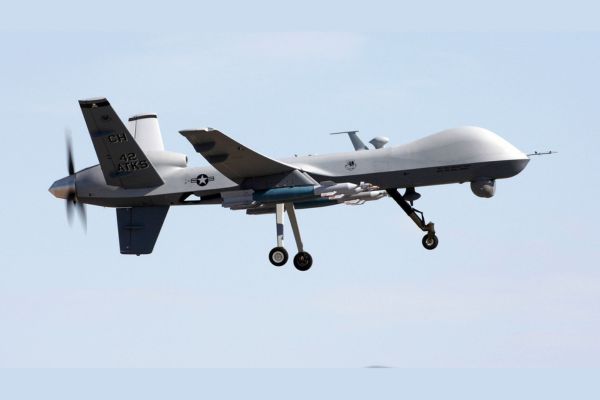
An Unmanned Combat Aerial Vehicle (UCAV), also known as a combat drone, is an advanced type of unmanned aerial vehicle (UAV) specifically designed for offensive military operations. Unlike traditional UAVs that are primarily used for surveillance and reconnaissance, UCAVs are equipped with weapons such as missiles, bombs, or precision-guided munitions, enabling them to engage targets autonomously or under human supervision.

UCAVs can perform a wide range of missions, including close air support, targeted strikes, suppression of enemy air defenses (SEAD), and battlefield intelligence gathering. These systems are either remotely piloted or semi-autonomous, with growing integration of artificial intelligence for real-time decision-making in dynamic combat environments.
Key Features
These drones are built for stealth, long-range endurance, and combat efficiency. Many feature low radar visibility, satellite connectivity, real-time data transmission, and multirole capability, including both lethal and intelligence-based operations.
Notable UCAV Models
Popular examples include the MQ-9 Reaper from the U.S., Bayraktar Akıncı from Turkey, Wing Loong II from China, and Ghatak under development in India. Each offers varying capabilities in terms of altitude, endurance, payload, and mission flexibility.
How is AI Transforming the Unmanned Combat Aerial Vehicle (UCAV) Market?
Artificial Intelligence is playing a pivotal role in enhancing the capabilities of UCAVs by enabling autonomous navigation, real-time target identification, and threat assessment. AI-powered systems can process vast amounts of sensor and imagery data to make split-second decisions during combat, reducing reliance on human operators and increasing mission efficiency. This not only boosts precision in high-risk environments but also allows for more complex and coordinated operations.
What Benefits Does AI Bring to UCAV Operations?
AI integration significantly improves situational awareness, adaptive flight control, and mission planning. With machine learning algorithms, UCAVs can learn from past missions, improve future performance, and adapt to evolving combat scenarios. As defense sectors globally invest in AI-based combat technologies, the demand for smart and autonomous UCAVs is expected to surge, reshaping the future of unmanned aerial warfare.
North America
- United States: The U.S. leads the global UCAV market, driven by substantial military investments, advanced technological development, and the presence of major defense contractors. The U.S. military’s focus on integrating UCAVs for surveillance, reconnaissance, and combat operations, along with border security initiatives, ensures continued market dominance.
- Canada: Canada is investing in UCAVs primarily for border surveillance and tactical defense applications, reflecting its commitment to modernizing its defense capabilities.
Europe
Europe is experiencing steady growth in the UCAV market as governments increase investments in military modernization. The use of UCAVs for surveillance, intelligence gathering, and precision strikes is expanding, particularly in response to evolving security threats. Recent conflicts in the region have highlighted the strategic importance of these systems, prompting further adoption across European militaries.
Asia Pacific
- India and Pakistan: Both countries are rapidly increasing their UCAV acquisitions to address rising defense needs and counter-terrorism efforts. Their focus is on deploying cost-effective drones with advanced targeting and surveillance capabilities.
- Afghanistan: Ongoing security concerns and the need for effective intelligence gathering have led to increased interest in UCAVs for surveillance and monitoring.
The Asia Pacific region is the fastest-growing market for UCAVs, fueled by geopolitical tensions, defense spending, and the adoption of new drone technologies.
Segmental Outlook of the Unmanned Combat Aerial Vehicle Market
By Type
The fixed-wing segment holds the largest market share, favored for its superior range, high payload capacity, and endurance, making it ideal for long-distance surveillance and precision strike missions. Hybrid-tiltrotor UCAVs, which combine vertical take-off and landing with long-range capabilities, are expected to grow fastest due to their versatility in challenging military operations.
By Altitude Range
Low-altitude (below 1,500 meters) UCAVs dominate the market, valued for their cost-effectiveness and operational flexibility in various combat scenarios. However, the very high-altitude segment (above 10,000 meters) is projected to grow rapidly, driven by the increasing need for extended-range surveillance and reconnaissance that keeps drones out of adversary detection.
By Endurance
UCAVs with up to 6 hours of endurance currently lead the market, offering a balance of operational range and cost-effectiveness, especially for tactical missions. The 6 to 12 hours endurance segment is set to expand quickly, as longer missions for intelligence gathering and counterterrorism become more prevalent.
By Payload Capacity
UCAVs with up to 25 kilograms payload capacity are most popular due to their versatility and cost-efficiency, suitable for a range of military operations. The 25 to 100 kilograms category is expected to see significant growth, as it supports longer-range missions and electronic warfare, providing a balance between size, endurance, and payload.
By Application
Reconnaissance is the dominant application, reflecting the high demand for persistent surveillance and intelligence gathering to inform military strategy. Electronic warfare is the fastest-growing segment, as modern militaries increasingly rely on UCAVs for technologically advanced, non-traditional combat and counter-terrorism operations.
Unmanned Combat Aerial Vehicle Market Companies

Kratos Defense & Security Solutions
Kratos is recognized for developing affordable, high-performance tactical UCAVs such as the UTAP-22 and XQ-58A Valkyrie. The company focuses on reusable, attritable drones designed for manned-unmanned teaming and survivability in contested environments. Kratos has secured significant contracts with the U.S. Department of Defense and is advancing new stealth UCAVs, positioning itself as a disruptor among traditional defense giants.
Leonardo S.p.A.
Leonardo is a major European player, contributing advanced aerospace and defense technologies. The company participates in collaborative European UCAV projects and provides expertise in avionics, sensors, and integrated mission systems, supporting the region’s adoption of unmanned combat platforms.
General Atomics
General Atomics is a dominant force in the UCAV sector, best known for the Predator and Reaper series. These drones are widely used by the U.S. and allied militaries for intelligence, surveillance, reconnaissance, and precision strike missions. The company continues to develop next-generation drones and sensor technologies.
AeroVironment
AeroVironment specializes in smaller tactical unmanned systems, including loitering munitions and reconnaissance drones. While not a primary UCAV manufacturer, its technologies support intelligence and targeting operations, complementing larger UCAV platforms.
Lockheed Martin
Lockheed Martin is a global leader in advanced defense systems, including stealth UCAVs. The company’s work on next-generation unmanned platforms and integration with manned systems enhances operational capabilities for the U.S. military.
Saab AB
Saab is known for its advanced defense systems and the Skeldar drone system, which serves both military and civilian applications. Saab focuses on surveillance, reconnaissance, and intelligence-gathering, and participates in collaborative European UCAV programs.
Dassault Aviation
Dassault is a key participant in European UCAV initiatives, notably the nEUROn demonstrator project. The company advances stealth, autonomy, and next-generation combat drone capabilities for European defense forces.
L3Harris Technologies
L3Harris provides critical communications, sensor, and electronic warfare systems for UCAVs, enabling secure data links and advanced mission effectiveness across a range of unmanned platforms.
BAE Systems
BAE Systems develops advanced UCAVs, including the Taranis project, with a focus on stealth, autonomy, and integration with broader defense systems. The company supports the modernization of air combat operations.
Airbus
Airbus plays a significant role in European UCAV projects, leveraging its aerospace manufacturing and systems integration capabilities. The company is active in multinational collaborations aimed at developing future combat air systems.
Northrop Grumman
Northrop Grumman is a leader in unmanned systems, known for the Global Hawk UAV and other advanced high-altitude, long-endurance platforms. The company’s innovations drive advancements in autonomous combat air operations and it collaborates on future tactical unmanned aircraft projects.
Textron Systems
Textron Systems develops tactical unmanned aircraft for military applications, offering platforms that support surveillance, reconnaissance, and light strike missions in various operational environments.
Boeing
Boeing is a major defense contractor with significant investments in UCAVs, including the MQ-25 Stingray and Loyal Wingman programs. The company focuses on integrating unmanned systems with existing air fleets for force multiplication.
Elbit Systems
Elbit Systems is a leading Israeli defense firm supplying UCAVs and related technologies, with a focus on electronic warfare, surveillance, and precision strike capabilities for global defense customers.Israel Aerospace Industries (IAI)
IAI is a pioneer in UCAV technology, offering a broad portfolio of combat and surveillance drones. Its platforms are widely exported and have shaped the operational doctrines of multiple militaries worldwide.