
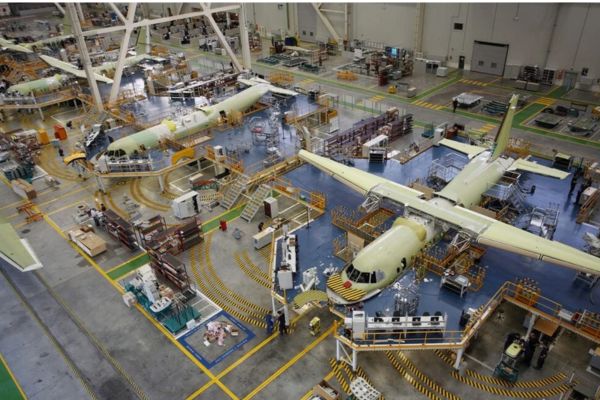
India’s defence manufacturing sector is undergoing a remarkable transformation, shifting from a long-standing dependence on imports to building robust indigenous production capabilities. This transition highlights the nation’s commitment to self-reliance and strategic autonomy in defence production.
In FY 2023–24, India’s defence production reached an all-time high of Rs. 1.27 lakh crore, representing a 174% increase from 2014–15. Additionally, defence exports have also seen an unprecedented surge, crossing Rs. 21,083 crores, a 30-fold expansion over the past decade, with equipment supplied to over 100 countries. These figures reflect the success of initiatives like ‘Make in India’ and policies such as the Defence Acquisition Procedure (DAP) 2020 and increased FDI limits, which have significantly boosted domestic manufacturing and R&D.

A pivotal factor driving this growth is the active participation of Micro, Small, and Medium Enterprises (MSMEs) in the defence sector. The establishment of Defence Industrial Corridors in Uttar Pradesh and Tamil Nadu has provided these enterprises with essential infrastructure and partnership opportunities, facilitating their integration into the global defence manufacturing ecosystem. The alignment of policy and industrial execution has led to rapid technological adoption.
Notably, the Indian Navy’s adoption of 3D printing technology to produce spare parts on-demand exemplifies efforts to reduce reliance on foreign components. This initiative has enabled the manufacture of critical components like centrifugal pump impellers, ensuring faster replacements and reduced downtime for naval vessels. Similarly, companies like Agnikul Cosmos and Skyroot Aerospace have successfully developed complex systems, such as rocket engines, using indigenous hybrid techniques. Agnikul’s Agnilet engine, entirely 3D-printed as a single piece, has demonstrated significant reductions in production time and complexity. Skyroot’s Raman engine also utilises 3D printing for its injector plate, showcasing the growing adoption of additive manufacturing in India’s aerospace sector.
Advancements in manufacturing infrastructure are also evident. Indian workshops are investing in multi-axis CNC machines and hybrid processes that combine additive and subtractive operations. Multi-axis CNC machines, particularly 5-axis systems, enable the production of complex components with high precision and reduced setup times. These machines are essential for manufacturing intricate parts required in defence applications, such as missile guidance systems and aircraft structural components.
Hybrid additive-subtractive manufacturing integrates 3D printing with traditional machining processes, allowing for the creation of parts with complex geometries and improved surface finishes. This approach reduces material waste and shortens production cycles.
By minimizing waste and reducing lead times, these technologies are proving indispensable for high-stakes sectors like aerospace and defence. Access to advanced materials like aerospace-grade titanium and Inconel remains vital. Establishing decentralized access to these materials, particularly for MSMEs, is essential for sustaining local manufacturing at scale. Recent investments in local titanium manufacturing facilities are encouraging steps in this direction.
Developing skilled human capital is equally important. Initiatives like the Pradhan Mantri Kaushal Vikas Yojana (PMKVY) offer industry-relevant skill training to empower the workforce and support economic growth. Collaborations with organizations like the All-India Council for Technical Education (AICTE) align industry-based training programs across educational institutions to bridge skill gaps in the digital era.
India’s commitment to indigenous defence production is exemplified by success stories like the Light Combat Aircraft (LCA) Tejas and the K9 Vajra-T howitzer. The LCA Tejas program has achieved significant milestones, with the Indian Air Force forming its first Tejas squadron in 2016. The indigenous content in the Tejas Mark 1 is 59.7% by value and 75.5% by the number of line-replaceable units, with expectations to surpass 70% in the next four years. These achievements underscore the nation’s strides in aerospace and defence manufacturing, highlighting the integration of advanced technologies and the development of critical components domestically.
Similarly, the K9 Vajra-T program highlights India’s growing defence production capabilities. Manufactured by Larsen & Toubro in collaboration with South Korea’s Hanwha Defence, the K9 Vajra-T units are produced at L&T’s facility in Hazira, Gujarat, showcasing successful localisation and contributing to job creation, technology transfer, and industrial growth. This collaboration emphasizes the role of advanced manufacturing technologies and precision engineering in bolstering India’s defence sector. This collaboration underscores the significance of advanced manufacturing technologies and precision engineering in strengthening India’s defence sector. Concurrently, the nation has set ambitious targets of achieving Rs. 3 lakh crores in defence production and Rs. 50,000 crores in exports by 2029. The urgency to act is clear. Global supply chains are unpredictable, and geopolitical risks are escalating. Strategic autonomy depends not just on policy intent but on the capacity to build mission-critical components domestically.
India’s journey to defence self-reliance will not be written in headlines alone, but forged in its machine shops, training centres, and materials labs. The opportunity to lead is here; what is needed now is the resolve to build, steadily and decisively.