


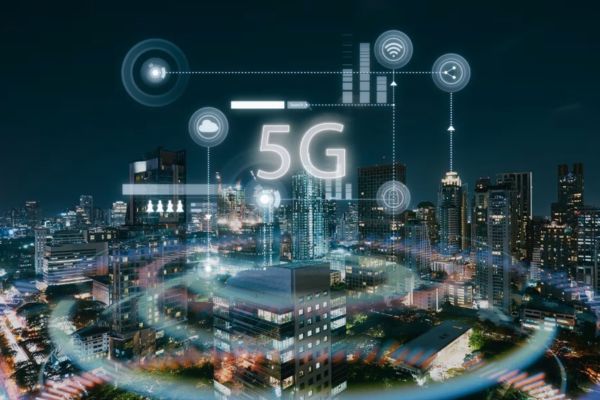
What if your phone could control your entire home in real time? Or your car could navigate traffic on its own, and factories could fix problems before they even happen? That’s the kind of world 5G IoT is creating. With ultra-fast speeds and the ability to connect billions of devices at once, 5G and the Internet of Things are teaming up to change how everything around us works, faster, smarter, and more connected than ever.
Did you know the global 5G IoT market was valued at USD 20.00 billion in 2024? It’s projected to reach an impressive USD 415.48 billion by 2034, with a strong CAGR of 35.5% between 2025 and 2034.
What is 5G IoT?
5G IoT refers to the integration of fifth-generation wireless technology with the Internet of Things (IoT). It enables faster, more reliable, and low-latency communication between billions of connected devices, from smart appliances and wearables to autonomous vehicles and industrial machines. 5G can support massive device density and real-time data exchange, making it ideal for powering smart cities, connected healthcare, and advanced automation across industries.
Applications of 5G IoT
With its ultra-fast speed, low latency, and ability to handle massive numbers of connected devices, 5G IoT is revealing groundbreaking possibilities across industries. Below are some of the key areas where 5G IoT is driving real-world transformation.
Smart Cities: 5G IoT powers intelligent infrastructure such as traffic lights, waste management systems, smart lighting, and surveillance. This leads to better resource management, reduced congestion, and enhanced public safety.
Healthcare: With real-time data transmission, 5G IoT enables remote surgeries, wearable health monitoring, and connected ambulances—making healthcare more accessible, faster, and personalized.
Industrial Automation (Industry 4.0): Factories are using 5G-connected sensors and robots for real-time monitoring, predictive maintenance, and automation, boosting productivity and reducing downtime.
Autonomous Transportation: 5G IoT supports vehicle-to-everything (V2X) communication, allowing self-driving cars, smart traffic systems, and fleet tracking to operate more safely and efficiently.
Agriculture: Farmers are adopting 5G IoT tools such as smart irrigation systems, soil sensors, and drone surveillance to optimize crop yield, monitor conditions, and reduce waste.
Benefits of 5G IoT
The combination of 5G technology and the IoT is revolutionizing connectivity, delivering benefits that extend across industries and everyday life. Let’s explore some of the key benefits driving this transformation.
Ultra-Fast Data Speeds
One of the most significant benefits of 5G IoT is its ability to transmit data at incredibly high speeds. This means devices can send and receive information almost instantaneously, enabling real-time responses and smoother operation. Whether it’s streaming high-definition video from surveillance cameras or managing thousands of sensors in a factory, ultra-fast speeds ensure critical data is available exactly when needed.
Low Latency for Real-Time Interaction
5G dramatically reduces latency, the delay between sending and receiving data, which is essential for applications requiring immediate action. This low latency supports mission-critical tasks such as remote surgeries, autonomous driving, and real-time industrial automation, where even milliseconds can make a huge difference.
Massive Device Connectivity
The 5G network can support an enormous number of connected devices simultaneously without sacrificing performance. This capability is crucial as billions of IoT devices—from smart home gadgets to city-wide sensors—become part of the connected ecosystem. The result is seamless communication and coordination across vast networks of devices.
Improved Energy Efficiency
5G technology is designed to be more energy-efficient, which helps extend the battery life of IoT devices. This is especially important for devices deployed in remote or hard-to-reach areas, such as agricultural sensors or environmental monitors, where frequent battery replacement would be costly and impractical.
Enhanced Reliability and Security
With 5G IoT, networks are more reliable and secure, offering better protection against interference and cyber threats. Enhanced security protocols ensure that sensitive data transmitted across connected devices remains safe, which is critical for applications in healthcare, finance, and critical infrastructure.
Scalability for Future Growth
5G IoT networks are built to scale easily as demand grows. Businesses and cities can expand their IoT deployments without worrying about network congestion or performance degradation. This scalability makes 5G IoT a future-proof foundation for innovation and expansion.
5G IoT Trends
The evolution of 5G IoT is being shaped by several key trends that are redefining how devices connect and communicate. One major shift is the growing use of edge computing, which allows data to be processed closer to the source for faster, more efficient responses. Private 5G networks are also becoming popular, especially in sectors like manufacturing and logistics, where secure, dedicated connectivity is essential. Additionally, the integration of AI and machine learning with IoT systems is enabling smarter automation and predictive analytics. Together, these trends are pushing industries toward faster, more intelligent, and more connected operations.
The Closure
5G IoT is not just a technological upgrade; it’s a catalyst for smarter living, faster communication, and more connected industries. As 5G continues to empower IoT with speed, scale, and reliability, we’re witnessing a shift in how the world works, more efficient, intelligent, and real-time than ever before. Whether it’s improving healthcare, transforming transportation, or powering smart cities, the impact of 5G IoT is only just beginning.