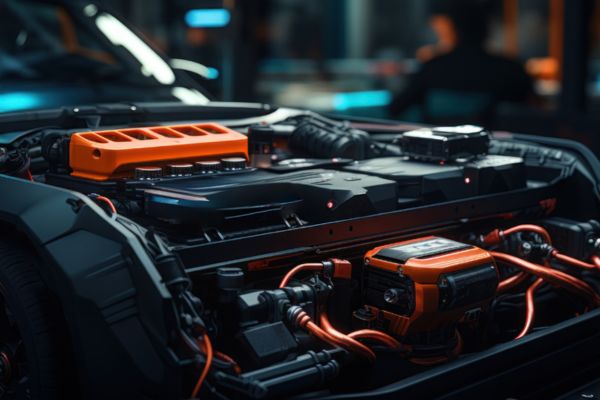
The automotive industry is undergoing one of its most significant transformations in history as electric vehicles (EVs) take center stage. At the heart of this change lies the battery, the technology that determines driving range, charging speed, cost, and overall performance. While lithium-ion batteries have long been the dominant choice for EVs, solid-state batteries are emerging as a promising alternative that could redefine the future of electric mobility. Understanding the differences between these technologies, and the trends driving their adoption, is key to predicting where the automotive battery market is heading.
The Dominance of Lithium-Ion Batteries
Lithium-ion batteries have powered the growth of the modern EV industry. They are widely used because they offer a balance of energy density, cost-effectiveness, and reliability. Over the past decade, manufacturers have significantly improved their performance, increasing driving ranges and reducing charging times. Additionally, large-scale production and supply chain maturity have driven costs down, making EVs more accessible to consumers.
However, lithium-ion batteries still face limitations. They rely on liquid electrolytes, which can pose safety risks such as overheating and, in rare cases, thermal runaway leading to fires. Moreover, they have constraints in terms of energy density, meaning there is a practical limit to how much energy they can store without significantly increasing size or weight.

The Promise of Solid-State Batteries
Solid-state batteries replace the liquid electrolyte found in lithium-ion batteries with a solid material, offering several potential advantages. These include higher energy density, which could enable EVs to travel much longer distances on a single charge, and improved safety due to reduced flammability. They also have the potential for faster charging times and longer lifespan, addressing two of the main concerns consumers have about EV adoption.
While the technology is promising, solid-state batteries are not yet widely available in commercial vehicles. Manufacturing challenges, high production costs, and difficulties in scaling up have slowed their entry into the mainstream market. Nevertheless, automotive giants like Toyota, BMW, and Volkswagen, along with a host of startups, are investing heavily in research and pilot production.
Cost and Scalability Challenges
One of the primary reasons lithium-ion batteries continue to dominate is their cost advantage. Years of production have optimized manufacturing techniques and built a robust global supply chain, bringing prices down significantly. In contrast, solid-state batteries are still in the early stages of mass production, making them considerably more expensive.
Scalability is another hurdle. Producing solid-state batteries at the scale required for millions of EVs demands new manufacturing methods and infrastructure investments. Until these challenges are resolved, lithium-ion batteries are likely to remain the most practical choice for the mass EV market.
Performance and Application Trends
In terms of performance, solid-state batteries have the potential to outperform lithium-ion in almost every metric like range, charging speed, safety, and durability. For example, early prototypes suggest they could offer ranges exceeding 800 km per charge and achieve charging times as low as 10 minutes. This makes them highly attractive for premium EV models and performance vehicles, where cost is less of a barrier.
Lithium-ion technology, on the other hand, continues to improve incrementally. Innovations like lithium iron phosphate (LFP) and nickel manganese cobalt (NMC) chemistries are increasing efficiency, extending battery life, and lowering production costs. These advancements ensure lithium-ion remains competitive even as solid-state technology develops.
Market Outlook and Industry Investments
Global investments in battery research have surged as automakers aim to secure a competitive edge. Companies such as Toyota and QuantumScape are aiming to launch solid-state batteries in commercial vehicles within the next few years. Meanwhile, Tesla, BYD, and CATL continue to refine lithium-ion technology, focusing on cost reduction and supply chain security.
Governments are also playing a role by funding battery research and offering incentives for advanced EV technology development. For example, several countries have announced initiatives to support next-generation battery production as part of their broader goals to achieve net-zero emissions.
Environmental Considerations
Sustainability is a growing concern in the automotive battery market. Lithium-ion batteries rely on materials like cobalt and nickel, which are expensive to mine and have environmental and ethical sourcing issues. Solid-state batteries could reduce the reliance on some of these critical minerals, but their manufacturing processes also have environmental footprints that must be addressed. Recycling and second-life applications for EV batteries are becoming increasingly important to minimize waste and resource consumption, regardless of the technology used.
Transitioning from Lithium-Ion to Solid-State
The shift from lithium-ion to solid-state batteries is unlikely to be immediate. Instead, the market will probably see a gradual transition, with solid-state initially appearing in luxury EVs, sports cars, and niche applications where performance outweighs cost considerations. As production scales up and costs come down, these batteries may eventually replace lithium-ion in mass-market vehicles. Until then, the two technologies are expected to coexist, each serving different segments of the market based on cost, performance, and consumer demand.
Conclusion
The competition between solid-state and lithium-ion batteries is not a simple case of one replacing the other overnight. Lithium-ion remains the backbone of the EV revolution due to its proven reliability, affordability, and established supply chain. Solid-state batteries, however, hold the potential to push electric mobility to new heights with greater range, safety, and performance. The future of the automotive battery market will likely involve a blend of both technologies, evolving in response to advancements in manufacturing, cost reduction, and consumer expectations. In the race for better EV batteries, innovation will be the driving force, shaping the cars and the roads of tomorrow.