Introduction
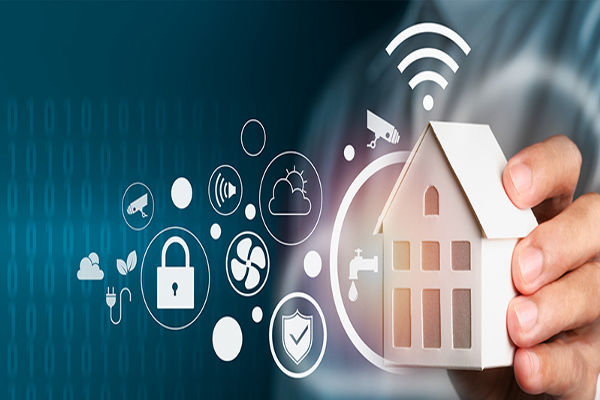
The Internet of Things (IoT) is fundamentally reshaping residential living, transforming traditional homes into intelligent, responsive, and highly automated environments. IoT in smart homes involves interconnected devices, sensors, and actuators that communicate seamlessly, enabling homeowners to control, monitor, and optimize various household functions for enhanced convenience, security, energy efficiency, and customized experiences.
Core Architecture of IoT-Enabled Smart Homes
IoT Device Layer
At the most fundamental level, IoT in smart homes relies on devices such as smart sensors (for light, motion, temperature, humidity), actuators (for controlling lights, switches, thermostats), cameras, and everyday appliances adapted for connectivity. These devices are embedded with microcontrollers and wireless communication modules (Wi-Fi, Zigbee, Z-Wave, Bluetooth, or Thread), allowing network integration and remote controllability.
Networking and Connectivity
IoT devices interface via standardized wireless protocols, with growing support for the Matter protocol that enhances compatibility across device manufacturers. Home routers and mesh networks support this interconnectivity, ensuring robust, low-latency communication for dozens of devices simultaneously.
Central Hub/Gateway
A critical component is the central hub or gateway that orchestrates device commands, data aggregation, and automation logic. Hubs can be dedicated hardware (e.g., smart speakers with built-in assistants, proprietary smart panels) or implemented via software running on cloud infrastructure. Increasingly, edge computing capabilities allow hubs to process data locally for faster response and redundancy.
User Control and Automation Interfaces
End-users interact with their smart home ecosystem via intuitive mobile applications, web platforms, or voice assistants (such as Amazon Alexa, Google Assistant). These interfaces provide dashboards for monitoring real-time device status, managing automations, and receiving notifications.
Key Technologies and Communication Protocols
- Wi-Fi: Offers high bandwidth for streaming and camera feeds; widely adopted for its simplicity and compatibility.
- Zigbee/Z-Wave: Built specifically for low-power, low-bandwidth IoT applications, supporting hundreds of devices in a mesh topology.
- Bluetooth/Thread: Increasingly used for device-to-device communications and in-room automations.
- LoRaWAN: Suited for deep indoor coverage and extended battery life, especially in larger or multi-property estates.
- Matter: A new interoperable protocol that allows seamless cross-brand integration, simplifying setup and expanding the ecosystem.
Applications and Use Cases
Lighting and Climate Automation
Smart bulbs, switches, and thermostats can be controlled and scheduled remotely. Sensors detect occupancy, daylight, or ambient temperature, enabling automatic adjustments to optimize comfort and reduce energy consumption.
Security and Surveillance
IoT-enabled home security comprises smart cameras, motion detectors, door/window sensors, and smart locks. These devices provide real-time alerts, support for remote monitoring, automated lighting, and the ability to lock/unlock doors from anywhere, drastically improving safety.
Energy Management
Data from energy monitoring sensors and smart meters helps analyze consumption patterns, leading to actionable insights. Automation can turn off unused devices, adjust heating/cooling during idle periods, and provide homeowners with reports to lower utility bills and carbon footprint.
Appliance Control
Smart plugs, kitchen appliances, and entertainment systems become accessible and manageable via voice commands or apps. Integration with scheduling automations streamlines chores like starting laundry remotely or preheating ovens before arrival.
Accessibility and Assisted Living
IoT technologies empower residents with mobility challenges, as devices can be managed through voice, gestures, or mobile apps, supporting greater independence and comfort.
Security, Privacy, and Challenges
Security Threats
The proliferation of connected devices expands the attack surface. Weak device security, outdated firmware, or poorly secured networks can lead to data breaches or unauthorized controls. Best practices include enforcing strong authentication, regular updates, network segmentation, and employing encrypted communications.
Privacy Concerns
IoT systems gather extensive behavioral data, raising privacy issues regarding data ownership and usage. Ensuring compliance with data protection regulations and transparency in data management policies is crucial.
Interoperability
Despite advances like the Matter standard, not all devices are universally compatible, occasionally necessitating bridging hardware or proprietary hubs. Open-source home automation platforms (e.g., Home Assistant, OpenHAB) provide flexible integration but can require technical expertise.
Scalability and Reliability
As more devices are added, maintaining reliable connectivity and low-latency responsiveness is vital. Mesh networking protocols and distributed processing at the edge—alongside cloud-based redundancy—address these needs.
Future Trends and Innovations
- Edge AI: Intelligent local processing that enables quick decision-making (e.g., facial recognition for access control, anomaly detection in energy use) without relying solely on the cloud.
- Increased Standardization: Widespread adoption of Matter and similar protocols is expected, making installation and expansion more accessible to mainstream users.
- Sustainable Smart Homes: Next-generation homes will emphasize integration with renewable energy sources, real-time consumption optimization, and smart grid interoperability.
- Enhanced Health Monitoring: Integration of health sensors and AI analytics to proactively monitor wellbeing and support elder care.
Conclusion
IoT in smart homes is at the forefront of shaping next-generation residential experiences, making living spaces more intelligent, secure, efficient, and adaptive to user needs. As technology matures, homeowners can expect even deeper integration, increased reliability, and richer automation capabilities, balanced with evolving security and privacy frameworks.