



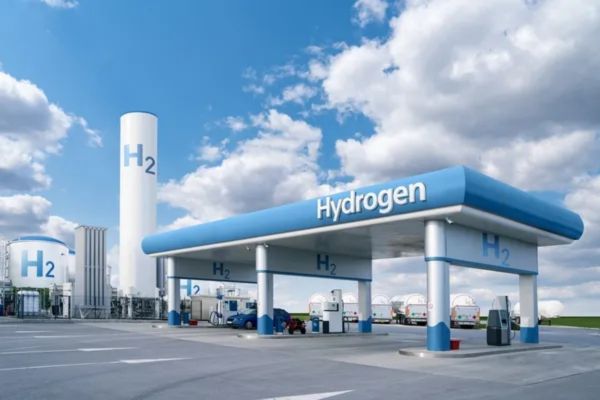
The global transportation landscape is undergoing a significant transformation, with a growing emphasis on sustainable and eco-friendly solutions. Central to this shift is the development and expansion of hydrogen fueling stations, which play a pivotal role in supporting the adoption of hydrogen fuel cell vehicles (FCVs). As nations strive to meet stringent environmental targets and reduce carbon emissions, the hydrogen fueling station market is poised for substantial growth.
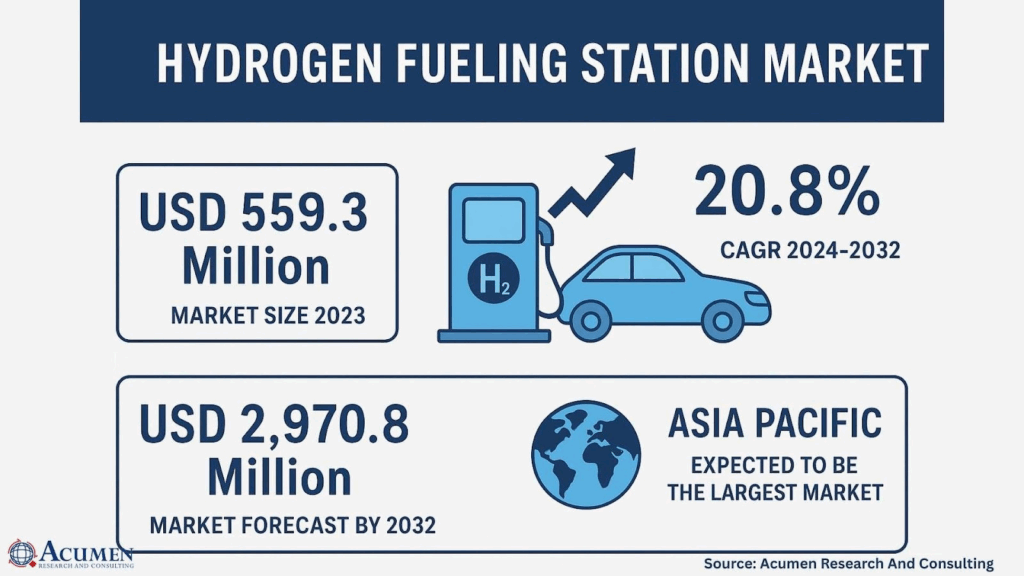
According to a comprehensive analysis by Acumen Research and Consulting, the global hydrogen fueling station market was valued at USD 559.3 million in 2023 and is projected to reach USD 2,970.8 million by 2032, growing at a CAGR of 20.8% from 2024 to 2032. This growth trajectory underscores the increasing importance of hydrogen infrastructure in the global transition to clean energy.

Hydrogen Fueling Station Market Drivers
Government Initiatives and Policies:
Governments worldwide are implementing favorable policies and incentives to promote the adoption of hydrogen technologies. These include subsidies for hydrogen infrastructure development, tax credits for FCV purchases, and funding for research and development in hydrogen production and storage technologies.
Environmental Concerns and Emission Reduction Goals:
With rising concerns over climate change and air pollution, there is a concerted push towards zero-emission vehicles. Hydrogen FCVs emit only water vapor, making them an attractive alternative to traditional internal combustion engine vehicles.
Advancements in Hydrogen Production and Storage Technologies:
Innovations in green hydrogen production methods, such as electrolysis powered by renewable energy sources, are making hydrogen a more viable and sustainable fuel option. Additionally, advancements in storage technologies are addressing challenges related to hydrogen’s storage and transportation.
Hydrogen Fueling Station Market Restraints
High Infrastructure Costs:
The establishment of hydrogen fueling stations requires significant investment in infrastructure, including compressors, storage tanks, and dispensers. These high upfront costs can deter private sector participation and slow down the expansion of the network.
Limited Hydrogen Production Capacity:
While hydrogen production is increasing, it is still limited compared to the demand from the transportation sector. Scaling up production to meet the needs of a growing fleet of FCVs remains a challenge.
Public Perception and Awareness:
There is a lack of awareness and understanding among the general public regarding hydrogen technologies. Misconceptions about safety and the benefits of FCVs can hinder widespread adoption.
Hydrogen Fueling Station Market Segmentation
The hydrogen fueling station market can be segmented based on station size, delivery type, mobility, end-user, and geography.
By Station Size:
- Small Stations:
Typically cater to low-volume hydrogen dispensing needs, such as for forklifts or small fleets. They are cost-effective and can be deployed in urban areas with limited space.
- Medium Stations:
Serve a moderate number of vehicles and are commonly found in suburban areas. They balance cost and capacity, making them suitable for regional applications.
- Large Stations:
Designed to handle high volumes of hydrogen dispensing, these stations are essential for supporting heavy-duty vehicles and long-distance transportation networks.
By Delivery Type:
- On-Site Production:
Hydrogen is produced at the fueling station using methods like electrolysis or steam methane reforming. This approach reduces transportation costs and ensures a steady supply of hydrogen.
- Delivered Hydrogen:
Hydrogen is produced off-site and transported to the fueling station via pipelines or delivery trucks. This method is suitable for areas where on-site production is not feasible.
By Mobility:
- Passenger Vehicles:
Includes hydrogen-powered cars and buses. The adoption of FCVs in the passenger segment is growing, driven by government incentives and advancements in vehicle technology.
- Commercial Vehicles:
Encompasses trucks, vans, and other heavy-duty vehicles. The commercial sector presents a significant opportunity for hydrogen adoption due to the need for long-range, zero-emission transportation solutions.
By End-User:
- Public Sector:
Governments are investing in hydrogen infrastructure to promote clean transportation and meet environmental goals.
- Private Sector:
Private companies, especially those in logistics and transportation, are adopting hydrogen technologies to reduce operational costs and carbon footprints.
Hydrogen Fueling Station Market Regional Insights
North America:
The North America hydrogen fueling station market is driven by government incentives and investments in clean energy infrastructure, particularly in states like California.
Europe:
Europe is witnessing significant momentum in hydrogen fueling infrastructure, driven by stringent emissions regulations and a strong commitment to green hydrogen production. Germany, France, and the Netherlands are making substantial investments in hydrogen mobility to reduce carbon footprints in industry and transportation.
Asia-Pacific:
Countries like Japan, South Korea, and China are leading the way in hydrogen adoption. Japan’s shift to hydrogen fuel cell cars and government-backed infrastructure plans have established a global benchmark. China’s aggressive policies and substantial investments are accelerating the development of hydrogen infrastructure.
Hydrogen Fueling Station Market Future Outlook
The hydrogen fueling station market is expected to continue its upward trajectory, driven by technological advancements, supportive policies, and increasing demand for clean transportation solutions. Key trends to watch include:
- Integration with Renewable Energy Sources:
The coupling of hydrogen production with renewable energy sources like wind and solar is enhancing the sustainability of hydrogen as a fuel.
- Development of Hydrogen Corridors:
Establishing networks of hydrogen fueling stations along major transportation routes is facilitating long-distance travel for FCVs.
- Collaborations and Partnerships:
Public-private partnerships are playing a crucial role in accelerating the deployment of hydrogen infrastructure.
The hydrogen fueling station market is at the forefront of the global transition to sustainable transportation. While challenges remain, the concerted efforts of governments, industries, and research institutions are paving the way for a cleaner and more efficient future. As the market continues to evolve, staying informed about the latest developments and trends is essential for stakeholders across the energy and transportation sectors.For a more detailed analysis and insights into the hydrogen fueling station market, please refer to the comprehensive report by Acumen Research and Consulting.