



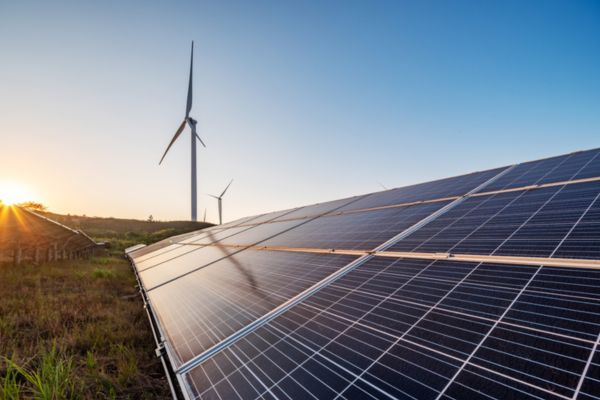
Confronted by climate change and the decreasing reserves of fossil fuel, the move to renewables is no longer distant; rather, it has become an imperative. Yet such a shift has been traditionally impeded by the barriers of intermittency, inefficiency in storage, and cost. Innovations in technology, however, are now accelerating the removal of these barriers, making renewable energy more realisable, reliable, and scalable than ever before.
1. Storage Systems
The greatest issue is intermittency in sources of renewable energy, such as solar and wind. Storage technology solutions are now coming to the forefront of that challenge. In the last ten years, the cost of energy storage, mainly in the form of lithium-ion batteries, has gone down by almost 90%. Concurrently, the new storage methods of the future, which include solid-state batteries, flow batteries, and gravity batteries, aim for a greater level of capacity, operate for longer lifespans, and ensure safe operations alike.
Energy storage allows excess power generated during peak times to be stored so that, when there is a lapse in energy production, it is used to maintain grid stability. Energy storage systems such as Tesla Megapack and various utility-scale batteries in the world are proving that renewables do have dispatchable power on demand.
2. Smart Grids with AI
The conventional power grid came into existence when nobody ever thought about energy decentralisation or variable energy injections into the network. Now, smart grids are digital augmented networks that monitor, predict, and adapt to an energy supply-demand situation in real-time. These systems use sensors and IoT devices and centre their action around AI-driven analytics for load balancing, fault detection, and performance optimisation.
Moreover, artificial intelligence is increasingly being applied to predict renewable energy generation patterns with the highest degree of precision. Wind and solar power forecasts are becoming more dependable due to operators incorporating weather forecasts with historic records and machine learning algorithms, thus trying to reduce the uncertainty that earlier so often plagued those two energy sources.
3. Solar and Wind Technology Breakthroughs
Solar photovoltaic (PV) technology has undergone enormous enhancements in efficiency and price reduction. The seizing of avenues to develop perovskite solar cells, which may prevail over silicon cells in terms of both efficiency and cost, is still considered leading-edge. At the same time, bifacial panels and solar tracking systems can garner more sunlight and produce more electricity per square meter.
Wind energy, on the other hand, has also witnessed great enhancements. Larger and more efficient turbines with rotors that can exceed 250 meters in diameter harness greater amounts of energy at lower wind speeds. These innovations are opening the way for offshore wind farm projects that can go deeper where winds are strong and steady, so the output potential is greatly enhanced.
4. Hydrogen and Power-to-X Technologies
Due to its green status, hydrogen is produced by electrolysis fueled by renewable electricity, making it an outstanding multi-purpose energy carrier and storage medium. This type of hydrogen will help address decarbonization issues in industries that are difficult to electrify, such as heavy industry and long-haul transport. Power-to-X technologies, therefore, convert renewable electricity into fuels, chemicals, and heat, expanding the utilisation of renewables much further than traditional electricity generation.
These innovations can fulfil the lag between energy supply and demand in various sectors and from season to season, thus marrying renewable energy with integrated energy systems.
5. Modular and Scalable Solutions
The upsurge of modular and distributed renewable systems, such as rooftop solar panels, microgrids, and community wind projects, allows for local generation and consumption of energy. The consequence is reduced transmission losses, increased energy access in remote regions, and enhancement of resilience against central grid failures. Such systems are particularly transformative in developing countries where grid infrastructure may be nonexistent or limited. Portable solar kits are, by far, one good example of such batteries.
Conclusion
Technological innovations are rapidly setting the stage for renewable energy. These emerging fields that focus on issues such as intermittency, efficiency, scalability, and integration are putting renewable energy on a potential wicket to global energy systems. On the other hand, growing innovation means renewables are now an economically and technically better option than just an environmentally driven concern.
The following article is attributed to Ravi Kumar- VP, Business Development, Oorjan Cleantech