


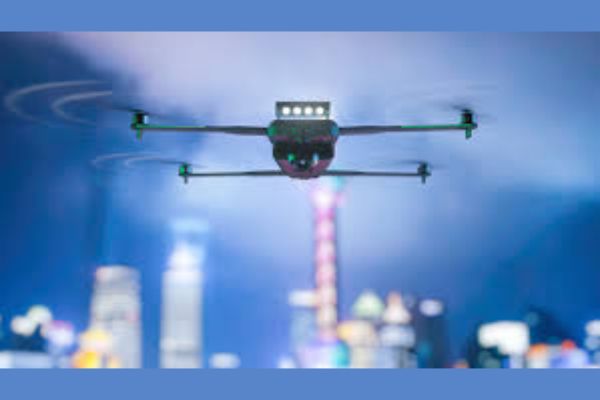
The global drone detection market is set for rapid expansion, fueled by rising defense budgets, growing concerns over unauthorized drone activities, and the widespread adoption of UAVs across commercial, industrial, and governmental sectors. Valued at USD 694.6 million in 2024, the market is projected to reach USD 8.4 billion by 2034, growing at a CAGR of 28.9%.
With drone-related threats becoming more sophisticated, governments and private operators are prioritizing investments in advanced detection platforms. The integration of AI and IoT is transforming drone detection capabilities, enabling real-time data processing, enhanced tracking precision, and automated classification. AI-powered software is particularly effective in reducing false positives, helping operators differentiate drones from other airborne objects.
Key Market Highlights
- By System Type: Ground-based systems generated USD 246.5 million in 2024, dominating due to their scalability and integration with radar, RF analyzers, and electro-optical systems for uninterrupted surveillance.
- By Technology: Radar-based systems contributed USD 255.4 million in 2024, reinforcing their central role in long-range and all-weather detection, supported by advanced resolution and drone-specific algorithms.
- By Region: North America led the market with USD 246.9 million in 2024, supported by robust homeland security budgets and rapid adoption of multi-layered detection systems across sensitive facilities.
- By End Use: Applications span military defense, airports, public safety, and industrial infrastructure, underscoring the importance of drone detection across both civilian and defense domains.
The Drone Detection Market: A Segmental Analysis
System Type Analysis
- Ground-Based Systems
These systems dominate the market with extensive deployment at airports, borders, and critical facilities. Their adaptability for both fixed and temporary zones makes them a cornerstone of drone detection infrastructure. - Mobile and UAV-Based Systems
Portable and airborne solutions are increasingly being adopted for VIP protection, large-scale events, and military convoys, addressing high-mobility security needs.
Technology Analysis
- Radar-Based Detection
Generating USD 255.4 million in 2024, radar systems remain central to detection efforts due to their reliability in long-range monitoring and adverse weather resilience. Advanced classification algorithms now enable operators to distinguish drones from clutter. - RF Analyzers
RF detection identifies drone communications and command links, providing early alerts even in encrypted environments. - Electro-Optical & Infrared Sensors
Critical for visual confirmation and thermal tracking, these sensors enhance situational awareness, especially in urban and low-visibility settings. - AI & IoT Integration
AI reduces false positives by analyzing multisensor input, while IoT platforms enable cloud-based monitoring and networked airspace security.
Regional Analysis
- North America
The region generated USD 246.9 million in 2024, projected to grow at a CAGR of 27.9% through 2034. Strong homeland security budgets and adoption of layered detection systems drive demand, with the U.S. spearheading innovations in sensor fusion. - Europe
Growth in Europe is supported by urban airspace monitoring needs and investments in AI-powered, multi-sensor platforms. Governments are increasingly adopting detection systems for stadiums, airports, and public events. - Asia-Pacific
APAC is emerging as the fastest-growing region, with demand fueled by border tensions, defense modernization programs, and aviation security. Local players are investing in indigenous systems to address regional needs. - LAMEA (Latin America, Middle East & Africa)
This region is focusing on cost-effective and rugged systems for oil facilities, borders, and urban security. Partnerships and technology transfers are enabling faster deployment across sensitive infrastructures.