



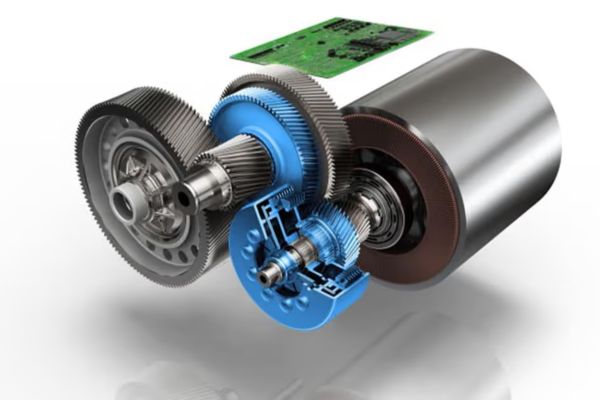
The global Electric Vehicle Transmission Market is entering a high-growth phase, supported by accelerating electric vehicle adoption, rapid powertrain innovation, and increasing OEM focus on drivetrain efficiency. According to Introspective Market Research, the market is expected to grow from USD 9.72 billion in 2024 to USD 28.74 billion by 2032, registering a robust CAGR of 12.8% during the forecast period.
Unlike conventional internal combustion engine (ICE) vehicles, electric vehicles rely on high-precision transmission systems designed to manage torque delivery, improve driving range, and enhance overall vehicle performance. The growing penetration of battery electric vehicles (BEVs), performance EVs, and electric commercial vehicles is significantly reshaping transmission design priorities across the global automotive industry.

Quick Insights: Electric Vehicle Transmission Market
- Market Size (2024): USD 9.72 Billion
- Projected Market Size (2032): USD 28.74 Billion
- CAGR (2024–2032): 12.8%
- Leading Region: Asia-Pacific
- Dominant Transmission Type: Single-Speed Transmission
- Fastest-Growing Segment: Multi-Speed EV Transmissions
- Key Players: ZF Friedrichshafen AG, BorgWarner Inc., Magna International, GKN Automotive, Schaeffler AG
Revenue Breakdown by Key Segments
| Segment | Revenue Share (2024) | Growth Outlook |
|---|---|---|
| Single-Speed Transmissions | 62% | Dominant due to cost efficiency and simplicity |
| Multi-Speed Transmissions | 28% | Fastest CAGR driven by performance and premium EVs |
| Integrated e-Axle Systems | 10% | Rapid adoption in next-gen EV platforms |
Passenger electric vehicles account for the majority of revenue, while electric commercial vehicles are emerging as a high-potential segment due to fleet electrification initiatives.
Where Are the Biggest Opportunities Emerging in EV Transmissions?
As EV architectures evolve, OEMs and Tier-1 suppliers are rethinking transmission strategies to balance efficiency, performance, and cost. Key opportunity areas include:
- Multi-speed transmissions for premium and performance EVs
- Integrated e-axle systems combining motor, inverter, and transmission
- Lightweight transmission materials to enhance vehicle range
- Scalable transmission platforms for modular EV architectures
These trends are opening new revenue streams for suppliers capable of delivering compact, efficient, and software-optimized transmission systems.
Expert Commentary
“Electric vehicle transmissions are no longer auxiliary components they are strategic enablers of EV performance, range optimization, and driving dynamics,” said Dr. Ananya Rao, Principal Consultant, Automotive & Mobility, Introspective Market Research.
“As EV adoption moves beyond early adopters into mass-market and commercial segments, transmission innovation will play a decisive role in OEM differentiation and cost leadership.”
Regional Market Highlights
- Asia-Pacific leads the global market, driven by large-scale EV production in China, Japan, and South Korea, along with strong government incentives and local manufacturing ecosystems.
- Europe remains a technology-driven market, with strong demand for multi-speed and performance-oriented EV transmissions, particularly in Germany and France.
- North America is witnessing steady growth, supported by rising EV penetration, commercial EV adoption, and OEM investments in domestic EV supply chains.
- Rest of the World markets are gradually expanding as EV infrastructure and regulatory support improve.
Recent Breakthroughs and Industry Developments
- ZF Friedrichshafen AG introduced next-generation EV transmissions integrated within compact e-axle systems to improve efficiency and reduce weight.
- BorgWarner Inc. expanded its multi-speed transmission portfolio to support high-performance and premium electric vehicles.
- Magna International launched scalable transmission solutions optimized for global EV platforms.
- GKN Automotive advanced integrated driveline technologies designed to enhance torque management and vehicle range.
Market Challenges and Cost Pressures
Despite strong growth prospects, the EV transmission market faces several challenges:
- High R&D and engineering costs associated with advanced transmission designs
- Price sensitivity in mass-market EVs, limiting adoption of multi-speed systems
- Supply chain volatility, particularly for precision components and advanced materials
- OEM pressure to reduce system complexity and improve manufacturing scalability
Balancing performance innovation with cost efficiency remains a key strategic challenge for suppliers.
Case Study: Multi-Speed Transmission in Performance EVs
A leading European EV manufacturer implemented two-speed transmission systems in its premium electric vehicle lineup. The result included:
- Up to 12% improvement in acceleration performance
- 8–10% increase in highway driving range
- Enhanced driving dynamics without compromising efficiency
This case underscores the growing relevance of multi-speed EV transmissions in performance-oriented vehicle segments.
Access the Full Report
Gain deeper insights into market sizing, competitive benchmarking, technology trends, and strategic recommendations.