
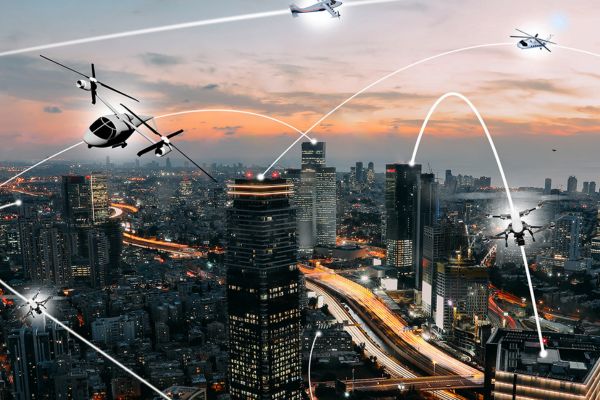
The electric vertical takeoff and landing (eVTOL) market is emerging as one of the most transformative segments within the aerospace and transportation industries. These aircraft use electric propulsion systems to take off and land vertically, enabling new forms of urban mobility and short-distance air transportation.
According to Acumen Research And Consulting analysis, the Global eVTOL Market size was valued atUSD 6,937 million in 2021 and is expected to reachUSD 30,519 million by 2030, expanding at a compound annual growth rate (CAGR) of 18.3% between 2022 and 2030.
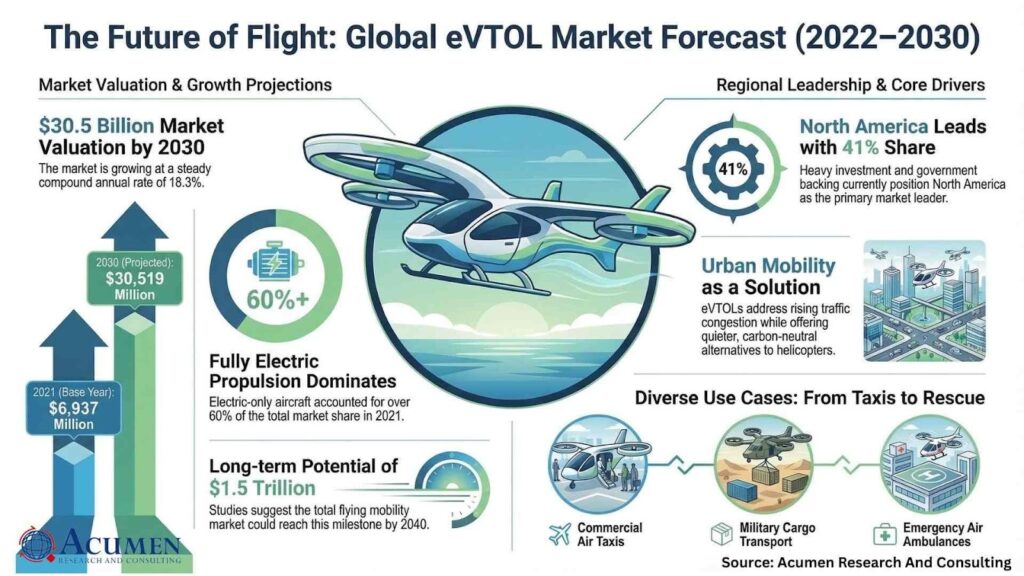
The rapid growth of this market reflects the increasing demand for sustainable transportation, technological advancements in electric propulsion systems, and the rising need for efficient urban mobility solutions.
As cities face increasing congestion and environmental concerns, eVTOL aircraft are being developed to provide faster, quieter, and more environmentally friendly transportation alternatives.
What Is an eVTOL Aircraft and Why Is It Important?
An electric vertical takeoff and landing (eVTOL) aircraft is a type of aircraft that uses electric propulsion to take off and land vertically, similar to a helicopter but with significantly lower emissions and noise levels.
These aircraft are designed to operate in urban environments and are capable of transporting passengers or cargo over short distances.
Key advantages of eVTOL aircraft include:
- Reduced carbon emissions compared to traditional aircraft
- Lower operational noise levels
- Ability to operate in densely populated urban areas
- Faster transportation compared to road travel
Because of these benefits, eVTOL aircraft are becoming a critical component of urban air mobility (UAM) ecosystems designed to transform the way people and goods move within cities.
What Factors Are Driving the Growth of the eVTOL Market?
Several technological and socio-economic factors are accelerating growth in the eVTOL aircraft industry.
Rising Demand for Urban Air Mobility
Urban air mobility is one of the most important drivers of the eVTOL market.
Rapid urbanization and increasing traffic congestion are pushing cities to explore alternative transportation solutions. eVTOL aircraft can operate from small landing zones known as vertiports, enabling faster travel within metropolitan areas.
These aircraft are expected to support applications such as:
- Air taxi services
- Urban passenger transportation
- Logistics and cargo delivery
- Emergency medical services
As urban populations continue to expand globally, demand for innovative transportation systems such as eVTOL aircraft is expected to increase significantly.
Growing Focus on Sustainable Aviation
Environmental sustainability is another major factor driving the adoption of electric aviation technologies.
Traditional aviation contributes significantly to global carbon emissions. eVTOL aircraft, powered by electric propulsion systems, offer a cleaner alternative that reduces greenhouse gas emissions and fuel consumption.
Advancements in electric motors, batteries, and power electronics technologies are further supporting the development of efficient electric aircraft systems.
These technological improvements are enabling manufacturers to design safer, quieter, and more cost-efficient eVTOL aircraft.
Increasing Investment in Advanced Air Mobility
The eVTOL industry is attracting significant investments from aerospace companies, airlines, and technology firms.
Strategic partnerships and investments are accelerating product development and commercialization.
For example, Delta Air Lines announced a long-term cooperation with Joby Aviation and committed an upfront equity investment of USD 60 million, with the option to increase that investment to USD 200 million.
Such investments highlight the growing confidence in the commercial potential of electric aviation technologies.
Which Segment Dominates the eVTOL Market?
The fully electric propulsion segment accounted for more than 60% of the market share in 2021, making it the dominant propulsion technology in the industry.
Fully electric aircraft provide several advantages over traditional aviation propulsion systems:
- Lower operating costs
- Reduced emissions
- Reduced vibration levels
- Lower maintenance requirements
These advantages make fully electric propulsion systems highly attractive for urban air mobility applications.
eVTOL Market Segmentation Insights
The global eVTOL market is segmented based on technology, propulsion type, mode of operation, payload capacity, range, and application.
Mode of Operation
eVTOL aircraft can operate in two primary modes:
- Autonomous
- Piloted
The autonomous segment is expected to experience significant growth, supported by advancements in artificial intelligence, Internet of Things (IoT), and autonomous navigation systems.
Autonomous eVTOL aircraft could reduce traffic congestion, improve safety, and increase transportation efficiency.
Range Analysis
Based on range, the 0–200 km segment is expected to capture a significant share of the market.
This segment is particularly suited for applications such as:
- Short-distance passenger travel
- Last-mile delivery services
- Emergency response missions
- Medical supply transportation
These short-range aircraft are ideal for urban air mobility systems designed to connect key city locations quickly and efficiently.