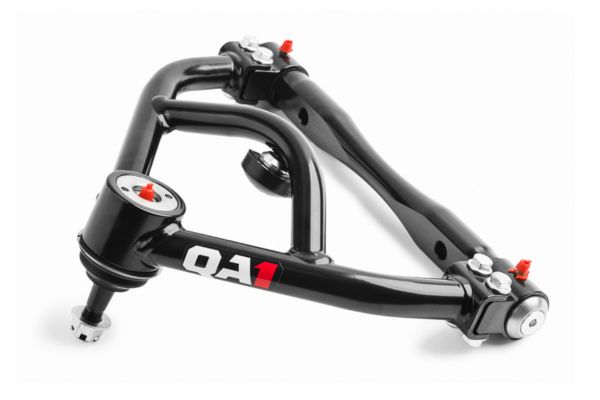
The Global Automotive Tubular Control Arms Market is a crucial segment within the automotive suspension system industry. As automakers focus on improving vehicle handling, fuel efficiency, and ride comfort, tubular control arms are gaining prominence due to their lightweight structure and superior strength-to-weight ratio.
Understanding Automotive Tubular Control Arms
Tubular control arms are key suspension components that connect the vehicle chassis to the wheel hub, allowing controlled movement of the wheels. Compared to traditional stamped or cast control arms, tubular variants offer:
- Reduced weight for improved fuel efficiency
- Enhanced strength and durability
- Better handling and stability
- Improved performance in high-load conditions
They are widely used in:
- Passenger vehicles
- Commercial vehicles
- Performance and off-road vehicles
Market Size and Growth Outlook
The global automotive tubular control arms market is experiencing strong and consistent growth:
- Valued at approximately USD 5.2 billion in 2024
- Expected to reach around USD 10.1 billion by 2034
- Growing at a CAGR of ~6.8%
Other estimates also suggest the market could exceed USD 14–22 billion by 2033, depending on material adoption and vehicle production trends
This growth is driven by the increasing demand for lightweight automotive components and advancements in suspension technologies.
Key Growth Drivers
Rising Demand for Lightweight Vehicles
Automakers are focusing on reducing vehicle weight to improve fuel efficiency and meet emission regulations. Tubular control arms, especially aluminum and composite variants, support this trend.
Expansion of Vehicle Production
Growing global demand for passenger and commercial vehicles is increasing the need for advanced suspension systems, directly boosting market growth.
Growth of Electric Vehicles (EVs)
EVs require lightweight and efficient components to maximize range and performance, making tubular control arms increasingly important.
Increasing Adoption of ADAS
Advanced Driver Assistance Systems (ADAS) demand improved vehicle stability and control, further driving innovation in suspension components.
Emerging Industry Trends
Shift Toward Advanced Materials
Manufacturers are increasingly adopting:
- Aluminum alloys
- High-strength steel
- Composite materials
Composite control arms are expected to grow at the fastest rate due to their superior strength-to-weight ratio.
Integration with Smart Suspension Systems
Tubular control arms are being designed to support modern suspension systems integrated with sensors and electronic controls.
Focus on Durability and Performance
Advanced welding techniques and manufacturing processes are improving product durability and load-bearing capacity.
Growth in Aftermarket Demand
As vehicles age, replacement demand for control arms is increasing, making the aftermarket a key growth segment.
Market Segmentation Insights
By Material
- Steel (largest segment due to cost-effectiveness)
- Aluminum (growing for lightweight benefits)
- Composite materials (fastest-growing segment)
By Application
- Passenger vehicles (dominant segment ~70%)
- Commercial vehicles (fastest-growing segment)
By Type
- Front control arms
- Rear control arms
By Sales Channel
- OEM (major share)
- Aftermarket (growing demand)
Regional Insights
- North America holds a leading share (~35%), driven by strong automotive manufacturing and demand for high-performance vehicles
- Europe follows with significant adoption due to advanced automotive engineering and emission regulations
- Asia-Pacific is the fastest-growing region, supported by expanding automotive production in countries like China and India
Market Challenges
Despite strong growth, the market faces several challenges:
- Fluctuating raw material prices
- Supply chain disruptions
- High manufacturing complexity
- Pressure to reduce costs while maintaining performance
However, continuous innovation and economies of scale are expected to mitigate these challenges.
Competitive Landscape
The market is moderately competitive, with major automotive component manufacturers focusing on innovation and partnerships. Key players include:
- Magna International
- ZF Friedrichshafen AG
- Hyundai Mobis
- Benteler International
These companies are investing in lightweight materials, advanced manufacturing, and integration with modern vehicle systems.
Future Outlook
The future of the automotive tubular control arms market is closely aligned with the evolution of vehicle design and mobility trends. As automakers continue to prioritize lightweight construction, safety, and performance, tubular control arms will remain a key component in next-generation suspension systems.
With the rise of electric vehicles, ADAS technologies, and smart suspension systems, the market is expected to witness sustained growth positioning tubular control arms as a critical element in modern automotive engineering.