
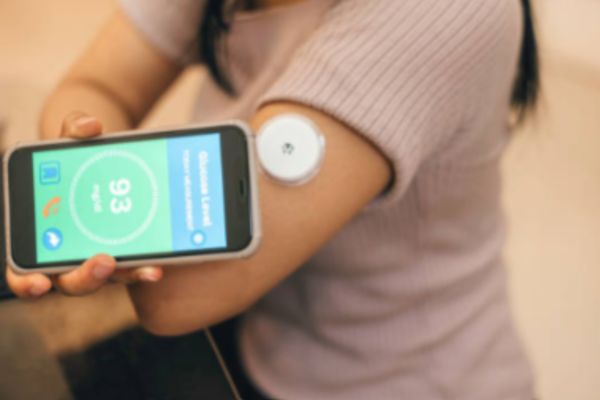
Continuous Glucose Monitors (CGMs) have transformed diabetes management by providing real-time glucose readings, reducing the need for frequent finger-stick testing. These compact, wearable devices not only improve patient quality of life but also enable clinicians to make more informed treatment decisions based on continuous and accurate data.
Behind this capability is a significant engineering challenge. Designers must create devices that operate safely and reliably within extremely tight power constraints, fit into small, body-worn form factors, and maintain high sensing accuracy under a range of conditions. Every component—across analog, digital, power management, and protection—plays a role in ensuring long-term performance and user comfort.

This article explores how carefully selected sensing, protection, and activation components—including miniature magnetic switches and thermistors—support the development of CGMs that meet demanding performance, safety, and regulatory requirements.
The Role of CGMs in Connected Healthcare
CGMs play a key role in modern diabetes care. They monitor glucose levels in interstitial fluid using a sensor placed beneath the skin, with data transmitted wirelessly to a smartphone, insulin pump, or cloud-based management system.
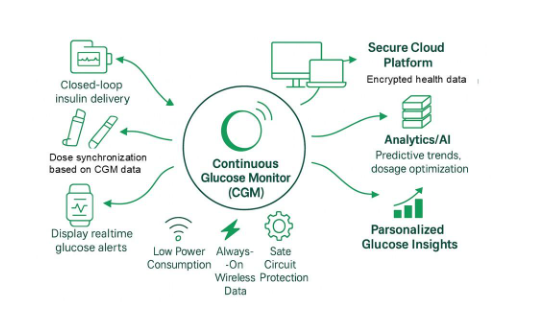
Figure 1. Example of a connected drug delivery system
The benefits of CGMs are well documented, including reduced glycemic variability, improved HbA1c levels, and fewer hypoglycemic events. As the technology continues to evolve, their use has expanded beyond Type 1 diabetes to include patients with Type 2 diabetes, gestational diabetes, and even pre-diabetic conditions. This broader adoption highlights their growing role in both preventive healthcare and long-term disease management.
From an engineering standpoint, CGMs reflect the wider shift toward connected, continuously operating healthcare systems, where safety, data integrity, and energy efficiency must all be carefully balanced.
System Architecture and Design Constraints
A typical CGM system comprises the following elements:
- Glucose sensor and analog front end (AFE): Amplifies and conditions microvolt-level signals generated by the biosensor.
- Microcontroller (MCU): Processes data, executes algorithms, and manages wireless communication via Bluetooth Low Energy or proprietary protocols.
- Power management circuitry: Regulates energy supplied by a small rechargeable or disposable battery.
- Wireless interface: Transmits readings to companion devices or cloud-based platforms.
- Temperature sensing, protection, and activation circuits: Support safe operation and enable user interaction.
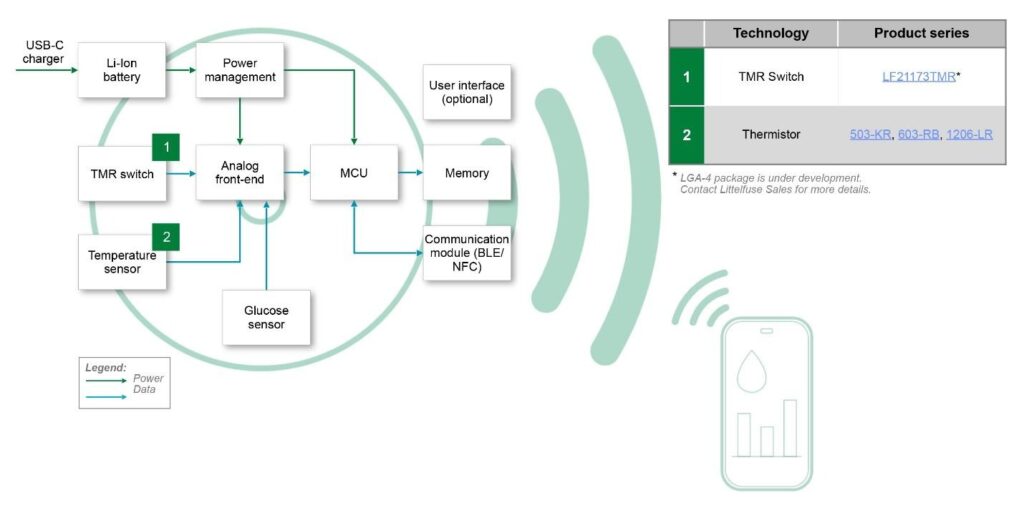
Figure 2. Simplified block diagram of a CGM system
These modules are required to operate continuously for seven to fourteen days on a single charge, while being exposed to movement, perspiration, temperature variation, and electrostatic discharge (ESD). Factors such as component size, thermal performance, and power efficiency all directly influence patient comfort and overall device usability.
Engineering Challenges in CGM Design
Designing CGMs involves several key challenges:
- Ultra-low power consumption. Even small amounts of leakage current can significantly impact battery life, so components must exhibit extremely low quiescent current.
- Miniaturization. Patch-based and implantable CGMs offer only limited PCB space, requiring compact, high-performance components.
- Electrical safety and isolation. Any circuit fault must be quickly contained to protect both the patient and the integrity of the device.
- Environmental robustness. Devices must withstand exposure to sweat, vibration, and humidity to ensure reliable operation throughout the wear period.
- Regulatory compliance. Designs must meet standards such as IEC 60601, ISO 13485, and 21 CFR 820, covering safety, quality, and EMC performance.
Addressing these challenges requires careful component selection combined with a system-level design approach.
Magnetic Activation for Sealed, Contactless Operation
Power-on and reset functionality are essential in wearable devices. Traditional mechanical push buttons can introduce contamination risks, are subject to wear, and complicate sealing for waterproof designs. In addition, activation circuits must minimise energy consumption during storage to ensure reliable device operation even after extended shelf life, such as 24 months.
Magnetic activation offers a contactless alternative, improving durability and maintaining device hygiene.
Three types of magnetic switching technologies are commonly used reed relays, Hall-effect sensors, and tunnel magnetoresistance (TMR) switches. Each option involves trade-offs in terms of power consumption, sensitivity, and physical size.
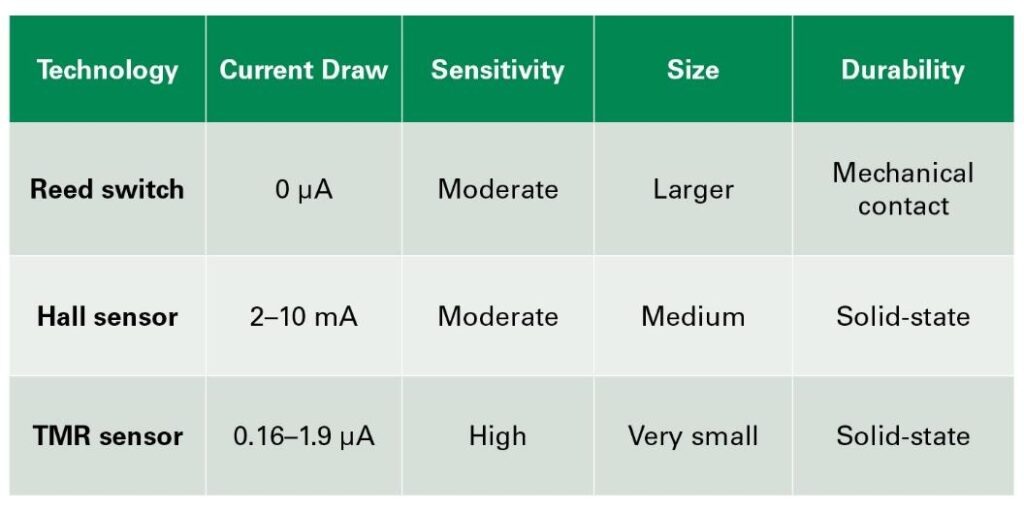
Table 1. Comparison of sensing technologies
TMR sensors provide an effective balance of performance for CGM applications, combining nanoamp-to-microamp power consumption, compact LGA packaging, and omnipolar detection that allows greater flexibility in magnet placement.
For instance, Littelfuse TMR magnetic switches are capable of detecting magnetic flux changes as low as 9 Gauss while operating at just 160 nA in low-speed mode. Their contactless design supports functions such as automatic power-on when the device is placed on the skin or activation during packaging removal. With no mechanical parts, TMR switches are resistant to vibration and moisture, offering operational lifetimes of tens of billions of switching cycles.
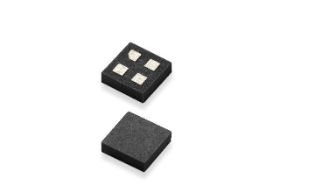
Figure 3. TMR magnetic switches enable contactless activation through a sealed enclosure (example: TMR LGA4 Switch LF21173TMR courtesy Littelfuse, Inc.)
By removing mechanical interfaces, designers can reduce the risk of mechanical failure, improve sealing performance, and extend battery life—all of which are essential for patient-worn devices.
Thermal Monitoring and Patient Safety
Temperature sensing serves several important functions in CGM design:
- Electronic safety monitoring: Identifies abnormal temperature increases caused by circuit faults or battery issues.
- Patient protection: Helps prevent surface temperatures that could cause discomfort or skin irritation.
- Sensor compensation: Accounts for temperature-dependent enzymatic reactions that affect glucose measurements.
Compact NTC thermistors, such as the Littelfuse 0803-KR, 0603-RB, and 1206-LR series, provide ±5% accuracy in packages as small as 1.6 × 0.8 × 1.0 mm. In many designs, multiple thermistors are used—typically one positioned near the biosensor for compensation purposes, and another located close to the power source for safety monitoring.
Accurate temperature feedback not only supports user safety but also improves measurement precision, contributing directly to overall clinical reliability. While the number and placement of sensors depend on the CGM architecture, designers generally differentiate between temperature sensing for safety monitoring and for measurement compensation.
Integrating Protection and Sensing for Reliable Operation
A well-designed CGM integrates protection, sensing, and activation functions into a unified system. This approach provides several advantages:
- Extended battery life through the use of ultra-low leakage sensing and protection components
- Improved mechanical reliability by removing moving parts and exposed contacts
- Simplified certification when using pre-qualified components that meet medical standards
- Greater user confidence through consistent and reliable performance
With these elements in place, engineers can focus more on refining algorithms, connectivity, and user experience, rather than addressing hardware-related issues.
Regulatory and Compliance Considerations
All CGM systems must comply with stringent international standards to ensure safety and performance. The following are among the most relevant for electronic subsystems:
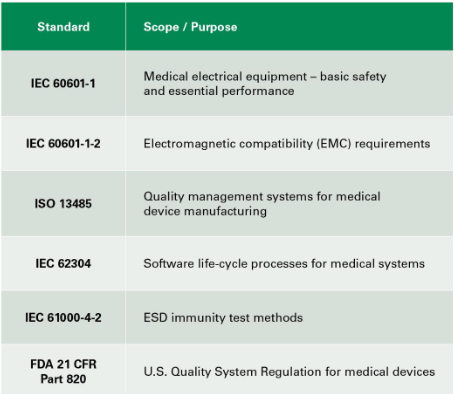
Table 2. International standards applicable to CGM compliance
Selecting electronic components that already include documentation aligned with these standards can help simplify risk management processes and support faster regulatory approval.
`Future Trends in CGM and Wearable Design
As wearable healthcare technologies continue to evolve, designers are increasingly focused on reducing device size, extending operational lifetime, integrating multiple sensors, and enabling cloud-connected data analysis. Each of these developments places additional demands on power efficiency and electrical safety.
Key trends include:
- Integration of multi-parameter sensing, combining measurements such as glucose, lactate, temperature, and hydration
- Adoption of energy harvesting or inductive charging methods to extend device lifetime
- Advanced protection monitoring, including built-in diagnostics for ESD performance or fuse condition
- Development of flexible, biocompatible electronics to enhance comfort for the wearer
Component suppliers that provide medically oriented design support, along with validated protection solutions, will be increasingly important in enabling these advancements.
Conclusion
Continuous Glucose Monitors illustrate the convergence of biomedical science and advanced electronics. Delivering reliable, always-on performance in a body-worn format requires careful management of power, protection, and sensing functions throughout the design.
By combining TMR magnetic switches for contactless activation, NTC thermistors for both safety and compensation, low-leakage ESD/TVS diodes for transient protection, and compact medical-grade fuses for fault isolation, engineers can meet the stringent safety and performance requirements of modern medical devices.
The result is a new generation of CGMs that are smaller, more reliable, and longer-lasting—helping patients benefit from accurate, connected monitoring while enabling clinicians to provide more responsive, data-driven care.