Market Summary
As per latest research by Growth Market Reports, the BMS Microcontroller market size stood at USD 1.67 billion in 2024, reflecting robust adoption across diverse industries. The market is projected to expand at a CAGR of 12.4% from 2025 to 2033, reaching a forecasted value of USD 4.75 billion by 2033. This remarkable growth is primarily driven by the increasing integration of advanced battery management systems in electric vehicles, renewable energy storage, and smart consumer electronics, underscoring the critical role of microcontrollers in enabling efficient and safe battery operations.
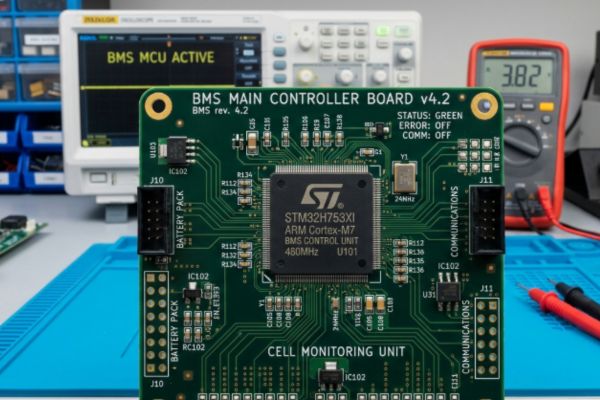
The BMS Microcontroller Market is experiencing strong expansion as industries increasingly adopt advanced battery technologies. This growth is closely tied to the global shift toward electrification and intelligent energy control systems. Battery Management System (BMS) microcontrollers act as the brain of battery packs, ensuring safety, efficiency, and performance optimization. These microcontrollers monitor parameters such as voltage, current, temperature, and state of charge. By enabling real-time decision-making, they prevent overcharging, deep discharge, and thermal runaway. As battery applications become more complex, the demand for high-precision and energy-efficient microcontrollers continues to rise.
Key Market Drivers
One of the primary growth drivers is the rapid adoption of electric vehicles (EVs). Governments worldwide are promoting EV usage through subsidies and strict emission regulations, which directly boosts demand for advanced BMS solutions. Additionally, the expansion of renewable energy storage systems, particularly solar and wind, is increasing reliance on battery storage infrastructure, further supporting market growth.
Another important factor is the increasing demand for consumer electronics such as smartphones, laptops, and wearables. These devices require compact, efficient, and safe battery systems, making BMS microcontrollers essential for performance optimization and product reliability.
Challenges and Constraints
Despite strong growth, the market faces challenges such as high development costs and complex system integration. Ensuring battery safety in high-energy applications remains a critical concern. Additionally, supply chain disruptions in semiconductor manufacturing can impact production timelines and pricing stability.
Technological Advancements
Continuous innovation in semiconductor technology is significantly enhancing the capabilities of BMS microcontrollers. Modern designs now feature higher processing speeds, lower power consumption, and integrated communication protocols. Artificial intelligence and machine learning are also being incorporated to improve predictive battery analytics and extend battery life. These advancements are making BMS systems more intelligent and autonomous.
Competitive Landscape
- Texas Instruments
- NXP Semiconductors
- STMicroelectronics
- Infineon Technologies
- Renesas Electronics
- Analog Devices
- Microchip Technology
- ON Semiconductor
- ROHM Semiconductor
- Toshiba Corporation
Future Outlook
The future of the BMS microcontroller market is closely linked with the global energy transition. As battery-dependent technologies expand, the need for smarter, more efficient microcontrollers will intensify. Continued innovation in semiconductor design and increasing adoption of renewable energy systems are expected to sustain strong market momentum through 2033.
Source: https://growthmarketreports.com/report/bms-microcontroller-market