
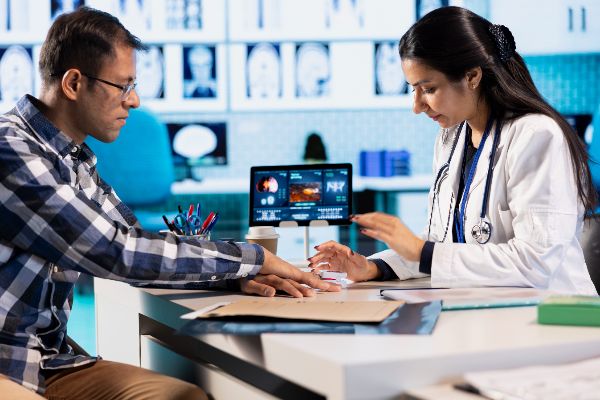
Walk into any modern hospital be it in Bengaluru, Gurugram, or Pune and you’ll notice technology is shaping modern healthcare. Gone are the days of doctors jotting notes on paper or nurses relying solely on manual charts. Instead, sensors, wearables, and connected monitors quietly hum in the background, collecting patient data in real-time. This is the Internet of Medical Things (IoMT) at work building a new ecosystem where healthcare meets intelligent connectivity.
Walk into any modern hospital today be it in Bengaluru, Gurugram, or Pune and you’ll notice technology is shaping modern healthcare. Gone are the days of doctors jotting notes on paper or nurses relying solely on manual charts. Instead, sensors, wearables, and connected monitors quietly hum in the background, collecting patient data in real-time. This is the Internet of Medical Things (IoMT) at work building a new ecosystem where healthcare meets intelligent connectivity.

India’s healthcare sector, long known for its scale and resilience, is now standing on the brink of a digital transformation powered by IoT. As the country races ahead in areas like telemedicine, digital diagnostics, and remote patient care, IoMT is fast becoming the bedrock of smarter, more personalized healthcare delivery.
What Exactly is IoMT?
At its core, the Internet of Medical Things refers to a network of medical devices and applications that communicate through the internet. These range from simple wearables like fitness trackers and glucose monitors to advanced hospital equipment like connected infusion pumps, imaging systems, and AI-powered diagnostic platforms.
Each connected device continuously collects, analyzes, and shares health data with physicians, caregivers, or cloud-based analytics engines. The result is faster diagnosis, remote treatment, and data-driven insights into patient health trends all while reducing human error.
For instance, a smart ECG device used in rural India can send patient data directly to a cardiologist in a Delhi hospital, enabling diagnosis without a physical visit. This is not a distant dream but an everyday reality now, driven by India’s growing digital infrastructure and rising healthtech innovation.
The Growing IoMT Landscape in India
India’s healthcare sector is undergoing a tectonic shift. Government initiatives like Ayushman Bharat Digital Mission (ABDM) are encouraging digital health adoption, while private sector startups are leveraging IoMT to develop scalable and affordable solutions.
According to NASSCOM, India’s digital health market is projected to reach $37 billion by 2030, with IoT-enabled devices expected to claim a significant share of that growth. The pandemic acted as a major catalyst, pushing hospitals and diagnostic chains to integrate connected monitoring and remote care solutions almost overnight.
A few noteworthy trends shaping the Indian IoMT ecosystem include:
- Remote patient monitoring (RPM): Home-based medical devices now allow continuous tracking of vitals such as heart rate, oxygen levels, and glucose levels, empowering doctors to intervene earlier.
- Telehealth and virtual care: IoT enables seamless integration of devices into teleconsultation workflows, improving diagnosis accuracy and reducing patient load in hospitals.
- Wearables for wellness and prevention: With rising awareness around fitness, devices like smartwatches and connected health bands are helping Indians monitor lifestyle diseases like diabetes and hypertension.
- Smart hospitals: Modern super-specialty facilities are using IoMT to automate everything from temperature-controlled drug storage to surgical room sterilization and patient flow management.
From Data to Decisions: The Analytics Advantage
The biggest advantage of IoMT lies not just in collecting health data but in what happens afterward the analysis. Data generated from thousands of connected devices can reveal trends invisible to the naked eye. With advanced AI and machine learning algorithms, healthcare providers can predict patient deterioration, identify treatment gaps, and make data-backed clinical decisions.
Imagine a cloud-based platform analyzing millions of blood sugar readings across India. Such data can help policymakers trace diabetes hotspots, plan public health interventions, and even forecast medicine demand. This kind of insight is invaluable in a country like India, where healthcare accessibility and affordability vary widely across urban and rural settings.
However, the challenge remains in managing this flood of data securely. With patient privacy under the spotlight, India’s evolving Data Protection Act and digital health regulations will play a key role in shaping how IoMT technology is deployed responsibly.
The Tech That Makes It Possible
Behind the buzzword, IoMT combines several modern technologies that are transforming medical operations:
- 5G Connectivity: Ultra-low latency networks are set to make real-time remote surgeries, tele-ICU monitoring, and mobile diagnostics a practical reality in India.
- Edge Computing: By processing data closer to the devices, edge systems reduce latency and dependence on cloud infrastructure crucial for time-sensitive health monitoring.
- Artificial Intelligence (AI): AI-driven analytics help filter meaningful patterns from the data deluge, assisting in predictive healthcare and early disease detection.
- Blockchain Security: Ensures data integrity and transparency, building trust among patients and practitioners in shared data ecosystems.
Together, these technologies are advancing India’s healthcare from reactive to proactive—from responding to illness to predicting it.
Challenges on the Road Ahead
Despite its promise, IoMT adoption in India isn’t without hurdles. Connectivity remains inconsistent in remote areas, affecting data transmission and device performance. Similarly, interoperability issues arise when devices from different manufacturers fail to communicate seamlessly.
Cybersecurity is another pressing concern. As more devices connect to the cloud, the potential for data breaches and ransomware attacks increases. Ensuring end-to-end encryption, secure firmware, and compliant data storage is now a necessity, not a choice.
Then there’s the matter of cost. While global brands introduce connected health devices, affordability remains key for large-scale adoption in India. Domestic manufacturing backed by initiatives like Make in India—is stepping in to close this gap, making locally produced, IoT-enabled devices more accessible to hospitals and clinics nationwide.
The Indian Startup Story
India’s vibrant startup landscape is playing a pivotal role in democratizing IoMT technologies. Companies like Dozee, HealthPlix, and Tricog Health have developed innovative, affordable platforms that integrate IoT hardware with cloud-based analytics.
Dozee, for instance, converts any hospital bed into a smart monitoring system using a simple sensor sheet. Tricog connects heart patients from rural clinics to cardiologists in urban centers via AI-supported cloud ECGs. Meanwhile, HealthPlix empowers doctors with real-time patient records and teleconsultation tools.
These homegrown efforts demonstrate that IoMT innovation doesn’t always require billion-dollar budgets it needs practical thinking tailored to India’s healthcare realities.
Government and Industry Push
The Indian government’s push towards digital health has added momentum to the IoMT wave. The National Digital Health Mission (NDHM) aims to standardize the way health data is stored and exchanged, creating an interoperable framework where IoMT devices can easily plug in.
Public-private partnerships are driving innovation, while policy think tanks like NITI Aayog are collaborating with industry leaders to set protocols for AI and IoT in healthcare. The expanding network of 5G corridors across Indian cities is only amplifying this transformation, allowing IoMT devices to operate with unprecedented reliability and speed.
The Human Impact
Beyond technology and infrastructure, the real impact of IoMT is human. It’s the elderly patient in a Tier-2 city who can now have her heart rate monitored around the clock without frequent hospital visits. It’s the diabetic youth who receives personalized medication alerts through a mobile app.
It’s the doctor who can access years of patient data in seconds and make better-informed decisions.
These stories reflect how IoMT is making healthcare more patient-centric, equitable, and predictive qualities that India urgently needs as it navigates the demands of a vast and diverse population.
Looking Forward: The Connected Care Era
The next phase of India’s healthcare journey will be defined by connectivity and collaboration. IoMT will evolve beyond individual devices into holistic ecosystems where patients, providers, insurers, and policymakers are all part of one data-driven network. Hospitals will function more like intelligent command centers, and home care will become a natural extension of clinical care.
As the lines blur between traditional hospitals and digital platforms, India’s vision of universal healthcare gets closer to reality. With affordable connected devices, robust data infrastructure, and proactive policy support, the IoMT revolution is here not in the distant future, but now.