
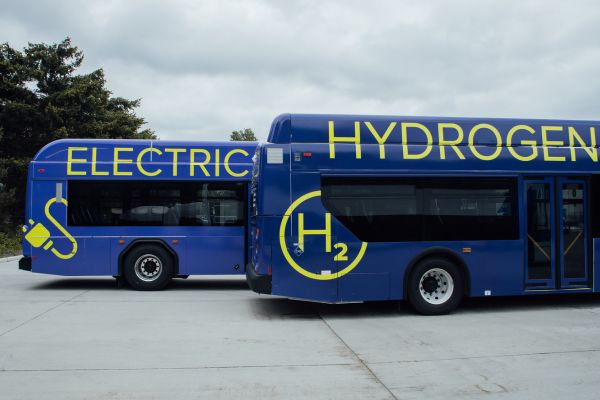
According to Cervicorn Consulting, the global hydrogen buses market size reached at USD 2.51 billion in 2025 and is projected to hit approximately USD 67.42 billion by 2035, expanding at a CAGR of 39% from 2026 to 2035. The market is experiencing rapid growth due to increasing investments in zero-emission public transportation, rising government support for hydrogen mobility infrastructure, and growing concerns regarding urban air pollution and greenhouse gas emissions. Hydrogen-powered buses are gaining significant traction as a sustainable alternative to diesel buses, particularly for long-distance and heavy-duty transit applications where battery-electric buses face operational limitations.
Hydrogen buses utilize fuel cells or hydrogen combustion systems to generate clean energy for propulsion, producing minimal or zero tailpipe emissions. The growing adoption of green hydrogen production technologies, coupled with advancements in fuel cell efficiency, is accelerating the commercialization of hydrogen-powered public transit systems worldwide. Governments across Asia-Pacific, Europe, and North America are actively promoting hydrogen-based transportation through subsidies, pilot programs, and long-term decarbonization policies. Public transit agencies are increasingly replacing conventional diesel fleets with hydrogen fuel cell buses to meet sustainability targets and improve urban air quality.
Market Highlights
- Asia-Pacific dominated the hydrogen buses market with a revenue share of approximately 70.5% in 2025 due to strong government investments and large-scale deployment programs in China, South Korea, and Japan.
- By fuel type, the green hydrogen segment accounted for around 58% revenue share in 2025 owing to increasing renewable energy integration and global net-zero emission initiatives.
- By bus type, single-decker hydrogen buses held the largest market share of 36.9% in 2025 because of their widespread usage in urban transit networks.
- By propulsion type, hydrogen internal combustion engine (ICE) buses captured 59.5% share in 2025 due to lower implementation costs and compatibility with existing vehicle platforms.
- By application, the public transportation segment generated 42.7% of market revenue in 2025 supported by government fleet electrification programs.
- Proton Exchange Membrane Fuel Cell (PEMFC) technology dominated the market with 47.4% revenue share in 2025 because of its compact size, high efficiency, and fast-start capabilities.
Market Drivers
Rising Government Support for Zero-Emission Public Transport
Governments across the globe are implementing aggressive decarbonization policies to reduce emissions from transportation sectors. Hydrogen buses are increasingly being adopted as part of national clean mobility strategies due to their zero-emission operation and ability to support long-range transit applications. Financial incentives, subsidies, and public-private partnerships are significantly accelerating market expansion. Several countries including China, Germany, Japan, South Korea, and the United States are investing heavily in hydrogen infrastructure and hydrogen-powered transit fleets.
Increasing Development of Green Hydrogen Infrastructure
The growing availability of renewable hydrogen produced from solar and wind energy sources is strengthening the hydrogen mobility ecosystem. Investments in hydrogen refueling stations, electrolyzers, and integrated hydrogen hubs are improving fuel accessibility and reducing operational barriers for transit agencies. Large-scale renewable hydrogen projects in Europe, North America, and Asia-Pacific are supporting the commercialization of hydrogen buses.
Growing Demand for Long-Range and Heavy-Duty Transit Solutions
Hydrogen buses offer advantages such as extended driving range, shorter refueling time, and higher operational efficiency compared to battery-electric buses for heavy-duty transportation. These benefits make hydrogen-powered buses highly suitable for intercity transportation, airport shuttles, tourism services, and long-distance public transit operations. As cities seek scalable zero-emission transportation solutions, hydrogen buses are becoming increasingly attractive for fleet operators.
Market Restraints
High Initial Vehicle and Infrastructure Costs
Despite strong growth potential, the hydrogen buses market faces challenges associated with high capital investment requirements. Hydrogen buses remain more expensive than conventional diesel and battery-electric buses due to costly fuel cell systems, hydrogen storage tanks, and limited production volumes. In addition, establishing hydrogen refueling infrastructure requires substantial investment, which can slow deployment in developing economies.
Limited Hydrogen Refueling Infrastructure
The lack of widespread hydrogen production and refueling networks remains a major barrier to market adoption. Many countries are still in the early stages of developing hydrogen ecosystems, limiting operational scalability for hydrogen bus fleets. Infrastructure gaps increase operational complexity and restrict deployment beyond pilot projects in certain regions.
Market Opportunities
Expansion of Hydrogen Transit Fleets in Emerging Economies
Emerging economies are increasingly investing in clean public transportation systems to address urban pollution and reduce fossil fuel dependence. Countries such as India, Brazil, and several Southeast Asian nations are exploring hydrogen-powered transit projects under national clean energy programs. India’s National Hydrogen Mission and pilot hydrogen bus projects are expected to create substantial future opportunities for manufacturers and infrastructure providers.
Strategic Partnerships Between OEMs and Energy Companies
Leading automotive manufacturers are collaborating with hydrogen fuel suppliers and infrastructure developers to establish integrated hydrogen ecosystems. Partnerships involving companies such as Toyota, Hyundai, Ballard Power Systems, Shell, and Air Liquide are accelerating commercialization and improving supply chain efficiency for hydrogen transportation solutions.
Hydrogen Buses Market Segmental Analysis
By Fuel Type
- Green Hydrogen
- Blue Hydrogen
- Grey Hydrogen
The green hydrogen segment dominated the market in 2025 due to increasing global focus on renewable energy integration and sustainable transportation solutions. Green hydrogen is produced using renewable electricity through electrolysis and supports long-term carbon neutrality objectives.
By Bus Type
- Single-Decker Hydrogen Buses
- Double-Decker Hydrogen Buses
- Fuel Cell Hybrid Buses
- Battery Electric Hydrogen Buses
Single-decker hydrogen buses accounted for the largest revenue share because they are widely utilized in urban transit operations due to their flexibility, lower operational costs, and high fuel efficiency.
By Propulsion Type
- Internal Combustion Engine (ICE)
- Fuel Cell Electric Vehicle (FCEV)
The ICE segment held the largest market share in 2025 owing to its compatibility with existing vehicle systems and lower initial implementation costs. However, fuel cell electric buses are expected to witness faster growth due to superior efficiency and zero-emission performance.
By Application
- Public Transportation
- Private Transportation
- School Transportation
- Tourism and Airport Transportation
Public transportation emerged as the leading application segment due to increasing adoption of hydrogen-powered transit fleets by municipal authorities and urban transit agencies worldwide.
By Technology
- Proton Exchange Membrane Fuel Cell (PEMFC)
- Solid Oxide Fuel Cell (SOFC)
- Alkaline Fuel Cell (AFC)
- Others
PEMFC technology dominated the market because of its compact structure, fast startup capability, and suitability for urban transportation systems.
Regional Analysis
- Asia-Pacific: Asia-Pacific dominated the global hydrogen buses market owing to large-scale hydrogen bus deployments in China, Japan, and South Korea. Strong government initiatives, robust manufacturing capabilities, and significant investments in hydrogen infrastructure continue to strengthen regional market growth. China remains the global leader in hydrogen bus fleet deployment.
- Europe: Europe is witnessing rapid growth due to stringent emission regulations and large-scale investments in sustainable public transportation. Countries such as Germany, the United Kingdom, and the Netherlands are actively expanding hydrogen-powered transit fleets and refueling infrastructure.
- North America: North America is experiencing increasing adoption of hydrogen buses supported by federal clean energy initiatives and rising investments in hydrogen production facilities. The United States and Canada are investing in hydrogen-powered transit pilot projects and long-range public transportation solutions.
Competitive Landscape
The hydrogen buses market is highly competitive with major automotive manufacturers, fuel cell technology providers, and hydrogen infrastructure companies focusing on technological innovation and strategic collaborations. Key market players are expanding production capacity, investing in advanced fuel cell systems, and forming partnerships to strengthen global market presence.
Key Companies
- Hyundai Motor Company
- Toyota Motor Corporation
- Ballard Power Systems
- Daimler Truck AG
- Wrightbus
- Van Hool
- Cummins
- Plug Power
- Air Liquide
- Shell