The New Era of Flexible Factory Automation
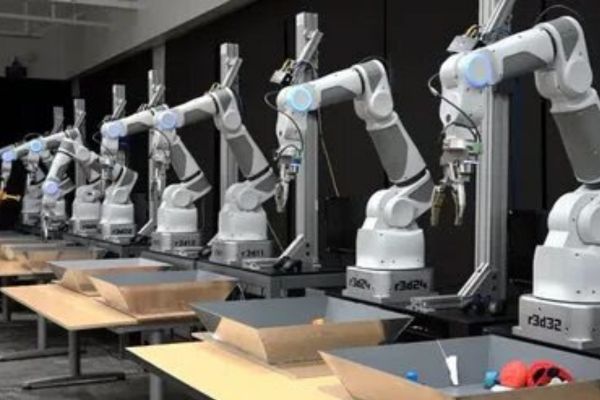
Industrial automation is moving far beyond fixed machines and repetitive production systems., manufacturers need speed, flexibility, accuracy, and scalability at the same time. This shift has placed articulated robots at the center of modern factory transformation. With multiple rotary joints, high movement flexibility, and the ability to perform complex tasks, articulated robots are helping industries automate operations that once required intensive manual labor or rigid machinery.
The Articulated Robot Market is gaining strong attention as companies across automotive, electronics, metal fabrication, food processing, pharmaceuticals, logistics, and packaging industries adopt robotic systems to improve productivity. Unlike traditional automation equipment, articulated robots can mimic the movement of a human arm, allowing them to perform welding, assembly, painting, material handling, machine tending, inspection, and packaging with high precision. This versatility is one of the key reasons they are becoming a preferred automation solution in smart factories.
Why Articulated Robots Are Becoming Essential in Smart Manufacturing
Smart manufacturing depends on connected machines, real-time data, automation software, sensors, and intelligent robotic systems. Articulated robots fit naturally into this environment because they can be integrated with vision systems, artificial intelligence, machine learning, and industrial Internet of Things platforms. These technologies allow robots to identify objects, adjust movements, detect errors, and work with higher levels of autonomy.
Manufacturers are increasingly under pressure to produce customized products in smaller batches without compromising speed or quality. Articulated robots support this need by enabling quick reprogramming and flexible deployment across multiple production tasks. A robot used for assembly in one shift can be adapted for packaging or inspection in another, depending on the production requirement. This level of flexibility helps companies reduce downtime and respond faster to changing customer demand.
Persistence Market Research highlights that automation-driven industries are increasingly focusing on robotic systems that can improve operational efficiency while reducing dependency on repetitive manual processes. This trend is strengthening the role of articulated robots in industrial transformation.
Improving Productivity Through Speed and Precision
One of the biggest advantages of articulated robots is their ability to perform repetitive tasks with consistent speed and accuracy. In industries such as automotive manufacturing, even small errors can lead to costly defects, safety risks, and production delays. Articulated robots help reduce these risks by maintaining repeatable precision across thousands of production cycles.
In welding applications, for example, articulated robots deliver uniform weld quality, reduce material waste, and improve production speed. In electronics manufacturing, they can handle delicate components with controlled movements that minimize damage. In packaging lines, they can pick, place, sort, and palletize products faster than manual workers while maintaining consistency.
This productivity improvement does not only come from faster task execution. It also comes from reduced downtime, fewer errors, lower rework costs, and improved process control. As industries seek leaner operations, articulated robots are becoming a practical investment for long-term efficiency.
Reducing Labor Challenges and Enhancing Workplace Safety
Many manufacturing sectors face labor shortages, rising wage pressures, and difficulty retaining workers for repetitive or physically demanding jobs. Articulated robots help address these challenges by taking over tasks that are dull, dirty, dangerous, or highly repetitive. This allows human workers to move into roles that require supervision, programming, quality control, maintenance, and decision-making.
Workplace safety is another major factor driving adoption. In factories, workers may be exposed to heat, fumes, sharp materials, heavy loads, toxic substances, or high-speed machinery. Articulated robots can operate in these hazardous environments, reducing the risk of injuries and improving overall safety standards. For example, robots used in painting and coating applications can limit human exposure to chemicals, while robots in material handling can reduce strain-related injuries caused by lifting heavy components.
Rather than replacing human value, these robots are reshaping the workforce by supporting human-machine collaboration. As factories become more automated, workers are increasingly trained to manage robotic cells, analyze production data, and optimize automated workflows.
Driving Quality Control and Consistent Output
Quality has become a major competitive factor in global manufacturing. Customers expect reliable products, faster delivery, and lower defect rates. Articulated robots support quality improvement by performing tasks with high repeatability and controlled movement. Their ability to follow programmed paths precisely helps reduce variation in production processes.
When combined with machine vision and sensors, articulated robots can also support automated inspection. They can detect surface defects, measure components, verify assembly accuracy, and identify missing parts. This helps manufacturers catch problems earlier in the production cycle, reducing waste and improving final product quality.
In industries such as medical devices, electronics, and automotive components, consistent quality is especially important because product failures can have serious consequences. Robotic automation helps maintain compliance with strict quality standards while improving production efficiency.
Supporting Industry 4.0 and Connected Production Lines
Industry 4.0 is built on the idea of intelligent, connected, and data-driven manufacturing. Articulated robots are no longer isolated machines performing fixed tasks. They are increasingly connected to factory networks, enterprise systems, cloud platforms, and digital monitoring tools. This connectivity allows manufacturers to collect performance data, monitor robot health, predict maintenance needs, and optimize production schedules.
Predictive maintenance is one of the most valuable benefits of connected robotics. Instead of waiting for a robot to fail, manufacturers can use data from motors, joints, sensors, and controllers to identify early signs of wear. This helps reduce unexpected downtime and extend equipment life.
The Articulated Robot Market is also benefiting from advances in software that make robot programming easier. Modern interfaces, simulation tools, and offline programming platforms allow manufacturers to test robotic movements virtually before applying them on the factory floor. This reduces setup time and makes automation more accessible to companies with limited robotics expertise.
Expanding Use Across Multiple Industries
While automotive manufacturing has traditionally been one of the largest users of articulated robots, adoption is now expanding across many other sectors. Electronics companies use them for assembly, soldering, testing, and component handling. Food and beverage manufacturers use them for packaging, sorting, and palletizing. Pharmaceutical companies use them for laboratory automation, sterile handling, and packaging operations.
Metal and machinery industries rely on articulated robots for welding, cutting, grinding, polishing, and machine tending. Warehousing and logistics operations are also adopting robotic arms for picking, sorting, and loading tasks. This broad application base is helping articulated robots move from specialized industrial environments into mainstream manufacturing and supply chain operations.
Small and medium-sized manufacturers are also beginning to adopt articulated robots as costs become more manageable and programming becomes easier. The availability of compact robots, modular systems, and flexible financing models is making automation more accessible to businesses that previously considered robotics too expensive or complex.
Cost Efficiency and Long-Term Business Value
Although robotic automation requires upfront investment, articulated robots can deliver strong long-term value. They help reduce labor costs, improve production speed, minimize waste, lower defect rates, and increase equipment utilization. For manufacturers operating in competitive markets, these benefits can improve margins and support business growth.
Robots can also operate continuously with minimal breaks, making them useful for high-volume production environments. When production demand increases, robotic systems can help companies scale output without proportionally increasing labor requirements. This scalability is especially valuable in industries where demand fluctuates or where speed-to-market is critical.
According to Persistence Market Research, the growing focus on operational efficiency, digital manufacturing, and advanced automation is expected to continue supporting demand for robotic technologies across industrial sectors. As companies prioritize productivity and resilience, articulated robots are becoming a strategic part of automation planning.
The Future of Industrial Automation with Articulated Robots
The future of articulated robots will be shaped by smarter software, better sensors, improved safety systems, and stronger integration with artificial intelligence. Robots will become easier to program, more adaptable, and more capable of working alongside humans. Collaborative features, real-time monitoring, and advanced motion control will further expand their use across industries.
The Articulated Robot Market will continue to play an important role in transforming industrial automation by enabling factories to become more flexible, productive, and data-driven. As manufacturers face rising competition, labor challenges, quality demands, and supply chain pressure, articulated robots offer a practical path toward smarter and more resilient production systems.
In the coming years, industrial automation will not only be about replacing manual tasks. It will be about building intelligent production environments where humans, robots, software, and data work together. Articulated robots are already helping industries move toward that future, making them one of the most important technologies in the evolution of modern manufacturing.