


The global automotive industry is entering a transformative phase, and transmission systems are emerging as one of the key technologies driving this evolution. As automakers focus on improving fuel efficiency, reducing emissions, and enhancing driving performance, advanced transmission technologies are becoming essential components of next-generation vehicles.
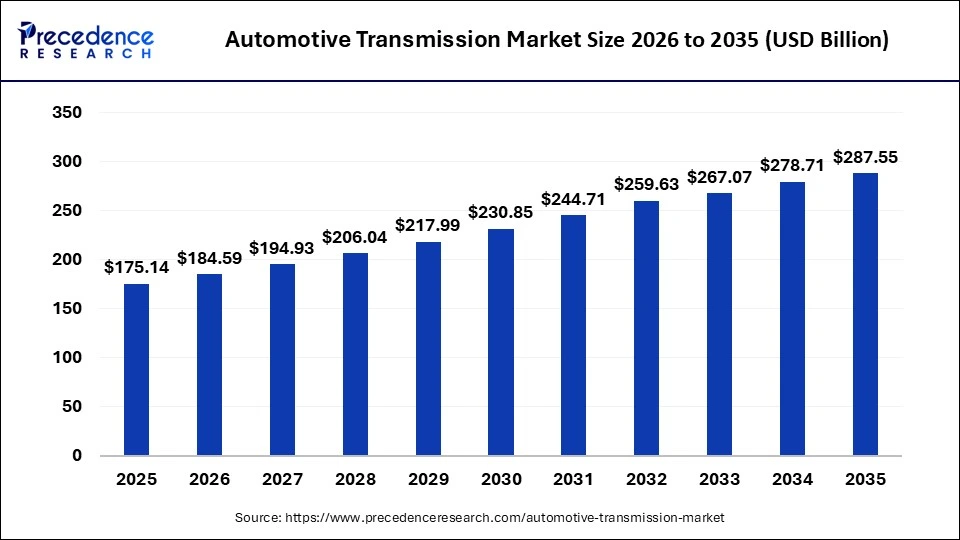
According to Precedence Research, the global automotive transmission market size stood at USD 175.14 billion in 2025 and is projected to be worth around USD 287.55 billion by 2035, expanding at a CAGR of 5.08% between 2026 and 2035. Rising demand for fuel-efficient vehicles, increasing vehicle production, and rapid electrification are expected to fuel long-term market growth.

The Backbone of Modern Vehicle Performance
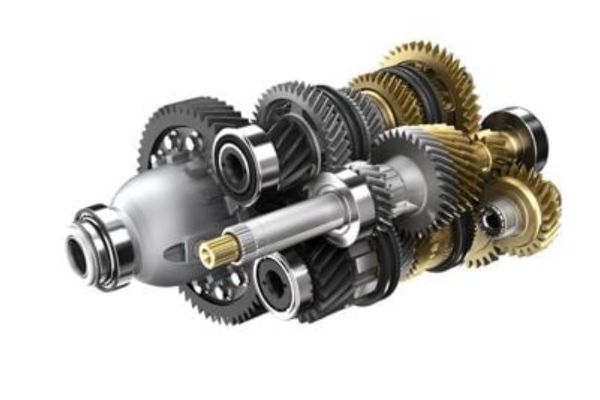
An automotive transmission is responsible for transferring engine power to the wheels while controlling speed and torque. Whether manual, automatic, continuously variable (CVT), or dual-clutch (DCT), transmission systems play a critical role in delivering smooth acceleration, improved fuel economy, and enhanced driving comfort.
Today’s transmission technologies are far more sophisticated than traditional systems. Modern designs incorporate lightweight materials, intelligent electronics, and software-driven controls that optimize vehicle performance while meeting increasingly stringent environmental regulations.
Artificial Intelligence is Transforming Transmission Systems
Artificial Intelligence is reshaping how modern vehicles operate, and transmission technology is one of its biggest beneficiaries.
AI-powered transmission systems can continuously analyze driving behavior, traffic conditions, terrain, and vehicle load to determine the most efficient gear selection in real time. These intelligent systems improve fuel economy, enhance acceleration, minimize component wear, and deliver a smoother driving experience.
Beyond transmission optimization, AI also supports advanced driver assistance systems (ADAS), predictive maintenance, real-time traffic management, and hazard detection. Together, these technologies are making vehicles safer, smarter, and significantly more efficient.
As connected mobility continues to evolve, AI-enabled transmission systems are expected to become standard across passenger, commercial, and electric vehicles.
Key Trends Driving Industry Growth
Several technology trends are redefining the automotive transmission landscape.
Electrification remains the strongest growth catalyst as electric and hybrid vehicles require highly efficient transmission architectures designed specifically for electric powertrains.
Multi-speed transmission systems for electric vehicles are gaining popularity, enabling better energy utilization, extended driving range, and improved vehicle performance compared to conventional single-speed systems.
Manufacturers are also embracing 3D printing, allowing the production of lightweight, highly precise transmission components while reducing manufacturing costs and material waste.
Sustainability has become another major priority. Companies are increasingly utilizing lightweight materials, low-friction components, and environmentally responsible manufacturing processes to reduce emissions and improve overall vehicle efficiency.
Market Growth Supported by Consumer Preferences
Consumer expectations continue to shift toward greater comfort, convenience, and fuel efficiency.
Automatic transmission systems have become increasingly popular because they provide smoother gear changes, easier driving in congested urban environments, and improved fuel economy compared to conventional manual transmissions.
Government regulations aimed at reducing emissions are further accelerating innovation. Automakers are investing heavily in advanced technologies such as Continuously Variable Transmissions (CVTs), Dual-Clutch Transmissions (DCTs), and intelligent transmission control systems to meet stricter fuel economy standards worldwide.
Growing passenger vehicle production, particularly across developing economies, continues to strengthen market demand.
Advanced Technologies Create New Opportunities
While high development costs remain a challenge, technological innovation is opening significant opportunities for manufacturers.
Modern transmission systems now incorporate adaptive control software capable of learning individual driving habits and optimizing performance automatically. These AI-driven capabilities reduce mechanical stress, extend component lifespan, and improve overall vehicle efficiency.
Smart transmission software, predictive diagnostics, and digital monitoring are also becoming valuable differentiators as connected vehicles become increasingly common.
Passenger Vehicles Continue to Lead Demand
Passenger vehicles accounted for the largest share of the automotive transmission market in 2025, representing approximately 66% of global demand.
Growing urbanization, rising disposable incomes, and increasing consumer preference for automatic transmissions continue to support this segment’s dominance.
Meanwhile, electric vehicles are projected to experience the fastest growth throughout the forecast period as governments worldwide accelerate the transition toward zero-emission transportation.
Asia-Pacific Remains the Global Growth Engine
Asia-Pacific dominated the global automotive transmission market in 2025, accounting for 31% of total market revenue.
The Asia Pacific region continues to lead the automotive transmission industry, with the market expected to expand from USD 56.04 billion in 2025 to USD 96.89 billion by 2035, growing at a CAGR of 5.63% over the forecast period.
The region’s leadership is supported by strong automotive manufacturing capabilities, rapid industrialization, rising EV adoption, and expanding middle-class populations across China, India, Japan, and Southeast Asia.
Government incentives for electric mobility and continued investment in automotive manufacturing further strengthen the region’s competitive position.
North America is expected to register the fastest growth during the forecast period, driven by increasing demand for commercial vehicles, luxury automobiles, and advanced transmission technologies. Europe also remains a technology leader, with manufacturers focusing heavily on hybrid drivetrains, dual-clutch systems, and compliance with stringent emissions regulations.
Competitive Landscape Focuses on Innovation
The automotive transmission market remains moderately fragmented, with global manufacturers competing through continuous innovation, strategic acquisitions, partnerships, and localized production.
Leading companies are investing in lightweight transmission systems, electric drivetrains, AI-enabled control technologies, and digital diagnostics to strengthen their competitive positions.
Automotive Transmission Market Companies
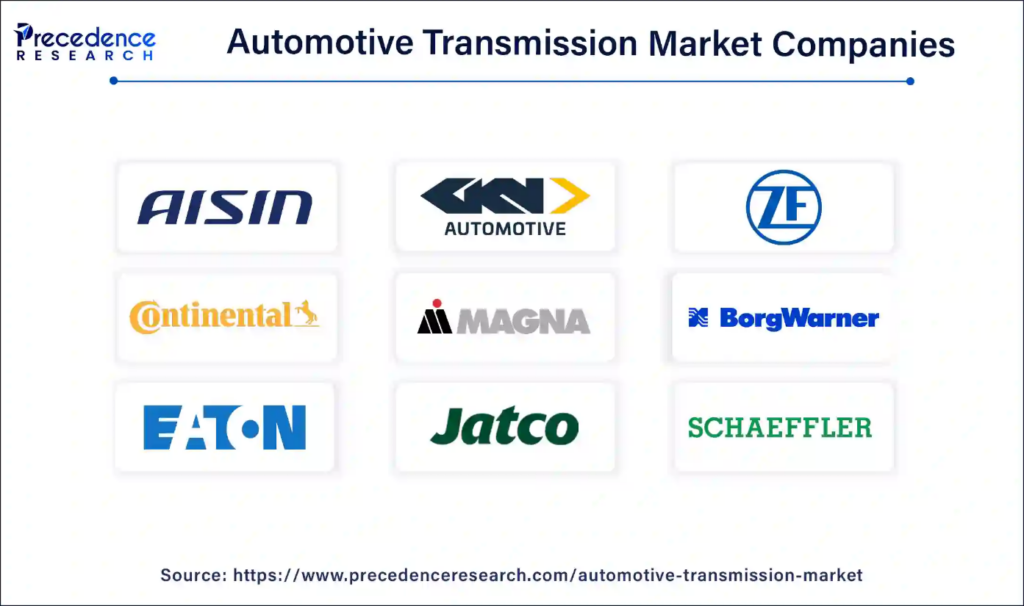
Aisin Corporation: Aisin offers automatic transmissions (AT), continuously variable transmissions (CVTs), manual transmissions, hybrid transmission systems, eAxles, clutch systems, drivetrain modules, and transmission components for passenger and commercial vehicles.
GKN Automotive: GKN Automotive provides all-wheel drive (AWD) systems, eDrive systems, torque vectoring technologies, axle drives, constant velocity (CV) joints, and transmission driveline components.
ZF Friedrichshafen AG: ZF Friedrichshafen offers automatic transmissions, hybrid transmission systems, commercial vehicle transmissions, transmission modules, electric drive systems, and integrated e-mobility drivetrain solutions.
Continental AG: Continental provides transmission control units (TCUs), transmission sensors, mechatronic systems, electronic control modules, and transmission software for automatic and hybrid powertrains.
Magna International Inc.: Magna International offers dual-clutch transmissions (DCTs), hybrid transmission systems, transfer cases, all-wheel drive (AWD) systems, eDrive systems, driveline modules, and complete transmission assemblies.
BorgWarner Inc.: BorgWarner supplies dual-clutch modules, transmission solenoids, transfer cases, torque management systems, transmission control technologies, and electrified transmission solutions.
Eaton Corporation plc: Eaton offers manual transmissions, automated manual transmissions (AMTs), clutch systems, transmission gears, differential technologies, and commercial vehicle powertrain solutions.
JATCO Ltd.: JATCO specializes in continuously variable transmissions (CVTs), hybrid CVTs, automatic transmissions, electric drive units, and transmission control technologies.
Schaeffler AG: Schaeffler provides hybrid transmission modules, clutch systems, torque converters, transmission bearings, synchronizers, transmission actuators, and eAxles.
Allison Transmission Holdings Inc.: Allison Transmission offers fully automatic transmissions for commercial vehicles, electric axles, propulsion systems, defense vehicle transmissions, off-highway transmission systems, and transmission software.
Looking Ahead
The future of the automotive transmission market extends well beyond traditional mechanical engineering.
As electric vehicles become mainstream, artificial intelligence matures, and software increasingly defines vehicle performance, transmission systems will evolve into intelligent mobility platforms capable of continuously optimizing efficiency, safety, and driving experience.
Manufacturers that successfully combine advanced engineering, AI-driven control systems, electrification expertise, and sustainable production practices will be well positioned to lead the next decade of automotive innovation.
With demand steadily increasing across both developed and emerging markets, the automotive transmission industry is entering an era defined by smarter technologies, cleaner mobility, and unprecedented opportunities for growth.