The global automotive shock absorber market size was valued at USD 18.54 billion in 2025 and is projected to grow from USD 19.48 billion in 2026 to approximately USD 30.40 billion by 2035, registering a CAGR of 5.07% during the forecast period from 2026 to 2035. Market growth is driven by the rapid expansion of the automotive industry, continuous technological advancements in shock absorber systems, increasing adoption of electric vehicles (EVs), and rising aftermarket demand supported by the longer operational lifespan of vehicles.

Key Takeaways
- Asia Pacific held a major market share in 2025.
- North America is expected to grow at the fastest CAGR between 2026 and 2035.
- By product type, the twin tube segment held a dominant position in the automotive shock absorber market in 2025.
- By product type, the mono tube segment is expected to grow at the fastest CAGR in the market between 2026 and 2035.
- By vehicle type, the passenger vehicle registered its dominance over the global market in 2025.
- By vehicle type, the commercial vehicle segment is expected to grow with the highest CAGR in the market during the studied years.
- By sales channel, the OEM segment held the largest revenue share in the market in 2025.
- By sales channel, the aftermarket segment is expected to expand rapidly in the market in the coming years.
Market Overview
The automotive shock absorber market comprises the development, manufacturing, and distribution of suspension components that absorb road shocks, reduce vibrations, and improve vehicle stability, safety, and ride comfort. Shock absorbers are essential for maintaining optimal tire-to-road contact, enhancing braking performance, and minimizing wear on suspension components, ensuring better driving comfort and control. The market is experiencing steady growth due to increasing vehicle production, rising demand for passenger and commercial vehicles, and continuous advancements in suspension technologies. The growing adoption of electric vehicles (EVs), which require advanced suspension systems to support heavier battery packs, is further driving market demand. Additionally, increasing awareness of vehicle maintenance, rising aftermarket replacement demand, and consumer preference for premium shock absorbers with enhanced performance, durability, and off-road capabilities are expected to support the market’s sustained growth over the forecast period.

What is the Role of AI in the Automotive Shock Absorber Market?
Artificial intelligence (AI) is transforming the automotive shock absorber market by enabling the development of intelligent and adaptive suspension systems. AI and machine learning (ML) algorithms analyze real-time driving conditions and driver behavior to optimize suspension performance, improve ride comfort, and enhance vehicle stability. AI-powered sensors continuously monitor road conditions and automatically adjust shock absorber settings for improved handling and safety. Additionally, manufacturers are integrating predictive algorithms that anticipate road irregularities, allowing suspension systems to respond proactively and deliver a smoother, more efficient driving experience.
Regional Outlook of the Automotive Shock Absorber Market
How Asia-Pacific Dominated the Automotive Shock Absorber Market?
Asia Pacific dominated the automotive shock absorber market in 2025, driven by high vehicle production, a well-established automotive manufacturing base, and strong demand for passenger cars and two-wheelers. The region benefits from expanding automotive production and consumption, particularly in China and India, supported by the rapid adoption of electric vehicles (EVs), growing logistics infrastructure, and favorable government initiatives promoting EV manufacturing and investment.
How is North America Growing in the Automotive Shock Absorber Market?
North America is expected to host the fastest-growing market in the coming years. The increasing demand for vehicle production and the demand for comfort and safety are rising among consumers, accelerating the market in North America. The region is also experiencing rising sales of luxury and premium vehicles, along with the growth of advanced suspension systems, which are creating new opportunities for the market in the region. Several government and private organizations provide funding for R&D and manufacturing processes to the leaders and researchers in the automotive sector.
What are the Advancements in the Automotive Piston Market in Europe?
Europe is expected to have significant growth in the market. This growth is driven by stringent environmental regulations and a shift towards sustainable automotive practices. The European Union also has a strong focus on reducing carbon emissions, which is boosting demand for lightweight and efficient components, including piston pins. Countries such as Germany, France, and the UK are leading players.
Automotive Shock Absorber Market Companies
- KYB Corporation is one of the world’s leading manufacturers of automotive shock absorbers, offering advanced suspension systems for passenger and commercial vehicles. The company focuses on product innovation, OEM partnerships, and expanding its global aftermarket presence to strengthen its position in the automotive shock absorber market.
- ZF Friedrichshafen AG develops advanced suspension and damping technologies that enhance vehicle comfort, handling, and safety. The company invests heavily in smart suspension systems and electrification technologies to meet the evolving demands of modern and electric vehicles.
- Tenneco (Monroe) is a prominent supplier of premium shock absorbers and suspension products under the Monroe brand for both OEM and aftermarket customers. The company emphasizes high-performance, durable suspension solutions designed to improve ride quality and vehicle stability.
- Hitachi Astemo Ltd. provides innovative suspension and chassis technologies, including advanced shock absorber systems for conventional and electric vehicles. The company focuses on integrating intelligent vehicle technologies to enhance driving performance, safety, and comfort.
- Mando Corporation manufactures advanced suspension systems and shock absorbers for global automotive manufacturers. Through continuous research and development, the company delivers lightweight, high-performance solutions that improve vehicle handling and ride comfort.
- Marelli (Magneti Marelli) offers a broad portfolio of automotive components, including suspension technologies designed for enhanced vehicle dynamics and stability. The company continues to develop innovative damping solutions that support the growing demand for electric, connected, and high-performance vehicles.
Segmental Insights of the Automotive Shock Absorber Market
Product Type Insights
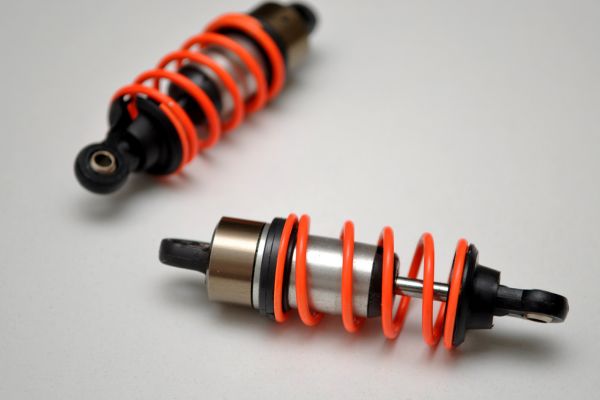
The twin tube segment held a major revenue share in the market in 2025, because tin tube shock absorber consists of two tubes, the inner tube and outer tube, to manage the flow of hydraulic fluid. The inner tube is a working cylinder, while the outer one is a reserve chamber. The twin tube is cheaper to manufacture. As it provides comfortable rides, it is mainly used in passenger vehicles to provide comfort and better driving conditions on roads.
Vehicle Type Insights
The passenger vehicle segment accounted for the highest revenue share in the market in 2025. In this segment, as passenger cars remain in high demand around the world, the demand for robust and high-quality shock absorbers keeps growing. Due to consumers’ preference for safety and a smooth ride, high-performance shock absorbers are in demand. A passenger car shock absorber, along with the spring, forms the end link between the suspension and the vehicle body.
Sales Channel Insights
The OEM segment registered its dominance over the global market in 2025. This segment involves the supply of shock absorbers provided directly to vehicle manufacturers for new vehicle assembly. It is a high-volume market that involves long-term contracts for supply to manufacturing companies such as Ford and Toyota. Clients benefit from direct supply from OEMs, as they do not need to pay extra charges to distributors