
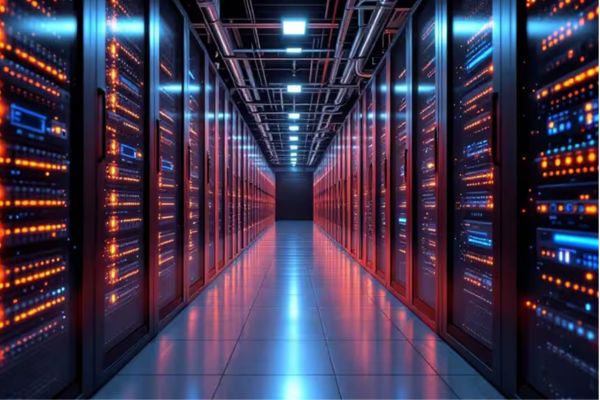
India’s race to become a global hub for artificial intelligence (AI) is driving a rapid expansion of data centre infrastructure. As companies increase their investment in AI computing, cloud platforms and digital services, the country will need far more than advanced chips and software. To handle growing digital workloads and power requirements, India will need large quantities of copper: the red metal that is critical to powering digital infrastructure.
In six years, India’s data centre capacity has witnessed more than fourfold growth. Government data shows that the capacity increased from about 375 MW in 2020 to around 1,500 MW in 2025.
Mr Mayur Karmarkar, Managing Director, International Copper Association India, said, “As AI workloads become more powerful, data centres need more electricity, better cooling systems and stronger electrical infrastructure. Copper plays an important role in all these areas.”
He added, “Copper’s unique properties, such as high electrical conductivity, durability and thermal efficiency, make it a key material for the data centres of the future. The metal acts as a catalyst of this technological advancement and quietly powers it all.”
On average, every 1 MW of data centre capacity requires around 26–27 tonnes of copper, based on estimates from real-world data centre installations. With global data centre expansion accelerating, the World Economic Forum estimates that more than 4.3 million tonnes of copper could be needed for data centres and related power infrastructure by 2035.
The demand for copper, however, goes beyond these applications. As AI servers operate at higher power densities than conventional computing infrastructure, they also increase the electricity load within individual racks and across facilities.
Mr Karmarkar highlighted that AI is effectively increasing the copper intensity of data centres. As power density rises, the need for robust conductors, better connectors and stronger power-distribution systems also increases. Copper’s high electrical conductivity makes it particularly valuable in these applications.
He said, “Considering the rising demand for copper, the conversation should move beyond copper as a commodity and recognise it as a core material in data centre architecture.”
With India’s data centre capacity expected to nearly double by 2027, copper is set to become an increasingly essential metal in the country’s AI infrastructure build-out. For the copper industry, this expansion raises a broader question about supply-chain preparedness.
“India is focused on building AI compute capacity, but we also need to focus on the materials needed to build and run these data centres. If we want a world-class data centre ecosystem, we need a strong and reliable infrastructure supply chain,” he said.
India’s data centre capacity is projected to reach 12 GW by 2030, which will significantly increase copper demand. Securing a steady supply of copper will be critical to meeting this demand and supporting India’s AI ambitions. Copper will be a key part of India’s AI ambitions. The countries that succeed will not only build computing capacity but also the power and infrastructure needed to support it. To prepare for this growth, India will need to strengthen domestic production, expand recycling and build reliable global supply partnerships.