


India’s electronics manufacturing industry is entering a period of rapid expansion. From smartphones and electric vehicles to telecom equipment, medical devices, consumer appliances and industrial systems, electronics is becoming an increasingly important part of the country’s manufacturing story. At the centre of this growth is a component that remains largely invisible to consumers but is fundamental to almost every electronic product: the Printed Circuit Board (PCB).
As domestic electronics production expands, so does the need for professionals who can design, assemble, inspect, test and maintain PCBs. At the same time, the growing adoption of Surface Mount Technology (SMT) is transforming how electronic components are assembled, driving demand for technicians and engineers who understand automated production lines and precision manufacturing. For India, this represents not just a technology opportunity but a significant skilling and employment opportunity as well.

Electronics Manufacturing Is Creating a New Workforce Requirement
India’s electronics sector has moved well beyond assembling finished products. The country is steadily building capabilities across design, component manufacturing, PCB assembly, testing and product development. Government initiatives promoting domestic electronics manufacturing, combined with rising demand for electronic products, are encouraging manufacturers and suppliers to expand their production capacity.
This expansion is generating demand across the entire manufacturing chain. A modern electronics factory needs people who can operate SMT machines, handle PCB assembly, conduct inspections, identify defects, maintain production equipment, manage quality and troubleshoot manufacturing issues. As a result, workforce requirements are becoming increasingly specialised, with the industry needing both engineers who can manage complex manufacturing and design functions, and technicians who can operate sophisticated equipment with precision.
Why PCB and SMT Skills Matter
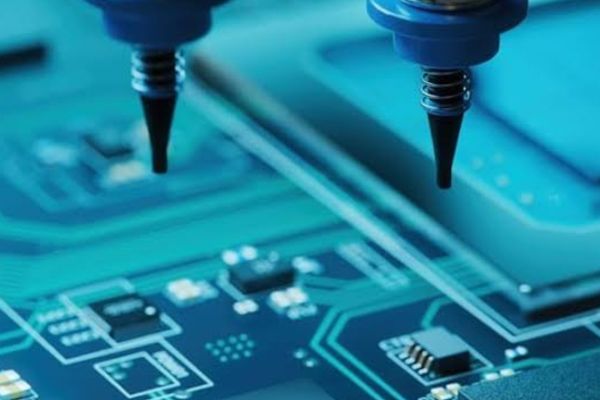
A PCB provides the physical and electrical platform on which electronic components are mounted and connected. SMT enables components to be placed directly onto the surface of the PCB using highly automated production systems. Modern SMT lines involve processes such as solder paste printing, component placement, reflow soldering and automated optical inspection, among other quality-control steps. While the equipment is largely automated, skilled personnel remain essential to operate, monitor and optimise these systems — a production line can only perform as well as the people managing it.
This is why the electronics manufacturing industry increasingly values workers who understand both the equipment and the process behind it. For a young person entering the sector, skills in PCB assembly, SMT operations, inspection, testing and quality control offer a practical entry point into electronics manufacturing.
Growing Demand Across Multiple Industries
The demand for PCB and SMT professionals is closely linked to the expansion of electronics across industries:
• Consumer Electronics: Smartphones, televisions, smart appliances, wearables and other connected products require large volumes of PCB assemblies.
• Automotive and Electric Mobility: Modern vehicles increasingly rely on sophisticated electronic control systems, battery management systems, sensors and communication modules.
• Telecommunications: Telecom infrastructure depends on electronic boards and assemblies for networking and communication equipment.
• Industrial Electronics: Automation systems, control equipment, robotics and industrial machinery all require reliable electronic hardware.
• Healthcare: Medical equipment increasingly incorporates sophisticated electronic systems, driving demand for high-quality, reliable PCB assemblies.
• Aerospace and Defence: These applications demand specialised electronics that meet stringent performance, reliability and quality requirements.
As these sectors continue to expand, the requirement for skilled PCB and SMT professionals is expected to grow alongside them.
The Career Opportunities Are Wider Than They Appear
PCB and SMT manufacturing is often viewed merely as an assembly activity. In reality, it offers a wide range of career pathways. At the entry level, candidates can work as PCB Assembly Operators or SMT Operators, supporting component placement, assembly and production activities.
With experience, they can progress into roles such as:
• Assembly Line Technician
• PCB Assembly Technician
• Quality Control Technician
• Incoming Quality Control Technician
• In-Process Quality Technician
• Testing Technician
• Maintenance Technician
• Production Supervisor
• Process Engineer
• Quality Engineer
• PCB Design Engineer
• Manufacturing Engineer
There are also opportunities in production planning, equipment maintenance, process optimisation, product development and technical support. This creates a career ladder in which a candidate can begin in a technician-level role and progressively move into supervisory, engineering or specialist positions through experience and continued training.
Skills the Industry Will Seek
The future electronics workforce will need a combination of technical knowledge, practical ability and workplace discipline. For PCB and SMT operations, key competencies include:
• Understanding of electronic components and their functions
• PCB assembly processes
• SMT production processes
• Soldering and component handling
• Solder paste printing and reflow processes
• Operation of SMT equipment
• PCB inspection and defect identification
• Understanding of basic testing procedures
• Quality control practices
• Workplace safety and Electrostatic Discharge (ESD) protection
• Reading electronic drawings and production documents
• Basic troubleshooting and problem-solving
• Understanding of manufacturing processes and standard operating procedures
For engineers and design professionals, additional expertise in PCB design, Electronic Design Automation (EDA) tools, multi-layer boards, signal integrity, manufacturability and design-for-production becomes important. The ability to understand the complete production cycle is increasingly valuable, as modern electronics manufacturing requires close coordination between design, production and quality teams.
Role of ESSCI in Building Industry-Ready Talent
As India’s electronics manufacturing ecosystem expands, the availability of industry-ready talent will be a critical factor in determining how quickly the sector can scale. The Electronics Sector Skills Council of India (ESSCI) has an important role to play in this ecosystem. By developing occupational standards, training frameworks and industry-aligned skill pathways, ESSCI is helping build a workforce prepared for the practical requirements of electronics manufacturing.
The focus must extend beyond certification alone. Candidates entering the sector need hands-on understanding of processes, equipment, quality requirements and workplace practices. Occupational roles such as PCB Assembly Operator, Incoming Quality Control Technician and In-Process and Final Quality Engineer provide structured pathways into electronics manufacturing and help candidates build experience for more advanced roles.
For employers, industry-aligned training can help reduce the gap between recruitment and workplace readiness. For candidates, it offers a clearer understanding of the skills required to build a long-term career.
From First Job to Long-Term Career
One of the strongest features of PCB and SMT manufacturing is the potential for career progression. A candidate may begin as an assembly or production operator and, with experience, move into quality control, process improvement, supervision or specialised technical functions.
For example, a PCB Assembly Operator can progress to a Lead Assembly Operator role, move into quality inspection or build expertise in production processes. Similarly, an Incoming Quality Control Technician can build a career in quality assurance, process engineering or product development.
This progression highlights an important point: the first job in electronics manufacturing does not have to be the final destination. Continuous learning, practical exposure and familiarity with new technologies can significantly expand career opportunities.
India’s Opportunity Is Also a Skilling Opportunity
India’s electronics ambitions will require more than factories and investment. The country will need a workforce capable of running these factories efficiently and maintaining the quality expected by global markets, making skill development an essential part of the electronics manufacturing strategy.
As PCB assembly and SMT operations become more widespread, demand will grow for people who can work confidently with automated equipment, understand production processes, maintain quality and solve problems on the shop floor. For students, ITI and diploma holders, engineering graduates and existing workers looking to upgrade their skills, electronics manufacturing offers multiple entry points. The opportunity is particularly significant because it combines manufacturing employment with exposure to advanced technology, offering young workers a pathway from shop-floor operations to specialised technical and supervisory roles.
The Road Ahead
India’s electronics story is entering a new phase, with the focus shifting from consuming electronic products to designing, manufacturing and exporting them. PCB and SMT operations will be fundamental to this transition. The growth of domestic electronics manufacturing will create demand not only for engineers and designers, but also for skilled technicians, operators, quality professionals and supervisors who can keep modern production lines running efficiently.
For the industry, the priority will be to build a reliable pipeline of trained talent. For skilling institutions, the challenge will be to keep training aligned with rapidly evolving technologies and manufacturing practices. And for young Indians, the expansion of electronics manufacturing represents an opportunity to build careers in one of the country’s most promising technology-driven manufacturing sectors. As India’s electronics boom builds the factories, the next challenge is to build the skilled workforce that will power them.

Mr. Madhvendra Singh, Chief Executive Officer Electronics Sector Skills Council of India (ESSCI)