



Pickering Electronics, a leading manufacturer of high-performance reed relays, has published new comparative test data showing that the company’s compact reed relays produce substantially less thermal EMF than competing products. This is important, especially in miniaturized low voltage systems, as microvolt-level offsets can become a meaningful source of error. Pickering’s 4mm pitch Series 120 relays, for example, produced a final thermal EMF offset magnitude of approximately 46µV, compared with approximately 403µV for the comparison relay — around 88.5% lower.
Commented Robert King, Reed Relays Product Manager at Pickering Electronics. “As components become smaller and test systems become more densely packed, engineers need to understand the errors that the switching components themselves can introduce. Our testing showed that the Series 120 produced around 8.7 times less thermal EMF offset than the comparable 4mm-class relay we tested. For low-level measurements, reducing that unwanted voltage helps the switching system preserve the signal being measured.”

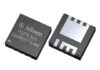
For applications such as semiconductor test, automated test equipment, precision data acquisition and low-level signal switching, a relay should not simply fit the available space. It should also help preserve the integrity of the signal being measured. Compact devices, such as Pickering’s Series 120 which occupy a footprint of just 3.9 x 3.9 mm, permit close stacking while retaining the benefits of reed relay switching, including high insulation resistance, low leakage, low contact resistance and long operating life. The new test data, which is detailed in an article titled ‘Not all high density Reed Relays perform the same…’, demonstrates that reducing PCB footprint does not necessarily require accepting higher thermal EMF in the switching path.
Pickering is recognised for leading the high-end reed relay market through innovative product design, high-performance components and exceptional quality control. The company’s reputation for innovation is founded on decades of manufacturing excellence. All its relays use instrumentation-grade reed switches for stable, long-life operation—up to billions of cycles—along with formerless coil construction and the company’s patented SoftCenter technology, which improves mechanical robustness. Mu-metal screening enables high packing densities with minimal magnetic interference, and every relay is 100% tested to ensure consistent quality.