


Electric Vehicles Are Becoming a Power Semiconductor Story
The next stage of electric-vehicle competition will not be determined by batteries alone.
As automakers pursue faster charging, greater driving range, higher power density and more efficient electric powertrains, a less visible group of components is becoming increasingly important: power semiconductors.
These chips control how electrical energy moves between an EV’s battery, traction motor, charging system and numerous auxiliary electrical systems. That makes the emerging xEV power chip market fundamentally different from the broader automotive semiconductor industry.

The global xEV power chip market was valued at USD 9.29 billion in 2025 and is projected to reach USD 30.52 billion by 2035, expanding at a 12.6% CAGR from 2026 to 2035, according to Acumen Research and Consulting.

But the larger technology story is occurring beneath those headline numbers.
The industry is simultaneously transitioning from conventional silicon toward wide-bandgap materials such as silicon carbide, while advanced electric vehicles move from established 400 V-class architectures toward 800 V, 900 V and potentially higher-voltage platforms.
Those two developments are closely connected.
What Are xEV Power Chips?
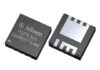
xEV power chips are semiconductor devices responsible for switching, controlling, converting and distributing electrical power throughout electrified vehicles.
The term xEV encompasses multiple electrified propulsion architectures, including:
- Battery Electric Vehicles (BEVs)
- Plug-in Hybrid Electric Vehicles (PHEVs)
- Hybrid Electric Vehicles (HEVs)
- Fuel Cell Electric Vehicles (FCEVs)
Unlike conventional low-power automotive electronics, power semiconductor devices must frequently handle substantial voltage, current and thermal loads.
Their applications extend across the vehicle.
A traction inverter converts DC electricity from the battery into controlled AC power for the electric motor. An onboard charger converts external AC electricity into DC power for the battery. DC-DC converters transform voltage between different electrical systems. Power devices also support battery management, thermal systems, electric motor control and auxiliary functions.
This means the xEV power chip opportunity expands not only as more electrified vehicles are sold, but also as each vehicle becomes increasingly electrically sophisticated.
xEV Power Chip Market Could More Than Triple by 2035
The global xEV Power Chip Market is projected to expand from USD 9.29 billion in 2025 to USD 30.52 billion by 2035.
That represents a 12.6% CAGR during 2026–2035.
Several structural changes are contributing to this expansion.
EV production continues to increase the number of vehicles requiring sophisticated power electronics. Higher charging power places greater demands on power-conversion systems. Automakers are pursuing efficiency improvements to extract additional driving range from existing battery capacity.
Meanwhile, higher-voltage electrical architectures are changing semiconductor requirements.
This is particularly important because improving an EV is not simply a matter of installing a larger battery.
Reducing losses across the powertrain can allow more of the energy already stored in the battery to reach the wheels.
Power semiconductors therefore sit at an increasingly important intersection between vehicle efficiency, range, charging performance, thermal management and powertrain packaging.
Silicon Still Leads With 56%—But SiC Is Closing the Gap
Silicon remained the largest semiconductor material in the xEV power chip market in 2025, accounting for 56% of revenue.
That leadership is understandable.
Silicon benefits from decades of semiconductor-manufacturing experience, established automotive qualification processes, mature supply chains and favorable economics.
Not every electrical function inside an EV requires an expensive wide-bandgap semiconductor.
For many lower-voltage and cost-sensitive applications, silicon can remain highly competitive.
But the market structure is projected to change significantly.
Silicon carbide accounted for 32% of the xEV power chip market in 2025 and is projected to increase to 46% by 2035.
That shift represents one of the most consequential trends in automotive power electronics.
SiC devices can provide important advantages in appropriate high-voltage applications, including lower switching losses, high-temperature capability and higher switching frequencies.
These characteristics become increasingly valuable as EV manufacturers pursue high-voltage architectures, greater power density and improved drivetrain efficiency.
The transition therefore should not be interpreted as silicon disappearing.
Instead, the EV is becoming a multi-material semiconductor platform, where silicon, SiC and eventually greater amounts of GaN can occupy applications suited to their respective technical and economic characteristics.
The Move From 400 V to 800 V and 900 V Changes the Semiconductor Equation
Most established EV architectures have historically operated around the 400 V class.
That remains visible in current market structure: 400 V to below 600 V architectures represented 49% of xEV power chip revenue in 2025.
Below-400 V architectures represented another 28%.
But the strategically important segment is increasingly at the other end of the voltage spectrum.
800 V and above architectures already represented 15% of the market in 2025.
Increasing voltage can allow an EV to transmit a given amount of power using lower current.
That can help reduce resistive losses and can support high-power charging and high-performance propulsion systems.
The semiconductor implications are substantial.
As voltage rises, power devices need to handle increasingly demanding electrical conditions while maintaining efficiency.
This strengthens the technical case for SiC in applications such as traction inverters.
The transition is no longer theoretical.
In April 2026, onsemi announced an expanded collaboration with NIO supporting the automaker’s move from 400 V toward 900 V vehicle architectures using onsemi’s EliteSiC technology.
The collaboration demonstrates how semiconductor technology is becoming closely integrated with vehicle-platform design rather than being selected only after the broader electrical architecture has been established.
Traction Inverters Are the Largest Power-Chip Application
Traction inverters accounted for 32% of xEV power chip market revenue in 2025, making them the largest application.
Their importance comes from their position at the center of the electric propulsion system.
The battery stores DC electricity, while most EV traction motors require controlled AC power.
The inverter manages that conversion and continuously adjusts electrical output based on acceleration, speed, regenerative braking and other operating conditions.
Even relatively small efficiency improvements can matter because significant amounts of vehicle energy repeatedly pass through this system.
That makes the traction inverter one of the most attractive applications for advanced power semiconductor technologies.
Onboard chargers represented another 15% of the market, while battery management and power distribution accounted for 14% and DC-DC converters represented 13%.
Together, these categories demonstrate why semiconductor demand extends far beyond the main propulsion inverter.
An EV is essentially an interconnected network of power-conversion systems.
IGBTs Lead Today, but Power MOSFETs Gain Strategic Importance
At the device level, IGBTs held 28% of the xEV power chip market in 2025, making them the largest category.
Power MOSFETs followed closely with 25%.
IGBTs have benefited from their established role in high-voltage and high-current switching and from a mature automotive supply ecosystem.
However, increasing requirements for switching efficiency and power density are changing the competitive landscape.
SiC MOSFETs are particularly relevant because they combine MOSFET switching characteristics with the material advantages offered by silicon carbide.
The transition will not occur uniformly.
Cost-sensitive vehicle platforms can continue using mature silicon devices where their performance remains sufficient, while premium and high-voltage architectures may justify greater SiC content because efficiency, thermal performance and charging capability carry greater value.
This creates a more nuanced competitive environment than a simple replacement cycle.
200 mm SiC Manufacturing Could Be Critical to Cost Reduction
Performance alone will not determine SiC adoption.
Manufacturing economics will be equally important.
SiC has historically been more difficult and expensive to manufacture than conventional silicon, making wafer utilization, yield, substrate availability and production scale strategically important.
The industry’s transition from 150 mm toward 200 mm SiC wafers is therefore significant.
Infineon began releasing its first products based on 200 mm SiC manufacturing technology to customers in the first quarter of 2025 from its Villach facility in Austria. Its Kulim facility in Malaysia is also transitioning from 150 mm to 200 mm production.
Larger wafers allow manufacturers to produce more semiconductor dies from each wafer and potentially improve manufacturing economics as processes mature.
This matters for automotive adoption because SiC does not merely need to outperform silicon technically.
It needs to achieve a sufficiently attractive combination of performance, reliability, availability and cost for mass-market vehicle platforms.
As 200 mm manufacturing scales, the competitive battle could increasingly shift from proving SiC’s technical advantages toward reducing the cost penalty associated with using it.
Rivian’s R2 Shows Why Silicon and SiC May Coexist
The semiconductor transition is unlikely to produce a single material winner across every vehicle.
Infineon’s relationship with Rivian provides a useful example.
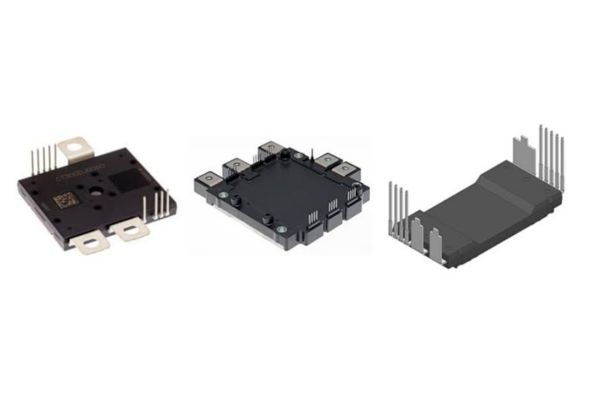
Infineon is supplying traction-inverter power modules for Rivian’s R2 platform beginning in 2026. The platform uses both silicon carbide and silicon modules from Infineon’s HybridPACK Drive G2 family.
That mixed-material approach highlights an important reality.
Automakers can optimize semiconductor selection around specific system requirements rather than using the highest-performing material everywhere.
A vehicle platform may therefore use SiC where its efficiency and high-voltage capabilities justify the cost while retaining silicon elsewhere.
For semiconductor suppliers, the competitive advantage may increasingly come from offering customers a broad technology portfolio rather than betting exclusively on one material.
BEVs Generate 52% of xEV Power Chip Demand
Battery electric vehicles represented 52% of xEV power chip revenue in 2025 and are projected to increase their share to 59% by 2035.
The reason is structural.
A BEV depends entirely on electrical energy for propulsion.
Power semiconductor devices are therefore required across the battery, traction inverter, electric motor, charging system, DC-DC conversion, thermal management and numerous supporting systems.
Hybrid and plug-in hybrid vehicles also require sophisticated power electronics, but their propulsion architectures combine electric systems with combustion engines.
Fuel-cell electric vehicles represent a much smaller segment, accounting for approximately 5% in 2025, but are projected to record the fastest xEV-type CAGR of 14.9% between 2026 and 2035.
FCEVs require multiple power-conversion stages connecting the fuel-cell stack, high-voltage battery, DC-DC converter, inverter and electric motor.
The result is a semiconductor-intensive architecture despite relatively limited current vehicle volumes.
Passenger Cars Account for 55% of Market Demand
Passenger cars represented 55% of xEV power chip revenue in 2025, reflecting the concentration of global electrification in consumer vehicles.
Light commercial vehicles accounted for another 15%, followed by heavy commercial vehicles at 12%, electric buses at 10%, and electric two- and three-wheelers at 8%.
Commercial electrification could nevertheless become increasingly important.
Delivery vans and logistics fleets frequently operate for long hours and under predictable duty cycles, making efficiency and operating costs particularly important.
Power-electronics reliability also becomes critical because commercial vehicles may experience considerably greater daily utilization than privately owned passenger cars.
This creates opportunities for semiconductor manufacturers across multiple vehicle classes rather than concentrating growth entirely in passenger EVs.
Asia-Pacific Holds 42% of the xEV Power Chip Market
Asia-Pacific accounted for approximately 42% of global xEV power chip revenue in 2025, making it the largest regional market.
Its leadership reflects something broader than EV sales alone.
The region combines large-scale vehicle manufacturing with battery production, electric-motor manufacturing, power electronics, semiconductor packaging and increasingly sophisticated SiC capabilities.
China is particularly important because it brings many parts of the electric-vehicle supply chain together geographically.
That creates an ecosystem where semiconductor demand, vehicle manufacturing and component production can scale simultaneously.
Asia-Pacific’s xEV power chip market is projected to increase from approximately USD 3.90 billion in 2025 to USD 14.34 billion by 2035, corresponding to a 14.0% CAGR during 2026–2035.
The region’s position therefore extends beyond being the largest consumer market.
It is increasingly central to how the global EV power-electronics supply chain is manufactured.
North America Holds 25% as Domestic Semiconductor Capacity Expands
North America accounted for approximately 25% of the xEV power chip market in 2025.
Its opportunity is closely tied to EV platform development, semiconductor innovation and the localization of advanced manufacturing.
The regional market is projected to increase from approximately USD 2.32 billion in 2025 to USD 6.71 billion by 2035.
The semiconductor supply chain has become strategically important as automakers seek greater visibility and resilience across critical vehicle electronics.
This creates opportunities not only in semiconductor fabrication but also in substrates, epitaxy, packaging, power modules and system-level integration.
The relationship between automakers and semiconductor suppliers is also becoming more direct.
The onsemi–NIO and Infineon–Rivian relationships illustrate a broader trend: as power electronics become more important to vehicle efficiency and charging performance, semiconductor roadmaps increasingly need to align with vehicle-platform roadmaps.
GaN Could Become the Next Technology to Watch
Silicon carbide currently attracts much of the attention in high-voltage EV propulsion, but gallium nitride (GaN) represents another wide-bandgap technology worth watching.
GaN offers very high switching speeds and can enable compact, high-frequency power-conversion designs.
Its role in xEVs remains smaller than silicon and SiC, particularly in high-power traction applications, but it can become increasingly relevant in onboard charging, DC-DC conversion and other applications where high switching frequency and power density are valuable.
Manufacturing scale could influence this trajectory.
The semiconductor industry is already developing larger-wafer GaN production technologies, potentially improving the economics of future devices.
The emerging xEV semiconductor landscape therefore may not be a simple transition from silicon to SiC.
It may become a three-material ecosystem:
Silicon for mature and cost-sensitive applications
SiC for high-voltage and high-efficiency power conversion
GaN for selected high-frequency and high-power-density applications
Power Modules Are Becoming Strategic Automotive Components
Another important change is occurring above the individual semiconductor die.
Automakers and Tier 1 suppliers increasingly need integrated power modules capable of combining semiconductor devices with packaging, thermal management and electrical interconnection.
This matters because extracting maximum performance from SiC requires more than installing a SiC chip.
The surrounding module must manage heat, electrical parasitics, mechanical stress and long-term automotive reliability.
ROHM and Schaeffler, for example, entered mass production in 2025 for a high-voltage inverter brick incorporating ROHM SiC MOSFET bare chips for a major Chinese automaker.
Such developments illustrate why competitive advantage increasingly extends from semiconductor material through device architecture, packaging, cooling and complete power-module design.
What Could Slow the xEV Power Chip Transition?
The market’s growth trajectory does not mean every EV will rapidly migrate to the most advanced semiconductor technology.
Cost remains a major constraint.
SiC substrates and processing remain more expensive than mature silicon technologies. Automotive qualification requirements are demanding, while manufacturers must achieve high yields and consistent reliability at enormous production volumes.
Supply-demand cycles also matter.
Rapid capacity expansion can create temporary oversupply, while unexpectedly strong EV demand can tighten availability.
Automakers must therefore balance efficiency improvements against vehicle cost.
This is particularly important in entry-level EVs, where semiconductor performance gains must justify their impact on the bill of materials.
The result is likely to be gradual segmentation rather than universal adoption: different vehicle platforms will select different semiconductor technologies according to voltage, performance, range, charging, thermal and cost requirements.
What Comes Next for the xEV Power Chip Market?
Several developments will determine how the market evolves through 2035.
The first is the speed at which 800 V and higher architectures move from premium EVs toward higher-volume vehicle segments.
The second is whether 200 mm SiC manufacturing can meaningfully improve production economics while maintaining automotive-grade yields and reliability.
The third is how rapidly SiC’s market share moves toward the projected 46% by 2035.
GaN adoption represents another variable, particularly in onboard chargers and DC-DC converters.
And finally, power-module packaging may become an increasingly important competitive differentiator as manufacturers attempt to extract greater performance from advanced semiconductor materials.
The projected expansion of xEV Power Chip Market from USD 9.29 billion in 2025 to USD 30.52 billion by 2035 reflects more than rising EV production.
It represents a fundamental redesign of how electrical energy moves through the automobile.
Batteries may store the energy, but power chips determine how efficiently that energy is converted, controlled and ultimately delivered.
As electric vehicles move toward higher voltage, faster charging and increasingly sophisticated powertrains, that makes the xEV power chip one of the most strategically important—and least visible—components of the electric mobility transition.
Key Takeaways
- The global xEV power chip market is projected to increase from USD 9.29 billion in 2025 to USD 30.52 billion by 2035, expanding at a 12.6% CAGR during 2026–2035.
- Silicon held 56% of the market in 2025, but SiC is projected to increase from 32% in 2025 to 46% by 2035, reflecting the transition toward high-efficiency power electronics.
- 400 V to below 600 V architectures accounted for 49% of 2025 demand, while 800 V and above already represented 15% and are strategically important to future SiC adoption.
- IGBTs led device types with 28% share, followed by power MOSFETs at 25%.
- Traction inverters represented 32% of market revenue, making propulsion power conversion the largest application.
- BEVs accounted for 52% of demand and are projected to reach 59% by 2035.
- Asia-Pacific led globally with 42% market share in 2025, supported by its concentrated EV, battery, power-electronics and semiconductor manufacturing ecosystem.
Frequently Asked Questions
What is the xEV power chip market?
The xEV power chip market covers power semiconductor devices used to switch, convert, control and distribute electrical energy in battery electric, hybrid, plug-in hybrid and fuel-cell electric vehicles. Major devices include IGBTs, power MOSFETs, power diodes, PMICs and integrated power modules.
How big is the xEV power chip market?
The global xEV power chip market was valued at USD 9.29 billion in 2025 and is projected to reach USD 30.52 billion by 2035, representing a 12.6% CAGR from 2026 to 2035.
Why is silicon carbide important for electric vehicles?
SiC power devices offer characteristics suited to high-voltage, high-efficiency power conversion, including reduced switching losses and high-temperature operation. These advantages become increasingly valuable in traction inverters and other systems as EV platforms adopt 800 V and higher architectures.
Will SiC replace silicon in EV power electronics?
Not completely. Silicon remains attractive for mature and cost-sensitive applications. SiC is expected to gain significant share in high-voltage and efficiency-critical systems, creating a multi-material power-semiconductor market rather than eliminating silicon entirely.
Why are 800 V EV architectures important?
Higher-voltage architectures can deliver a given level of power at lower current, helping reduce electrical losses and supporting high-power charging. They also increase the value proposition for advanced power devices such as SiC MOSFETs.