
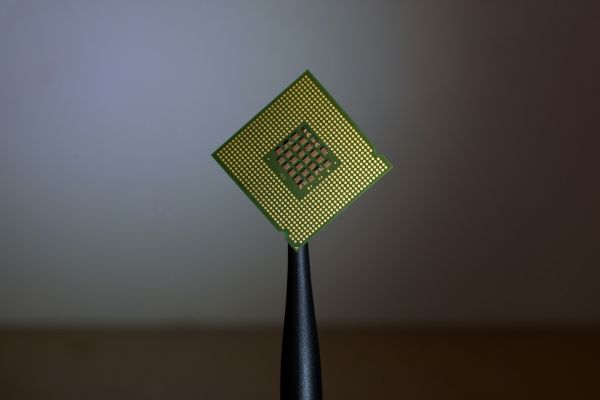
The global microchips market is entering a new phase of expansion as artificial intelligence (AI), high-performance computing, connected devices, automotive electronics and data-centre infrastructure accelerate demand for increasingly powerful and energy-efficient semiconductor components.
According to Cervicorn Consulting, the global microchips market was valued at approximately USD 609.32 billion in 2025 and is projected to reach nearly USD 1.06 trillion by 2035, expanding at a 5.7% CAGR between 2026 and 2035.
The growth reflects the rising semiconductor content across smartphones, PCs, vehicles, industrial equipment, servers, networking systems, medical devices and emerging AI-enabled applications.
AI Emerges as a Major Demand Driver
The rapid deployment of AI and high-performance computing is reshaping the microchips industry. AI workloads require substantial processing capacity, high-bandwidth memory, accelerated networking and advanced power-management technologies.
The expansion of hyperscale data centres and enterprise AI infrastructure is therefore creating strong demand for GPUs, CPUs, AI accelerators, ASICs, memory chips and specialised processors.
AI is also changing the design requirements for chips. Rather than relying solely on general-purpose processors, technology companies are increasingly developing application-specific architectures designed for workloads such as AI training, inference, data processing and edge computing.
This shift is encouraging semiconductor companies to invest in specialised silicon capable of delivering higher performance while controlling power consumption and thermal requirements.
Automotive Electronics Expand Semiconductor Demand
The automotive industry is becoming another important growth engine for microchips.
Electric vehicles, advanced driver-assistance systems (ADAS), autonomous driving technologies and software-defined vehicles are increasing the amount of semiconductor content incorporated into each vehicle.
Modern vehicles require microprocessors, microcontrollers, system-on-chip architectures, sensors, connectivity components and power-management devices to support increasingly sophisticated electronic systems.
The transition toward software-defined vehicles is particularly significant. Vehicle functions that were traditionally controlled through mechanical or isolated electronic systems are increasingly being managed through software and centralised computing architectures.
This is creating opportunities for semiconductor manufacturers across processing, sensing, connectivity and control applications.
Edge AI Opens New Opportunities
Another major development is the movement of computing intelligence from centralised cloud infrastructure toward edge devices.
Edge AI enables smartphones, industrial machines, vehicles, cameras, smart-home systems and other connected products to process data locally. This reduces latency, improves privacy and can lower dependence on continuous cloud connectivity.
As a result, demand is growing for low-power processors, microcontrollers, AI accelerators, sensors and system-on-chip solutions capable of performing inference and real-time decision-making directly on the device.
The automotive sector is expected to benefit significantly from this trend as vehicles increasingly require local computing capabilities for driver assistance, automated functions and real-time perception.
Asia-Pacific Maintains Market Leadership
Asia-Pacific remains the largest regional market for microchips, supported by its extensive semiconductor manufacturing base, electronics production capabilities, memory ecosystem and growing demand for advanced computing technologies.
The region accounted for approximately 55.2% of the global microchips market in 2025.
China, Taiwan, South Korea, Japan, India and Southeast Asian economies collectively contribute to different stages of the semiconductor value chain, including chip design, fabrication, memory, equipment, materials, assembly and testing.
China remains a major semiconductor market because of its large electronics manufacturing ecosystem and expanding domestic chip capabilities. Japan continues to benefit from its strengths in semiconductor materials, manufacturing equipment, sensors, automotive electronics and precision technologies.
India is also becoming increasingly important as semiconductor manufacturing, design and packaging investments expand. The country’s semiconductor ecosystem is receiving additional momentum from government-backed initiatives and rising demand from electronics, automotive, telecommunications and digital infrastructure.
TimesTech has previously reported that India’s semiconductor demand could increase from approximately USD 44 billion in 2025-26 to around USD 90 billion by 2029-30, highlighting the country’s expanding role in the global semiconductor ecosystem.
North America Benefits from AI Infrastructure Investment
North America is another major microchip market, supported by AI computing, cloud infrastructure, data centres, automotive electronics, industrial automation and advanced semiconductor research.
The region represented approximately 24.5% of the global market in 2025, according to the market assessment.
The United States remains particularly important because of its concentration of semiconductor designers, technology companies, hyperscalers and research organisations.
Growing investment in AI data centres is creating demand for high-performance GPUs, CPUs, custom ASICs, high-bandwidth memory, networking components and advanced packaging technologies.
At the same time, efforts to strengthen domestic semiconductor manufacturing are encouraging investment across fabrication, packaging, materials and equipment.
Europe Focuses on Automotive and Industrial Applications
Europe accounted for around 12.1% of the global microchips market in 2025. The region’s semiconductor demand is strongly connected to automotive electronics, industrial automation, power management, sensing and embedded systems.
Germany remains a key market because of its large automotive and industrial manufacturing base. As vehicles become increasingly electrified and software-driven, demand is rising for microcontrollers, sensors, processing systems, connectivity chips and power-management components.
The Netherlands also holds a strategic position in Europe’s semiconductor ecosystem because of its expertise in semiconductor equipment, lithography, photonics and high-precision technologies.
Microprocessors Remain a Leading Chip Category
Among different chip types, microprocessors accounted for approximately 22.8% of the global microchips market in 2025, making them the largest category in the market assessment.
Microprocessors remain essential across PCs, servers, enterprise computing, embedded systems and other computing platforms.
At the same time, specialised architectures such as GPUs, ASICs and AI accelerators are gaining importance as computing workloads become more application-specific.
Memory chips are also experiencing increasing demand because AI systems, data centres and high-performance computing platforms require significantly larger and faster memory pools.
6–14 nm Technology Represents a Major Market Segment
The 6–14 nm technology segment represented approximately 25.8% of the microchips market in 2025, making it the largest technology category in the market assessment.
The segment continues to attract demand because it provides a balance between performance, energy efficiency, manufacturing complexity and cost.
While leading-edge nodes below 5 nm are increasingly important for advanced AI processors, premium mobile chips and high-performance computing, many automotive, industrial, connectivity and embedded applications continue to rely on mature and intermediate process technologies.
This creates a diverse semiconductor manufacturing landscape in which advanced and mature nodes will continue to coexist.
Processing Accounts for the Largest Functional Segment
Processing represented approximately 31.7% of the global microchips market in 2025, making it the largest functional category.
The expansion of AI, cloud computing, edge computing, automation and connected devices is increasing the need for computational capacity across virtually every major electronics category.
Memory is another important growth area. AI and data-intensive applications require high-bandwidth memory as well as conventional DRAM and other storage technologies.
The growing amount of data processed by AI systems is therefore increasing the memory intensity of modern computing platforms.
Manufacturing Costs Remain a Major Challenge
Despite strong demand, semiconductor manufacturing remains highly capital-intensive.
Advanced microchip production requires sophisticated lithography systems, specialised materials, cleanroom environments, advanced packaging capabilities and highly reliable energy and water supplies.
The resource intensity of semiconductor fabrication can create significant barriers to new manufacturing capacity. Access to electricity, ultrapure water and specialised semiconductor infrastructure is becoming increasingly important as manufacturers seek to expand production.
Supply-chain volatility is another challenge.
Fluctuations in memory and other semiconductor component prices can increase procurement costs for electronics manufacturers and complicate long-term production planning.
Sustainability and Supply-Chain Resilience Gain Importance
Environmental considerations are becoming increasingly important across the microchip value chain.
Semiconductor fabrication requires substantial quantities of water and electricity, while climate-related risks can affect the availability and transportation of critical raw materials.
Manufacturers are therefore exploring water-recycling systems, energy-efficient production technologies and more geographically diversified supply chains.
Building resilient semiconductor ecosystems is becoming a strategic priority for governments and technology companies as nations seek to reduce dependence on concentrated manufacturing networks.
Advanced Packaging Becomes Increasingly Important
As transistor scaling becomes more challenging and AI workloads continue to expand, semiconductor companies are increasingly turning to advanced packaging technologies.
2.5D and 3D integration, chiplets, high-bandwidth memory and heterogeneous integration are becoming critical technologies for improving computing performance without relying exclusively on transistor scaling.
Advanced packaging is particularly important for AI and high-performance computing, where memory bandwidth, I/O density, thermal management and power delivery can significantly influence system performance. TimesTech has reported growing industry focus on 2.5D and 3D packaging architectures as semiconductor designs become increasingly complex.
Competitive Landscape
The global microchips ecosystem includes major semiconductor designers, manufacturers and integrated device companies such as Intel, NVIDIA, AMD, Qualcomm, Broadcom, MediaTek, Samsung Electronics, SK hynix, Micron Technology, Texas Instruments, NXP Semiconductors and STMicroelectronics.
Competition is increasingly centred on AI acceleration, advanced process technologies, energy efficiency, memory performance, chiplet architectures, advanced packaging and supply-chain resilience.
Companies are also increasing collaboration across chip design, manufacturing and packaging as the complexity of semiconductor development continues to rise.
Outlook
The microchips industry is moving beyond traditional semiconductor demand driven primarily by PCs and smartphones. AI infrastructure, electric vehicles, robotics, edge computing, industrial automation, connected devices and data centres are creating new and increasingly sophisticated chip requirements.
With the global market projected to grow from approximately USD 609.32 billion in 2025 to USD 1.06 trillion by 2035, the semiconductor ecosystem is expected to remain central to the next phase of digital transformation.
The competitive landscape, however, will increasingly depend on more than transistor density. Advanced packaging, AI-specific architectures, energy efficiency, manufacturing capacity, access to critical resources and resilient supply chains will all play a larger role in determining the future of the microchips industry.
For semiconductor manufacturers, technology companies and governments, the next decade will therefore be defined not simply by producing more chips, but by developing smarter, faster, more efficient and more resilient semiconductor systems.