



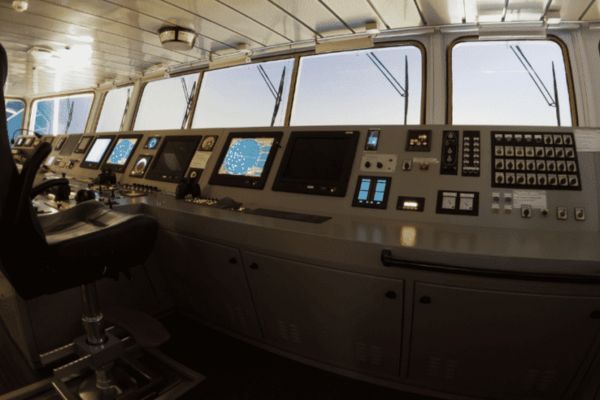
The maritime industry is undergoing a digital transformation. At the core of this evolution lies the integrated bridge system, a unified platform that combines navigational, communication, safety, and vessel control systems into a centralized interface. Designed to improve operational efficiency, situational awareness, and crew safety, integrated bridge systems are now essential in both commercial and defense maritime operations. With strong adoption across new builds and retrofits alike, the integrated bridge systems market is emerging as a cornerstone of modern maritime infrastructure.
What Are Integrated Bridge Systems?
An integrated bridge system is a networked arrangement of shipboard navigational, control, and safety systems that operate through a unified command interface. The goal of the integrated bridge system is to streamline bridge operations and minimize human error. Also, it aims to improve maritime safety and efficiency. An integrated bridge system combines key systems, including radar, electronic chart display and information systems, autopilot, and automatic identification system, to make them accessible from a single control console or a series of connected workstations.

What Are Key Subsystems of Integrated Bridge Systems?
An integrated bridge system comprises multiple interconnected subsystems. These subsystems work cohesively to ensure smooth navigation, control, communication, and monitoring onboard a vessel. Below, we’ve given a detailed explanation of these:
Navigation Systems
Navigation systems are the core component of integrated bridge systems. They provide real-time, accurate positional and environmental data that is essential for safe and efficient vessel operation. Central to these systems is the Electronic Chart Display and Information System (ECDIS). The ECDIS integrates digital nautical charts with GPS and other sensor inputs to offer a comprehensive visualization of the vessel’s position, planned route, and surrounding hazards.
Control Systems
Control systems manage the vessel’s mechanical operations, enabling precise and responsive handling of propulsion, steering, and auxiliary functions. The engine control system enables operators to monitor key engine parameters. Steering gear control systems provide precise helm management and interface with autopilot systems to automate course corrections when necessary. Thruster controls are crucial for maneuvering in confined spaces, such as harbors, and during docking procedures.
Communication Systems
Communication systems with integrated bridge systems ensure seamless and reliable exchange of information. They facilitate information exchange both onboard and between the vessel and external entities such as port authorities, other ships, and emergency services. The Global Maritime Distress and Safety System (GMDSS) is a crucial component, enabling automated distress signaling and the reception of maritime safety broadcasts to keep ships informed of navigational hazards and weather updates.
What Are Key Market Metrics?
Polaris Market Research examines the integrated bridge systems market, which is expected to register sustained growth in the coming years. With a compound annual growth rate (CAGR) of 3.3% between 2025 and 2034, the market is projected to grow to USD 11.41 billion by 2034.
What’s Driving Market Growth?
The demand for integrated bridge systems is rising globally. Several key factors are propelling market growth and encouraging adoption across vessel types and regions. These include:
Increasing Vessel Traffic and Navigational Complexity
The growing global trade expansion has led to a surge in maritime traffic volume. This has made navigation in congested waterways and busy ports more challenging. Integrated bridge systems provide ship operators with enhanced situational awareness and precise control over their vessels. Their use helps in reducing collisions, groundings, and other accidents in complex maritime environments.
Stringent Safety and Regulatory Requirements
International maritime authorities, including the International Maritime Organization (IMO), have implemented rigorous safety standards. These regulations mandate advanced bridge systems for certain vessel classes. Regulations such as the SOLAS (Safety of Life at Sea) Convention require ships to be equipped with integrated navigation and communication systems that improve safety and compliance, driving adoption of integraed bridge systems globally.
Retrofitting and Modernization of Legacy Systems
Many older vessels operate with outdated or fragmented bridge technologies, which limit operational efficiency and safety. The shift towards retrofitting and upgrading existing vessels with modern, integrated bridge systems is gaining traction as shipowners seek to extend vessel lifespans and improve performance.
What Are Applications Across Vessel Types?
Integrated bridge systems are known for their versatility and adaptability. They serve as the technological backbone across a wide range of vessel categories. These include:
Commercial Vessels
Integrated bridge systems play a crucial role in ensuring safe and efficient navigation through congested sea routes and busy ports for commercial vessels such as container ships, bulk carriers, and oil tankers. These vessels often undertake long voyages carrying high-value or hazardous cargo. As such, precise route planning and real-time situational awareness are critical to avoiding accidents and minimizing delays.
Offshore Platforms and Support Vessels
Offshore platforms, including drilling rigs and floating production units, rely heavily on integrated bridge systems for accurate maneuvering and station-keeping in challenging marine environments. Support vessels that serve these platforms also utilize integrated bridge systems to navigate complex offshore zones, assist in supply chain operations, and conduct emergency response missions.
Naval Ships
Military and naval vessels operate in highly demanding scenarios that require advanced mission planning, real-time surveillance, and secure communication. The use of integrated bridge systems enhances all these capabilities in naval ships.
To Conclude
Integrated bridge systems are transforming maritime operations by offering enhanced safety and improved operational efficiency. As the shipping industry continues to undergo digital transformation, the integrated bridge systems market is becoming increasingly indispensable for navigating the increasingly complex maritime environments.]