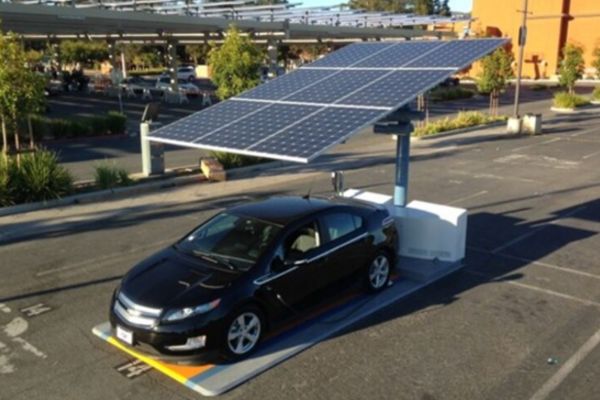
A solar charging station is a facility that uses solar energy to charge electronic devices, mostly batteries in electric vehicles , bicycles, scooters, mobile phones, or portable batteries. These stations are equipped with solar panels that convert sunlight into electricity, which is then used directly or stored in batteries for later use. Moreover, use of EVs is increasingly being mandated globally by governments, due to their environmental impacts. Governments across the globe are promoting the use of EVs as they have a smaller environmental footprint compared to those with internal combustion engines.
Traditional charging stations are most commonly used to recharge EVs, and rely heavily between 40% and 60% on electricity from the national grid that is generated from non-renewable sources. Moreover, as EVs are an eco-friendlier option used in operations, the reliance on grid-based power, often derived from fossil fuels, poses environmental challenges. Thus, the switch to using only electric vehicles is not sufficient to fully decarbonize the transportation sector. Implementation of solar-powered charging stations for EVs provides a solution to eliminate or reduce these emissions. This strategy benefits the environment as well as provides significant advantages for managing vehicle fleets.
Rapid adoption of EVs fostering green transportation
The adoption of electric vehicles is rising significantly globally, which is expected to drive the demand for solar charging stations. Furthermore, EV sales are expected to increase globally, with a projection to reach 40 million annually by 2030. Thus the need for clean, reliable, and grid-independent charging systems is paramount. Solar-powered charging offers a reasonable solution by reducing reliance on fossil-fueled grids. It cuts down operating costs and provides energy access in remote or off-grid regions. It is easily integrated with emerging technologies such as battery storage, smart charging, and vehicle-to-grid (V2G) systems.
Moreover, governments globally are promoting this transformation by focusing on EV and solar sales, which further leads to rise the number of installations of solar charging stations. For instance, the Inflation Reduction Act (IRA) provides tax credits on purchases of EVs and solar installations in the U.S., allowing homeowners to adopt solar EV charging. Also, the Green Deal authorized by the European Union mandates that new buildings are expected to include EV charging facilities that are integrated with renewable energy sources like solar.
Significant innovations in the sector transforming EV charging solutions
Recent developments in the solar charging station industry are making EV charging more efficient, flexible, and integrated with renewable energy systems. According to Allied Market Research, the sector is projected to rise at a CAGR of 18.5% from 2022 to 2031. The V2G technology is advancing, allowing EVs to supply energy back to the grid, which enhances stability and efficiency. User-friendly interfaces in the charging stations provide real-time data and remote control via mobile application, improving the charging experience. In addition, solar charging solutions are integrated into urban facilities, such as solar- and wind-powered streetlight chargers, which reduces installation costs and increases accessibility for consumers.
For instance, in June 2025, the Bangalore Electricity Supply Company (BESCOM) inaugurated a 24/7 solar-integrated EV charging station near Kempegowda International Airport in Bengaluru, India. This charging facility is the first of its kind with the ability to operate using repurposed EV batteries. The facility is integrated with solar panels to provide continuous charging services. This initiative promotes the adoption of electric vehicles as well as contributes to sustainable energy practices by extending the lifecycle of EV batteries.
Recent collaborations fostering advancements in sustainable solar charging
On January 15, 2025, Green Rain Solar, a subsidiary of The Now Corporation, made an official announcement about its joint venture with ChargeTronix. The aim of the partnership is to distribute advanced electric vehicle (EV) charging stations in the North America region. The collaboration allows Green Rain Solar to offer white-labeled EV charging solutions, so that businesses have the ability to integrate branded, clean energy infrastructure that supports the rising adoption of EVs. As part of this initiative, Green Rain Solar has identified 13 Hilton hotel locations for EV charging installations, which are in line with Hilton’s sustainability goals.
Also, Tata Power Solar Systems Limited (TPSSL) partnered with the Bank of India (BOI) in July 2024, to offer easily accessible financing solutions for the installations of rooftop solar and EV charging stations. The alliance’s primary aim is to support the initiatives of the Government of India, including the PM Surya Ghar Yojana, by providing tailored financing solutions to residential users, housing societies, and MSMEs.
Looking ahead
Technological advancements, rise in government support, and increase in demand for sustainable energy are major factors that are expected to drive the growth of solar charging station industry. In recent times, innovations such as ultra-fast charging, wireless solutions, and smart grid integration lead to improvements in charging efficiency and convenience. Regions such as Asia-Pacific, especially China and India, are leading in adoption rates, owing to strengthened policies and subsidies, thereby driving the growth of the industry during the forecast period.