Industrial automation is evolving rapidly as industries adopt advanced technologies to improve efficiency and reduce operational risks. Among these innovations, digital twins and predictive maintenance are playing a crucial role in transforming how machines and systems are managed. These technologies enable businesses to monitor performance, predict failures, and optimize operations in real time.
By combining data driven insights with intelligent systems, companies can achieve higher productivity and better decision making. This shift is helping industries move from reactive approaches to more proactive and efficient operations while also supporting sustainable manufacturing practices.
Understanding Digital Twins
A digital twin is a virtual representation of a physical asset, process, or system. It uses real time data from sensors and connected devices to simulate the behavior and performance of the actual system.
This virtual model allows businesses to monitor operations, analyze performance, and test different scenarios without affecting the physical asset. Digital twins provide valuable insights into how systems operate under various conditions.
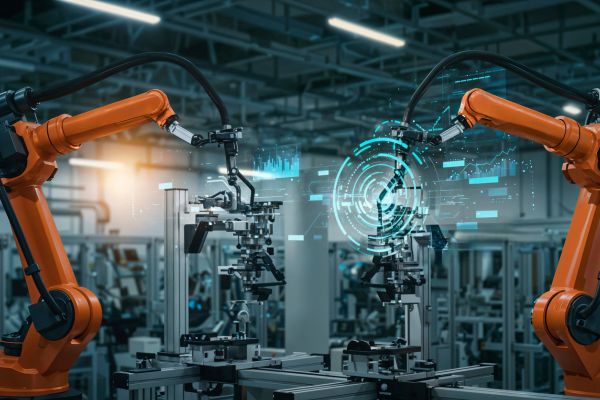
In industrial automation, digital twins are used to replicate machines, production lines, and entire facilities. This helps companies identify inefficiencies and make improvements without disrupting operations.
Concept of Predictive Maintenance
Predictive maintenance is a strategy that uses data analysis to predict when equipment is likely to fail. Instead of performing maintenance at fixed intervals or after a breakdown, this approach focuses on maintaining equipment only when necessary.
By analyzing data from sensors, historical records, and performance metrics, predictive maintenance systems can identify patterns that indicate potential issues. This allows businesses to take preventive action before a failure occurs.
Predictive maintenance reduces downtime, extends equipment lifespan, and lowers maintenance costs. It also improves safety by preventing unexpected breakdowns in critical systems.
Integration of Digital Twins and Predictive Maintenance
The combination of digital twins and predictive maintenance creates a powerful solution for industrial automation. Digital twins provide a detailed and dynamic view of equipment performance, while predictive maintenance uses this data to identify potential problems.
By integrating these technologies, businesses can monitor equipment in real time and predict failures with greater accuracy. The digital twin acts as a testing environment where different scenarios can be simulated to understand how systems will respond.
This integration enables more precise maintenance planning and reduces the risk of unexpected downtime. It also allows companies to optimize their operations by continuously improving system performance.
Enhancing Operational Efficiency
Digital twins and predictive maintenance significantly improve operational efficiency in industrial environments. Real time monitoring ensures that any deviation in performance is detected early.
This allows businesses to address issues before they escalate, reducing disruptions and maintaining smooth operations. Predictive insights help in scheduling maintenance activities at the most convenient times, minimizing production interruptions.
In addition, digital twins enable continuous optimization of processes by providing insights into system performance. This leads to better resource utilization and increased productivity.
Reducing Costs and Downtime
One of the major benefits of these technologies is the reduction in costs and downtime. Unplanned equipment failures can be expensive and disrupt production schedules.
Predictive maintenance helps prevent such failures by identifying issues in advance. This reduces the need for emergency repairs and lowers maintenance expenses.
Digital twins also contribute to cost savings by enabling better planning and testing of processes. Companies can identify inefficiencies and implement improvements without incurring significant costs.
Together, these technologies help businesses maintain consistent operations while controlling expenses.
Improving Safety and Reliability
Safety is a critical aspect of industrial automation. Equipment failures can lead to accidents and pose risks to workers and the environment.
Digital twins and predictive maintenance enhance safety by providing early warnings of potential issues. This allows companies to take preventive measures and avoid hazardous situations.
Reliable equipment performance also ensures consistent production quality. By maintaining optimal operating conditions, businesses can deliver high quality products while ensuring the safety of their workforce.
Challenges in Implementation
Despite their advantages, implementing digital twins and predictive maintenance can be challenging. One of the main challenges is the need for high quality data. Accurate and reliable data is essential for creating effective digital models and predictive systems.
Another challenge is the integration of these technologies with existing systems. Companies need to invest in infrastructure, software, and skilled personnel to manage these solutions.
Data security and privacy are also important considerations. As more systems become connected, protecting sensitive information becomes critical.
Overcoming these challenges requires careful planning and a strategic approach.
Future Outlook
The future of industrial automation will be strongly influenced by digital twins and predictive maintenance. As technology continues to advance, these solutions will become more sophisticated and widely adopted.
Artificial intelligence and machine learning will enhance predictive capabilities, allowing for more accurate and faster decision making. Digital twins will become more detailed and capable of simulating complex systems.
Industries will continue to invest in these technologies to improve efficiency, reduce costs, and enhance competitiveness. This will lead to more intelligent and adaptive industrial environments.
Conclusion
Digital twins and predictive maintenance are transforming industrial automation by enabling proactive and data driven operations. They provide valuable insights, improve efficiency, and reduce risks associated with equipment failures.
By integrating these technologies, businesses can achieve greater reliability, lower costs, and improved safety. While challenges exist, the benefits far outweigh the difficulties.
As industries continue to evolve, digital twins and predictive maintenance will play a key role in building smarter and more efficient industrial systems.