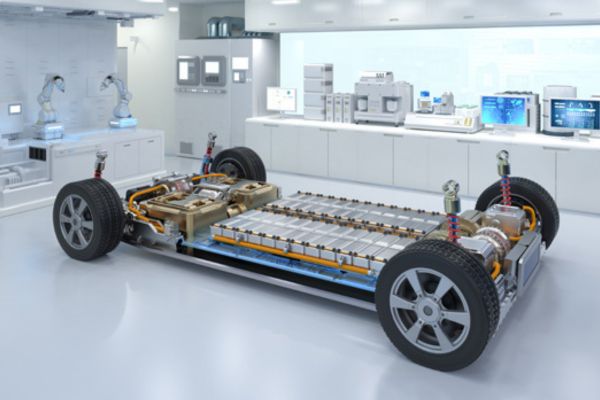
The global EV battery testing market is experiencing significant growth due to the rising adoption of electric vehicles worldwide and increasing investments in advanced battery technologies. These developments are driving the need for rigorous testing to ensure battery safety, performance, reliability, and longevity. Manufacturers and service providers are increasingly focusing on comprehensive testing solutions to meet evolving industry standards and consumer expectations.
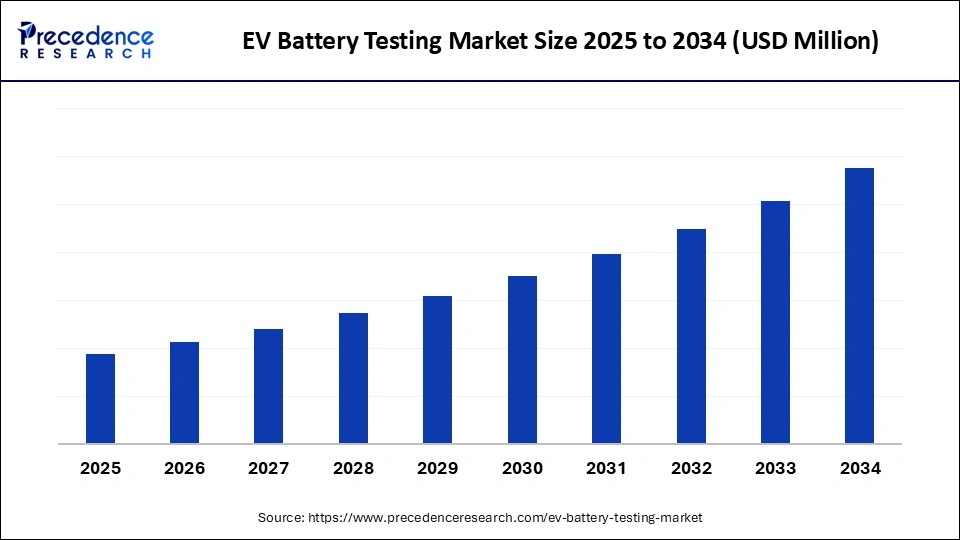
Key Takeaways
- Asia Pacific held a dominant presence in the market in 2024.
- North America/ Europe is expected to grow at the fastest rate in the market during the forecast period of 2025 to 2034.
- By test type, the performance and electrical testing segment accounted for a considerable share of the EV battery testing market in 2024.
- By test type, the safety and abuse segment is projected to experience the highest growth rate in the market between 2025 and 2034.
- By test stage, the validation and type approval testing segment led the market.
- By test stage, the end-of-life/second-use/recycling qualification segment is set to experience the fastest rate of market growth from 2025 to 2034.
- By end-use/application, the passenger EVs segment registered its dominance over the EV battery testing marketin 2024.
- By end-use/application, the commercial vehicles segment is anticipated to grow with the highest CAGR in the market during the studied years.
What Is Encompassed in the EV Battery Testing Market?
The global EV battery testing market is expected to witness substantial growth, fueled by the rising adoption of electric vehicles and continuous advancements in battery technologies. According to the International Energy Agency (IEA), the sales-weighted average range of battery electric cars increased by 50% between 2018 and 2023, reflecting significant improvements in battery performance. This rapid expansion of the EV industry is increasing the demand for advanced battery testing solutions to ensure safety, efficiency, reliability, and longer battery life.
Impact of Artificial Intelligence on the EV Battery Testing Market
Artificial intelligence (AI) is transforming the EV battery testing market by improving the efficiency, accuracy, and innovation of battery testing processes. Leading companies are adopting AI-powered solutions to analyze large volumes of battery cell and pack data, enabling real-time detection of performance degradation, safety risks, and capacity issues. In addition, AI-driven predictive analytics helps manufacturers accelerate testing procedures, enhance battery lifespan, optimize performance, and comply with stringent safety and quality standards.
Regional Outlook of the EV Battery Testing Market
What Makes Asia-Pacific the Dominating Region in the EV Battery Testing Market?
Asia Pacific led the EV battery testing market, capturing the largest revenue share in 2024, due to its superior battery production capacity, strong EV production, and support of government policies. In 2023, China manufactured more than 75% of global lithium-ion batteries and more than 60% of all global EV sales.
This generates massive demand for battery testing on large scales, according to the International Energy Agency (IEA). These programs put the Asia-Pacific in the centre of the global EV battery testing ecosystem. Furthermore, the Asia Pacific EV battery testing market is expected to expand significantly due to the rapid development of EV manufacturing hubs.
North America / Europe
They anticipated to grow at the fastest rate in the market during the forecast period, owing to the high rate of EV adoption and strict testing laws. According to the projections of the U.S. Department of Energy (DOE), North American battery manufacturing capacity is expected to grow to over 1,200 GWh by 2030.
This creates a need for sophisticated testing facilities to validate cells and new chemistries. The Battery Regulation 2023/1542, which is being applied in Europe starting in 2024 is requires full lifecycle testing of batteries, including carbon footprint, recyclability, and safety compliance. Additionally, it is estimated that North America and Europe will grow at the same pace, which is further attributed to government incentives and tightening regulations.
EV Battery Testing Market Companies
- UL Solutions – Provides safety certification, compliance, and testing services, including battery and EV system evaluations.
- TÜV SÜD – German TIC (testing, inspection, certification) company offering EV battery safety, performance, and compliance testing.
- Intertek Group – Global testing and certification provider specializing in product safety, quality, and performance testing.
- SGS SA – Swiss-based leader in inspection and verification services, including battery testing and sustainability assessments.
- Bureau Veritas – Provides conformity assessment and testing services for automotive, energy storage, and consumer products.
- DNV – Offers testing, advisory, and certification services with expertise in renewable energy and battery storage systems.
- DEKRA – German TIC provider focused on product safety, EV battery validation, and automotive testing.
- Element Materials Technology – Specializes in materials testing and battery performance/safety evaluations for EV and aerospace.
- AVL List GmbH – Austrian company known for advanced simulation and testing systems for powertrains and EV batteries.
- Horiba / HORIBA MIRA – Provides automotive R&D, battery testing, and emissions measurement systems.
- Chroma ATE Inc. – Taiwanese company producing electronic test and measurement systems, including EV battery testers.
- Arbin Instruments – U.S. manufacturer of precision battery test equipment for research and commercial applications.
- Maccor (AMETEK Battery Test Systems) – Industry leader in automated battery test equipment for R&D and production.
- Bio-Logic (Horiba-BioLogic) – French company offering electrochemical and battery testing instruments for laboratories.
Segmental Insights of the EV Battery Testing Market
Test Type Insights
The performance and electrical testing segment dominated the EV battery testing market in 2024, driven by manufacturers’ interest in range, efficiency, and system integration validation. Cell makers and automakers test electrical performance more to ensure state-of-charge algorithms and pack-level energy throughput. Furthermore, the increasing volumes of cell-to-pack electrical qualifications are further fuelling the invest over the long term in precision electrical test equipment and automated data pipelines.
Test Stage Insights
The validation and type approval testing segment held the largest revenue share in the EV battery testing market in 2024, due to the ongoing rise in regulatory requirements and rigorous homologation processes. Additionally, the investment in certified validation services and automated data processes provides support for regulatory dossiers and submissions for homologation.
End-Use / Application Insights
The passenger EVs segment dominated the EV battery testing market in 2024, as manufacturers were competing to comply with regulatory requirements and match consumer expectations. The IEA estimates that the total sales of EVs worldwide increased by almost a quarter annually in the first half of 2024. This indicates the amount of testing required to make them compliant and reliable. Furthermore, the high rate of EV passenger uptake accelerated the emphasis on stringent battery testing regimes, thus further fuelling the market.
Vehicle Type / OEM Customer Insights
Battery manufacturers/cell makers & OEMs segment held the largest revenue share in the EV battery testing market in 2024, as they played a central role in ensuring compliance, safety, and performance before commercial introduction. These players have the role of authenticating the electrochemical characteristics and efficiency of energy to satisfy the requirements of the international standards.
Test Equipment / Solution Type Insights
The battery test systems/cyclers segment dominated the EV battery testing market in 2024, as they are essential in ensuring charge-discharge performance, efficiency, and cycle life across a variety of chemistries.
Manufacturers use these systems to benchmark energy density, thermal behavior, and degradation during actual driving conditions. Moreover, the increased use of fast-charging networks also contributed to the demand to use high-precision cyclers, which measure rapid changes in current.