


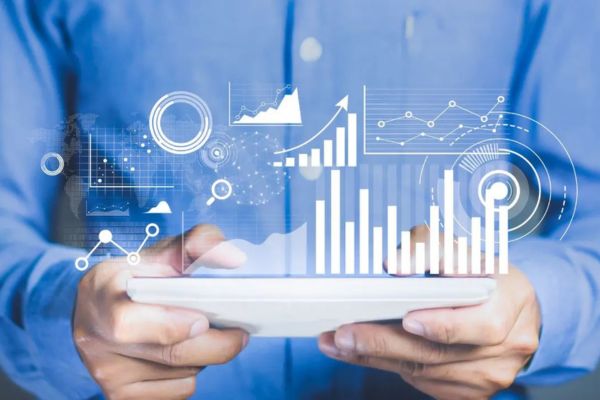
In today’s hyper connected economy, data is no longer just a by-product of business operations; it has become one of the most valuable strategic assets. Yet, the real differentiator is no longer access to data alone; it is the ability to interpret and act on that data in real time. Across industries, organizations are increasingly leveraging real-time analytics to transform decision-making, enhance customer experiences, optimize operations, and gain a competitive edge.
The shift from traditional reporting models to real-time intelligence is fundamentally changing how businesses operate. Earlier, organizations relied on historical reports and periodic assessments to guide decisions. While effective in a slower-moving marketplace, this approach often left leaders reacting to events after they had already occurred. Today, advanced analytics platforms, cloud infrastructure, artificial intelligence, and automation enable businesses to access live insights and make informed decisions as situations unfold.

This evolution is creating a more agile business environment where companies can identify opportunities, mitigate risks, and respond to changing market conditions with unprecedented speed.
Sarika Shetty, CEO & Co-founder, RentenPe, highlights how real-time analytics is transforming the rental and financial ecosystem.
“Real-time analytics has collapsed the lag between action and insight for the entire ecosystem. Earlier, a landlord would wait weeks to assess a tenant’s payment behavior, and a tenant would wait months, sometimes years, to see any credit impact from the rent they were faithfully paying. Today, that gap is shrinking dramatically. With real-time data flowing through our platform, decisions that once took days are now happening in hours. We’re not just tracking payments anymore; we’re reading patterns, flagging risks early, and rewarding responsible financial behavior the moment it happens. That speed changes everything; for how landlords evaluate tenants, for how lenders look at borrowers, and most importantly, for how everyday renters finally get to see their financial story told accurately and promptly. Data was always there. Real-time analytics just finally gave it a voice. What used to be a slow, trust-based industry is becoming a responsive, insight-driven one. The businesses that will lead the next decade aren’t the ones sitting on the most data; they’re the ones acting on it fastest.”
Her observation reflects a broader trend across industries where data is increasingly being used not just to understand the past, but to influence outcomes in the present. Businesses are now using real-time intelligence to anticipate customer needs, identify emerging risks, and personalize services at scale.
Technology plays a crucial role in enabling this transformation. The convergence of AI, machine learning, and cloud computing, and connected digital systems has made it possible to process vast volumes of data instantly and derive actionable insights from them.
According to Pavan Puri, Founder and Managing Director, Greencore Electronics, the true value of data emerges when it is supported by an integrated technology ecosystem.
“Data has become the backbone of modern business growth, but its true value is unlocked only when combined with the right technology ecosystem. Today, organizations are leveraging AI, cloud computing, automation, and advanced analytics to streamline operations, improve decision-making, and deliver superior customer experiences. The real transformation happens when data flows seamlessly across functions, enabling businesses to move from reactive decision-making to predictive and proactive strategies. As markets become increasingly dynamic, companies that invest in integrated, data-driven technologies will not only improve efficiency but also build the agility and resilience needed to achieve sustainable growth and maintain a competitive edge.”
The ability to move from reactive to predictive decision-making is becoming a defining characteristic of successful enterprises. Rather than waiting for operational disruptions, market shifts, or customer complaints to occur, businesses can now identify patterns early and take corrective action before challenges escalate.
The travel and aviation industry provides another compelling example of how real-time analytics is driving smarter commercial decisions. Customer preferences, booking behavior, and market demand can change rapidly, requiring organizations to adapt almost instantly.
Mr. Satheesh Satchit, Co-founder and CPO, Verteil Technologies, explains how real-time data is helping the industry become more responsive and customer-centric.
“Real-time analytics is helping travel businesses make decisions at the speed of the customer. In airline retailing, every search, booking trend, and market movement tells a story about what travellers want and how demand is changing. Through NDC, airlines and travel sellers can bring richer content and more relevant offers closer to the customer, while real-time data helps them respond with greater speed and confidence. At Verteil, we support this shift by helping airlines and retailers connect, distribute, and act on dynamic content more effectively. The result is a more responsive retailing environment where businesses can personalise offers, improve customer experience, and make smarter commercial decisions.”
This growing emphasis on real-time intelligence is also reshaping organizational culture. Decision-making is becoming more decentralized, with teams across departments gaining access to actionable insights that empower faster responses. Leaders are increasingly focusing on building data-driven organizations where insights are embedded into everyday workflows rather than confined to executive dashboards.
As digital transformation accelerates globally, real-time analytics is moving from a competitive advantage to a business necessity. Organizations that can effectively transform live data into meaningful action will be better positioned to navigate uncertainty, capitalize on emerging opportunities, and deliver greater value to customers.
The future belongs not simply to businesses that collect the most information, but to those that can turn information into action at the exact moment it matters. In an economy defined by speed and constant change, real-time analytics is becoming the bridge between data and decisive business strategy.