
As industries worldwide embrace digital transformation, industrial robotics has emerged as a cornerstone of modern manufacturing. From automotive assembly lines and electronics production facilities to logistics centers and heavy machinery plants, robots are revolutionizing the way businesses operate. The increasing demand for efficiency, precision, safety, and scalability is accelerating the adoption of industrial robotics across diverse sectors.
According to Fact. MR analysis, the global industrial robotics market is projected to grow from USD 37.82 billion in 2025 to USD 96.81 billion by 2035, expanding at a robust CAGR of 9.9%. This remarkable growth reflects the growing importance of automation technologies in addressing manufacturing challenges and driving productivity improvements.
The Growing Importance of Industrial Robotics
Industrial robots are programmable machines designed to perform repetitive, complex, and precision-oriented tasks with minimal human intervention. These systems help manufacturers reduce operational costs, improve product quality, increase throughput, and maintain consistency in production processes.
In today’s competitive manufacturing environment, organizations are increasingly facing challenges such as labor shortages, rising wages, demand fluctuations, and stricter quality requirements. Industrial robotics offers a practical solution by enabling continuous operations, reducing human error, and supporting scalable manufacturing capabilities.
The transition toward smart factories and Industry 4.0 ecosystems has further accelerated the demand for advanced robotic systems that can seamlessly integrate with digital manufacturing platforms.
Why Manufacturers Are Investing in Robotics
Several key factors are driving industrial robotics adoption worldwide:
1. Rising Labor Costs and Workforce Shortages
Many developed and emerging economies are experiencing labor shortages in manufacturing sectors. Industrial robots help bridge this gap by performing repetitive and physically demanding tasks while allowing human workers to focus on higher-value activities.
2. Demand for Greater Productivity
Manufacturers are under constant pressure to increase output while maintaining product quality. Robotics systems operate with exceptional speed and precision, enabling organizations to meet production targets efficiently.
3. Manufacturing Reshoring Initiatives
As companies seek to strengthen supply chain resilience, many are reshoring production activities closer to end markets. Robotics makes localized manufacturing economically viable by reducing dependency on manual labor.
4. Smart Factory Development
The integration of robotics with IoT, artificial intelligence, machine vision, and cloud-based analytics is creating highly connected manufacturing environments. These smart factories optimize production processes through real-time monitoring and predictive maintenance.
Handling Applications Lead the Market
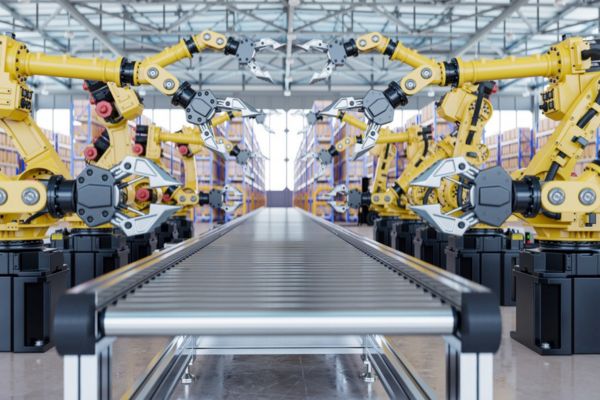
Among all industrial robotics applications, handling robots account for approximately 42% of market share, making them the largest application segment.
Handling robots are extensively used for:
· Material transportation
· Pick-and-place operations
· Packaging
· Palletizing
· Machine loading and unloading
Their versatility and adaptability make them suitable across multiple industries, from automotive manufacturing to warehouse automation.
Modern articulated robots equipped with advanced sensors and machine vision systems can perform material handling tasks with exceptional speed and accuracy, significantly improving operational efficiency.
Electronics Industry Drives Strong Demand
The electrical and electronics sector represents the largest end-use segment, accounting for approximately 31% of industrial robotics demand.
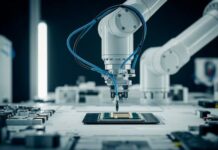
As electronic devices become smaller and more complex, manufacturers require automation solutions capable of performing delicate assembly tasks with micron-level precision. Industrial robots are increasingly used in:
· Printed circuit board assembly
· Semiconductor packaging
· Component placement
· Quality inspection
· Surface mount technology operations
The rapid growth of consumer electronics, electric vehicles, and semiconductor manufacturing continues to create substantial opportunities for robotics deployment.
Emerging Trends Shaping the Future
Collaborative Robots (Cobots)
One of the most transformative developments in industrial automation is the rise of collaborative robots.
Unlike traditional industrial robots that operate in isolated environments, cobots are designed to work safely alongside human employees. Their flexibility, ease of programming, and lower deployment costs make them particularly attractive for small and medium-sized enterprises.
Fact.MR research indicates that collaborative robotics could account for 38% to 44% of future market opportunities, highlighting their growing significance in modern manufacturing.
Artificial Intelligence Integration
Artificial intelligence is redefining the capabilities of industrial robots.
AI-powered systems can:
· Adapt to changing production conditions
· Improve quality control
· Enable predictive maintenance
· Optimize workflow management
· Learn from operational data
The combination of AI and robotics is moving manufacturing beyond programmed automation toward intelligent decision-making environments.
Autonomous Mobile Manipulation
Autonomous mobile robots equipped with robotic arms are gaining popularity in warehouses and manufacturing facilities. These systems combine mobility with manipulation capabilities, allowing them to transport materials and perform complex tasks without fixed infrastructure.
As warehouse automation expands globally, autonomous mobile manipulation platforms are expected to become a major growth segment.
Asia Pacific Leads Global Growth
Asia Pacific continues to dominate the industrial robotics market due to rapid industrialization and large-scale manufacturing investments.
India: Fastest Growing Market
India is expected to register the highest growth rate of 12.3% CAGR through 2035. Government initiatives supporting manufacturing expansion, increasing automation awareness, and rising investments in industrial infrastructure are driving demand.
Major manufacturing hubs across Maharashtra, Gujarat, and Tamil Nadu are increasingly deploying robotics solutions to improve productivity and maintain competitiveness.
China: Manufacturing Automation Powerhouse
China remains one of the world’s largest robotics markets, supported by extensive manufacturing capacity and strong government-backed automation programs. Rising labor costs and increasing quality expectations are accelerating robotic adoption across industries.
South Korea, USA, Germany, and Japan
These countries continue to lead in advanced robotics implementation due to their mature manufacturing ecosystems, technological expertise, and strong Industry 4.0 initiatives.
Challenges to Overcome
Despite strong growth prospects, several barriers continue to influence market adoption.
High Initial Investment
Industrial robotics systems require substantial upfront investment, including equipment procurement, installation, integration, and employee training.
For small and medium-sized enterprises, these costs can create adoption challenges despite long-term productivity benefits.
Skills Gap
Successful robotics implementation requires specialized expertise in programming, maintenance, and system integration. Many organizations face challenges in recruiting and training skilled automation professionals.
Integration Complexity
Integrating robotics into existing manufacturing environments often requires careful planning, process redesign, and technical validation to ensure optimal performance.
Competitive Landscape
The industrial robotics industry features a mix of established global leaders and innovative technology providers. Major market participants include:
- ABB Ltd.
- Fanuc Corporation
- KUKA AG
- Yaskawa Electric Corporation
- Mitsubishi Electric Corporation
- Kawasaki Heavy Industries
- Omron Corporation
- Universal Robots
- Denso Corporation
- Comau SpA
These companies continue to invest heavily in AI-powered automation, collaborative robotics, machine vision technologies, and integrated manufacturing solutions.
Fact.MR’s Perspective
At Fact.MR, we believe industrial robotics is no longer simply an automation tool—it is becoming the foundation of future manufacturing competitiveness. As organizations seek higher productivity, greater flexibility, and improved operational resilience, robotics will play an increasingly strategic role across global industries.
The next decade will witness significant advancements in collaborative automation, intelligent robotics, and autonomous manufacturing systems. Businesses that invest early in robotics integration and workforce upskilling will be better positioned to capitalize on emerging opportunities and sustain long-term growth.
With automation becoming essential rather than optional, industrial robotics is set to redefine the future of manufacturing worldwide.