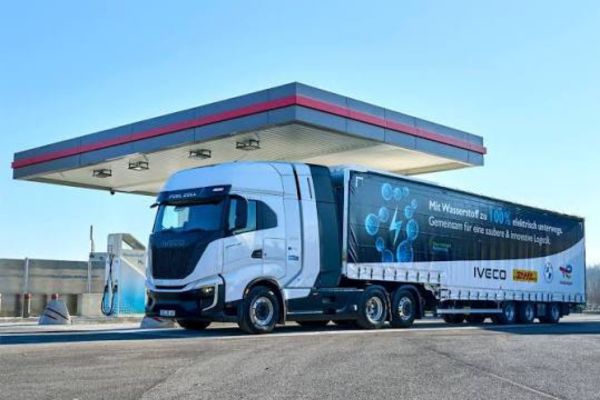
According to Cervicorn Consulting, the global hydrogen truck market size reached USD 3.84 billion in 2025 and is expected to exceed around USD 16.97 billion by 2035, exhibiting a compound annual growth rate (CAGR) of 16.5% over the forecast period from 2026 to 2035. The global Hydrogen Truck Market is witnessing remarkable momentum as governments, logistics providers, and commercial fleet operators accelerate the transition toward sustainable freight transportation. Hydrogen-powered trucks offer long driving ranges, rapid refueling capabilities, and zero tailpipe emissions, making them an ideal solution for long-haul transportation where battery-electric alternatives face operational limitations.
Growing investments in hydrogen refueling infrastructure, fuel cell technology, and green hydrogen production are creating new growth opportunities across the commercial vehicle ecosystem. Leading truck manufacturers, energy companies, and public authorities are collaborating to develop large-scale hydrogen mobility networks, further strengthening market expansion.
Why the Hydrogen Truck Market is Growing
The increasing emphasis on carbon neutrality and stringent emission regulations is encouraging the adoption of hydrogen-powered heavy-duty vehicles. Hydrogen fuel cell trucks provide superior range, faster refueling, and higher payload capacity compared to conventional battery-electric trucks, making them particularly attractive for logistics, mining, construction, and regional freight operations.
Several governments are introducing financial incentives, infrastructure funding, and hydrogen roadmaps to accelerate commercial deployment. At the same time, advancements in fuel cell efficiency, hydrogen storage systems, and vehicle durability are improving operational performance while reducing total ownership costs.
Report Highlights
- Asia-Pacific emerged as the leading regional market, accounting for 48.2% of global revenue. The region’s dominance is driven by rapid expansion of hydrogen refueling infrastructure, robust commercial vehicle manufacturing, and strong government initiatives promoting fuel cell technology, particularly across China, Japan, and South Korea.
- Heavy-Duty Trucks represented the largest vehicle segment with a 55.6% market share, supported by rising demand for long-haul freight transportation, higher payload capacity, extended operational range, and faster hydrogen refueling compared to conventional alternatives.
- Hydrogen Fuel Cell Electric Vehicles (FCEVs) captured 91.4% of the market, driven by their zero-emission performance, superior energy efficiency, longer driving range, and increasing investments in hydrogen production and fueling infrastructure worldwide.
- Vehicles with a driving range above 500 km accounted for 47.5% of the market, reflecting growing adoption among commercial fleet operators seeking uninterrupted long-distance transportation, improved productivity, and lower downtime through rapid refueling.
- Logistics & Freight Transportation dominated the application landscape with a 44.8% market share, fueled by the rapid growth of e-commerce, increasing fleet decarbonization initiatives, and rising demand for sustainable, high-performance heavy-duty transportation solutions.
Key Market Growth Drivers
- Rising global demand for zero-emission commercial transportation
- Government incentives supporting hydrogen mobility and clean transportation
- Expansion of hydrogen refueling station networks
- Increasing investment in green hydrogen production
- Growing adoption of fuel cell technology in heavy-duty vehicles
- Long driving range with significantly shorter refueling time
- Fleet decarbonization initiatives by logistics and transportation companies
- Strategic collaborations between OEMs, energy providers, and technology developers
Emerging Market Opportunities
The market offers significant opportunities as countries invest in national hydrogen infrastructure and commercial fleet electrification. Hydrogen trucks are expected to play a critical role in industries requiring continuous operation, including long-distance logistics, ports, mining, construction, municipal services, and industrial transportation.
Future opportunities include:
- Development of hydrogen freight corridors
- Large-scale deployment of green hydrogen production facilities
- Integration of renewable energy with hydrogen generation
- Commercialization of next-generation fuel cell systems
- Public-private partnerships for hydrogen mobility ecosystems
- Expansion into emerging economies investing in clean transportation
Market Challenges
Despite strong growth prospects, several factors continue to influence market adoption:
- High initial vehicle acquisition costs
- Limited hydrogen refueling infrastructure
- High cost of green hydrogen production
- Supply chain challenges for fuel cell components
- Infrastructure investment requirements
- Standardization and safety regulations across regions
Continuous technological innovation and government support are expected to gradually overcome these challenges throughout the forecast period.
Regional Market Insights
- Asia Pacific dominates the global Hydrogen Truck Market, supported by substantial investments in hydrogen infrastructure, favorable government policies, and large-scale commercialization initiatives in countries such as China, Japan, and South Korea.
- Europe continues to experience rapid growth through ambitious decarbonization targets, hydrogen strategies, and increasing investments in sustainable freight transportation.
- North America is witnessing strong momentum as governments and private companies expand hydrogen production capacity, develop fueling infrastructure, and deploy fuel-cell-powered commercial fleets.
- Meanwhile, Latin America and the Middle East & Africa are gradually emerging as promising markets due to growing renewable energy investments and national hydrogen development strategies.
Competitive Landscape
The Hydrogen Truck Market is highly competitive, with industry participants focusing on technological innovation, strategic collaborations, infrastructure development, and new product launches to strengthen their market presence.
Key competitive strategies include:
- Investment in advanced fuel cell technologies
- Expansion of hydrogen fueling networks
- Strategic partnerships across the hydrogen value chain
- Fleet demonstration projects
- Commercial-scale manufacturing expansion
- Research and development for higher efficiency and lower operating costs
The leading companies in the hydrogen truck market are Daimler Truck AG, Hyundai Motor Company, Toyota Motor Corporation, Volvo Group, PACCAR Inc., Nikola Corporation, IVECO S.p.A., Hino Motors, Ltd., MAN Truck & Bus SE, Ashok Leyland Limited, Quantron AG, and Dongfeng Motor Corporation.
Stay Ahead of the Hydrogen Mobility Revolution
As the commercial transportation sector accelerates toward net-zero emissions, hydrogen-powered trucks are emerging as a transformative solution for sustainable logistics. Organizations investing early in hydrogen technologies, infrastructure, and fleet modernization will be well-positioned to capitalize on one of the fastest-growing clean mobility markets over the coming decade.
Gain actionable market intelligence with Cervicorn Consulting’s comprehensive Hydrogen Truck Market Report and make informed strategic decisions for future growth.