
Asahi Kasei Microdevices Corporation (AKM), a subsidiary of diversified global company Asahi Kasei, has announced that its CZ39 series and CZ3K series coreless current sensors have been adopted as key enabling components of Microchip Technology Machine Learning (ML) / AI-based Arc Fault Detection (AFD) reference design featuring a dsPIC33A Digital Signal Controller (DSC). This collaboration demonstrates how AKM’s current sensing technology and Microchip’s dsPIC33A real-time signal-processing and edge machine-learning capabilities can be combined to support accurate and reliable arc fault detection. The dsPIC33A DSC executes the signal processing and inference algorithms directly on the controller, enabling local decision making without external processing resources.
Arc faults are a leading cause of electrical fires in solar PV systems, energy storage systems, EV charging infrastructure, and industrial and residential power distribution. Conventional threshold based detection struggles to distinguish real arc events from normal system activity. In residential and commercial AC circuits, everyday loads such as vacuum cleaners, power drills, and light dimmers produce arcing at switch contacts and motor brushes that closely resembles a dangerous arc fault.

In DC systems such as solar PV, EV charging, and energy storage, switching transients from relay contact bounce, inverter operation, and capacitor inrush generate broadband noise in the same frequency bands as actual arc faults. In both cases, the result is either false positives that cause unnecessary shutdowns, or relaxed thresholds that miss real faults. Machine learning can close that gap. Microchip’s AFD reference design runs an edge ML model directly on its dsPIC33A DSC, leveraging an integrated DSP engine and advanced analog peripherals to enable low latency ML inference. This intelligent approach helps reduce false triggers and improve arc fault detection performance compared with traditional threshold-based approach.
Detection performance depends on multiple factors, including sensor bandwidth and noise performance, signal processing, feature extraction, and machine-learning model training. High-quality current sensing is an important contributor to overall system performance. For high-accuracy detection, the sensor needs to be fast and have little data pollution to capture an arc’s signature. A slow or noisy sensor blurs or buries that signature, which precludes effective training of the model.
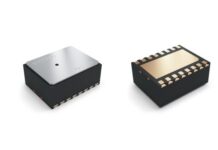
AKM’s CZ39 series and CZ3K series coreless current sensors feature a 100 ns response time. Their speed and low-noise signal quality are central to the signal chain behind Microchip’s reference design. The engineering team in San Jose at AKM Semiconductor, Inc. (AKMS), AKM’s U.S. subsidiary, worked closely with Microchip on the current-sensing configuration during the development and validation stage.
Chris Baltar, Vice President of Business Development at AKMS, stated, “We were glad to support Microchip as they built out and validated this reference design using the AKM CZ39 and CZ3K families. Our collaboration demonstrates how high-performance current sensing combined with intelligent edge processing can help designers implement advanced protection functions across a variety of power applications. We’re excited to explore how this design could be adopted for data center applications
as AI workloads drive the need for higher-power-density and emerging high-voltage power architectures.”
The AFD demonstration, available through Microchip’s reference design program, is currently applicable across solar PV, energy storage systems, EV chargers, smart ignition systems, e-Fuse designs, and residential and industrial safety switches.
Asahi Kasei has positioned Electronics as a First Priority business expected to drive earnings growth. The business is expanding its portfolio of materials and components for advanced semiconductors and electronic devices. Within AKM, current sensors are positioned as a future growth pillar, building on their use in EVs while targeting AI and data center applications.