

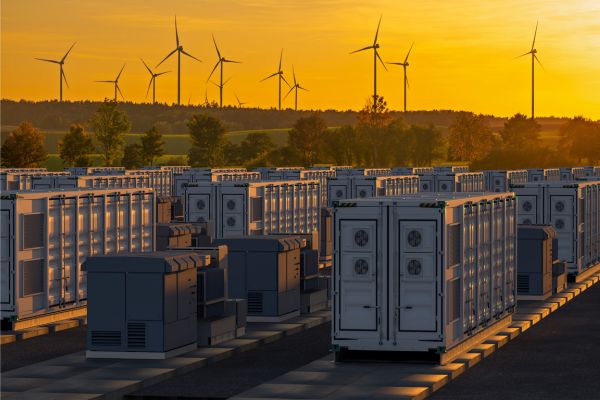
As India works towards expanding its non-fossil fuel power capacity, the challenge is increasingly moving beyond renewable generation alone. Greater penetration of solar and wind requires infrastructure that can manage intermittency, balance supply and demand, support grid stability and store electricity for use when generation falls.
Battery Energy Storage Systems (BESS), Power Conversion Systems (PCS) and high-capacity inverters are therefore becoming important components of the renewable-energy ecosystem. Across the industry, technology providers are developing solutions for utility-scale storage, renewable integration, industrial applications and microgrids. Here are five technologies that illustrate how this infrastructure is evolving.
1. High-Voltage Central Inverters for Utility-Scale Solar
Large solar installations require high-capacity inverters capable of converting DC electricity generated by solar modules into grid-compatible AC power while responding to changing grid conditions.
Solutions in this category increasingly operate on 1500Vdc architectures and incorporate active and reactive power control, grid-support functions and modular deployment. For instance, Delta Electronics India’s Modular Central Inverter / DC1100U operates at 1500Vdc/660Vac, with maximum AC output of 1,350 kVA and the ability to install multiple units in parallel.
Such high-voltage inverter architectures can support megawatt-scale solar projects while providing greater flexibility in the design and operation of large renewable-energy installations.
2. Containerised BESS for Large-Scale Energy Storage
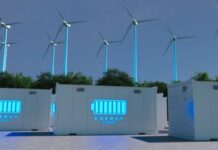
Containerised battery systems are becoming an important part of utility-scale renewable projects because they combine battery modules, thermal management, safety systems and power-conversion infrastructure within modular platforms.
Systems such as Sungrow’s PowerTitan 2.0, available in configurations including 2.5 MW/5 MWh, represent this approach to utility-scale storage. These platforms can be deployed for applications ranging from renewable-energy integration and peak shaving to grid balancing.
Their modular design also enables storage capacity to be scaled according to the requirements of individual renewable-energy and grid projects.
3. Central PCS for Grid-Connected Battery Systems
The PCS serves as the interface between batteries and the electricity grid, allowing energy to move in both directions. Electricity can be converted from AC to DC while batteries are charging and from DC to AC when stored electricity is discharged back into the grid.
Central PCS architectures, including solutions developed by companies such as Sineng Electric, are designed for high-voltage battery systems and utility-scale storage projects. Their control capabilities can help storage assets respond to grid requirements while managing charging and discharging cycles.
As BESS deployments increase, the ability of PCS platforms to interact dynamically with the grid will become increasingly significant.
4. Hybrid Power Conversion for Solar and Storage
Another emerging approach is the use of power-conversion platforms capable of supporting both photovoltaic generation and battery storage.
TMEIC’s Solar Ware Universal PCS is one example of this architecture. The modular system uses IGBT-based power conversion and can support bidirectional operation for energy-storage applications, including configurations based on a 1500Vdc architecture.
Hybrid conversion platforms can help integrate renewable generation and storage within a common electrical architecture, an increasingly relevant requirement as projects move towards combining solar capacity with battery storage.
5. Grid-Forming PCS for Advanced Storage Applications
As battery storage assumes a larger role in electricity networks, PCS technology is also evolving from basic power conversion towards active grid support.
Modern bidirectional converters can provide fast dynamic response and functions such as frequency regulation, voltage support, islanding and black start. Hitachi Energy’s Battery Power Conversion System, for example, supports battery voltages of up to 1,500 VDC and incorporates liquid cooling and grid-forming capabilities.
These functions could become particularly relevant as grids accommodate greater shares of variable renewable generation and storage systems take on responsibilities traditionally performed by conventional power plants.
Building the Infrastructure Behind Renewable Power
India’s energy transition will depend on more than expanding solar and wind generation. The electricity system will also require storage and power-electronics infrastructure capable of managing when renewable electricity is generated, stored and supplied to the grid.
High-voltage inverters, bidirectional PCS, containerised BESS, hybrid conversion architectures and grid-forming technologies address different parts of this requirement. As utility-scale storage deployment expands, the focus is likely to shift increasingly towards how these technologies work together to create a more flexible and resilient electricity network.
Rather than any single product or supplier defining this transition, the development of a broader ecosystem of storage, conversion, control and grid-integration technologies will determine how effectively India can accommodate its growing renewable-energy capacity.