

The consumer electronics industry is entering a phase where connectivity alone is no longer enough. Devices are becoming increasingly capable of processing information, understanding user behaviour and responding in real time. This shift is being driven by the convergence of Artificial Intelligence (AI), the Internet of Things (IoT), 5G and edge computing.
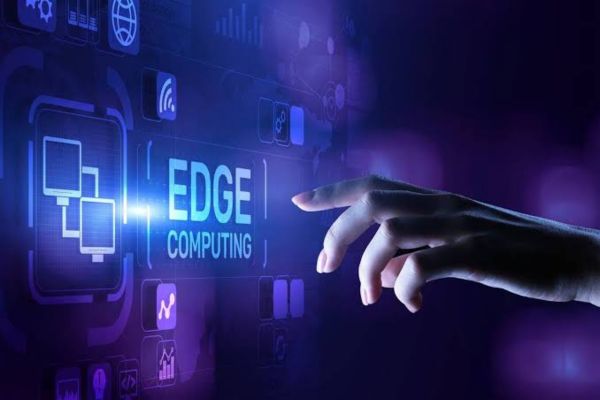
At the centre of this transformation is edge intelligence. Instead of sending every piece of data to a remote cloud infrastructure for processing, edge-enabled devices can analyse and act on information closer to where it is generated. For consumer electronics, this can mean faster responses, greater personalization and more efficient device experiences.
The smartphone is perhaps the clearest example of this transition. AI is already being integrated into cameras, voice functions, search, translation, content recommendations and device optimisation. As smartphones increasingly use dedicated processors for AI workloads, more processing can happen directly on the device. This reduces dependence on constant cloud interaction for certain applications and can also improve responsiveness.
This evolution is changing the way consumers view device capabilities. Specifications such as processor speed, camera resolution and storage will continue to matter, but consumers will increasingly look at what a device can actually do with those specifications. An AI-enabled smartphone, for instance, has greater value when its intelligence translates into better photography, more useful assistance or a more personalized experience.
The same shift is taking place beyond smartphones. IoT has already connected a wide range of products, including televisions, air conditioners, refrigerators, security systems, lighting and other household appliances. The next step is to make these connected devices more intelligent.
A connected appliance can provide information remotely, but an intelligent appliance can interpret information and respond to it. Depending on the model and its capabilities, an AI-enabled air conditioner can analyse usage patterns and adjust settings to improve comfort and energy efficiency. Similarly, connected appliances equipped with appropriate monitoring features can identify certain operating irregularities and notify users when maintenance may be required. A television can use viewing behaviour to provide more relevant recommendations. A connected appliance can identify unusual operating patterns and alert the user before a potential issue develops.
When these capabilities extend across multiple products, the result is an ecosystem rather than a collection of individual devices. This is where AIoT becomes particularly relevant. AI provides the intelligence, IoT provides the connected infrastructure, and edge computing allows devices to process information closer to the point of use.
5G adds another important layer to this ecosystem. 5G can provide higher data speeds, lower latency under suitable network conditions, and support for a growing range of connected applications. While many smart home devices continue to rely on Wi-Fi or other connectivity technologies, wider 5G availability can strengthen the broader digital infrastructure supporting connected consumer experiences. While not every consumer application will require 5G, its wider availability can help create the connectivity infrastructure required for more responsive and interconnected environments.
The impact of this convergence will extend beyond individual product categories. The consumer electronics market is gradually moving towards an ecosystem approach, where smartphones, wearables, entertainment devices and home appliances can interact with each other. The value of a device will increasingly depend not only on its individual capabilities but also on how effectively it fits into this wider ecosystem.
For the industry, this creates an important challenge. AI, IoT and edge technologies are complex concepts, but their benefits need to be easy for consumers to understand. Consumers are unlikely to adopt a technology simply because it has AI or edge processing. They will adopt it when the technology solves a genuine problem or makes an existing experience more convenient.
This is also where electronics retailers have an evolving role to play. As products become more intelligent and interconnected, consumers will need greater assistance in understanding the practical differences between devices. Product demonstrations, comparisons and guidance can help translate technical specifications into real-world benefits. Retailers can also help consumers understand compatibility between different products and the wider connected ecosystem.
Trust will be another important consideration. Connected devices are increasingly becoming part of personal spaces and daily routines, which means questions around privacy and data security will become more important. Edge processing can reduce the need to send certain information to remote systems, but manufacturers and technology providers will still need to prioritise strong security, transparency and responsible data practices.
India has an opportunity to become a significant market for this next generation of consumer electronics. India has an opportunity to become a significant market for the next generation of consumer electronics, supported by its large digitally connected population and expanding 5G infrastructure. As AI-enabled products become more accessible, their adoption will depend on affordability, ease of use, practical benefits and consumer confidence in connected technologies. At the same time, adoption will depend on affordability, ease of use and whether these technologies deliver benefits that consumers can clearly recognise.
From a consumer electronics perspective, one of the most interesting developments will be the shift from connected products to intelligent ecosystems. The question is no longer simply whether a device can connect to the internet. It is whether that connectivity, combined with AI and local processing, can make the device more useful and responsive.
The convergence of AI, IoT and 5G is therefore likely to influence the next generation of consumer electronics in a significant way. Edge intelligence can bring computing closer to the consumer, AI can make devices more capable, IoT can connect them and 5G can support faster communication across the ecosystem.
The opportunity for the industry is to ensure that this technological progress remains closely connected to consumer needs. The most successful intelligent devices will not necessarily be those with the most features, but those that use intelligence in a way that makes everyday experiences simpler, faster and more relevant.
As these technologies mature, intelligence will increasingly become part of the device itself rather than something consumers consciously interact with. That could ultimately be the biggest change brought by Edge Intelligence: making technology smarter without making it more complicated for the people using it.

By Gaurav Pahwa, Director, Lotus Electronics