

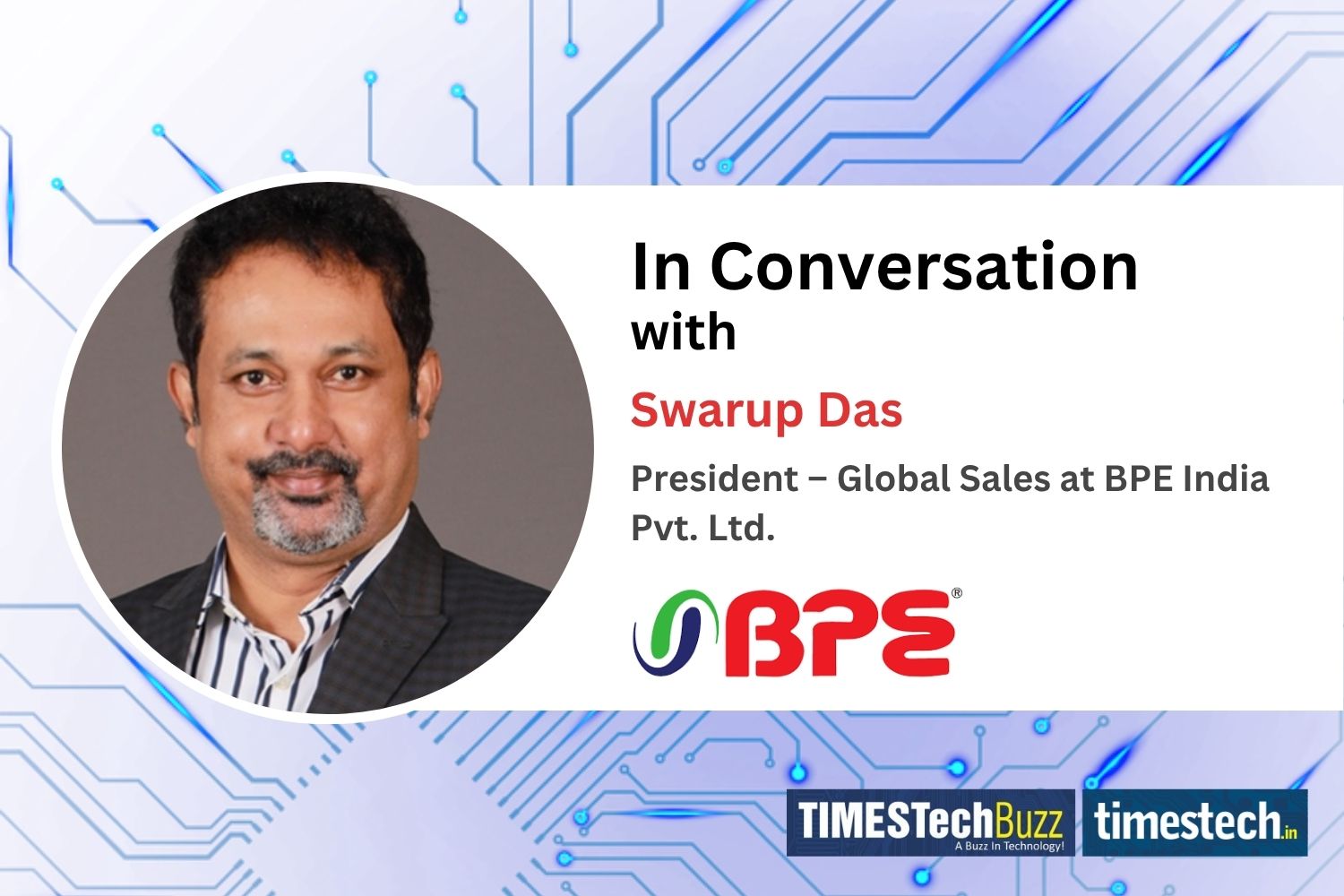
In an interview with TimesTech, Swarup Das, President – Global Sales at BPE India Pvt. Ltd. reflects on the company’s evolution from a bootstrapped UPS provider to a global power solutions leader. He highlights key inflection points, including early bets on power reliability, a shift to integrated solutions, and investments in R&D. The discussion also explores emerging trends in AI-driven power demand, data centres, and sustainable energy solutions shaping the future.
Read the full interview here:
TimesTech: BPE started at a time when India’s power infrastructure faced significant challenges. Looking back, what were the defining inflection points that transformed BPE from a bootstrapped venture into a global power solutions leader?
Swarup: Our journey began at a time when power reliability was a critical bottleneck for India’s growth. The first inflection point was recognizing early that power continuity would become mission-critical across sectors like banking, telecom, and IT. We focused on building robust, reliable UPS solutions when the market was still largely fragmented. The second turning point was our shift from being a product company to a solutions-driven organization—integrating design, manufacturing, and after-sales service. This allowed us to build long-term customer trust. Another key milestone was our investment in R&D and indigenous manufacturing, aligning with India’s push for self-reliance while also making us globally competitive. Finally, our expansion into international markets and critical infrastructure segments like data centres and space applications firmly positioned us as a global player.
TimesTech: With over 1200 products and a presence across 25+ countries, how does BPE ensure innovation, customization, and consistency in quality across such a vast and diverse portfolio?
Swarup: Managing scale without compromising quality requires a strong foundation of processes and culture. At BPE, we have built a modular product architecture that allows us to customize solutions without reinventing the core technology each time. We maintain strict global quality standards through standardized testing protocols, certifications, and centralized quality control systems.
Digitization also plays a big role—our engineering, supply chain, and service teams are tightly integrated to ensure consistency across geographies. This enables us to deliver both customization and reliability at scale.
TimesTech: BPE has been deeply involved in critical infrastructure projects—from ISRO to large-scale data centres. What are the unique power challenges in mission-critical environments today, especially with the rise of AI-driven workloads?
Swarup: Mission-critical environments today demand zero tolerance for downtime. With AI-driven workloads, we are seeing a sharp increase in power density, dynamic load patterns, and heat generation. The key challenges include ensuring uninterrupted uptime, managing thermal stress, and delivering high-efficiency power systems that can scale rapidly. There is also a growing need for predictive monitoring and intelligent power management. In such environments, power systems are no longer just backup—they are integral to operational continuity. This requires highly resilient, redundant, and intelligent infrastructure, which is where our advanced UPS systems and energy storage solutions play a crucial role.
TimesTech: As India rapidly emerges as a global GCC (Global Capability Centre) hub, how do you see this trend reshaping demand for advanced power infrastructure, data centre solutions, and BESS technologies?
Swarup: Global Capability Centres are the next big thing for the Indian IT industry and GCCs do require advanced power infrastructure and BESS solutions. We have successfully delivered high performance solutions for large IT companies and GCCs in the Middle East and South East Asian region. The recent expansion of the IT space is indeed promising for our industry and we project that this momentum shall be maintained.
TimesTech: Battery Energy Storage Systems (BESS) are increasingly being positioned as alternatives to traditional DG sets. How do you see this transition evolving in India and globally, and what role is BPE playing in accelerating this shift?
Swarup: Till very recently, traditional DG sets which ran of diesel were the preferred solution sought by large companies as a dependable power back up option for running seamless operations. However, this was a costly option, as most DG sets ran on diesel, prices of which were persistently increasing the last few years; further, it was also adding to carbon footprints, which is a major concern these days, both for companies and investor community. We at BPE, have been continuous evolving our solutions to offer tailor-made power back-up solutions to all our clients, who come from a variety of industries. Our clients include, leading brands in the Quick Commerce, Fast Food and IT/ITeS space. Most of our clients have referred us to other companies, which we feel is a true validation of our products and solutions.
TimesTech: With industries like AI, 5G, and edge computing pushing power demand to new extremes, how is BPE preparing its technology roadmap to address issues like power density, thermal stress, and uninterrupted uptime?
Swarup: Any industry, especially the IT industry is a very dynamic and technologies evolve on an everyday basis. Likewise, even we at BPE innovate our solutions to meet our client’s needs. Gone are the days, when clients were open to keeping invertors which were large box-like structures, occupied lots of space, and were more of an eye-sore in offices. Now, clients prefer compact and sleek looking UPS products which offer high performance services for uninterrupted uptime and to the aesthetics of the workplace. The agility of doing the customisation as per customer need is one of the strength of BPE.
Coming to the second part of your question; we at BPE have an R&D department, who study latest technologies and try to incorporate those in the solutions that we offer. Our entire focus is on creating high performance options for our clients who operate in spaces which require round-the-clock uptime; as their operations, very often include, high value transactions.