


Market Summary
According to latest research by Research Intelo, the Global Defense Digital-Engineering market size was valued at $8.7 billion in 2024 and is projected to reach $23.4 billion by 2033, expanding at a robust CAGR of 11.5% during the forecast period of 2025–2033. The primary factor propelling this impressive growth trajectory is the increasing integration of advanced simulation and modeling technologies within defense organizations worldwide. As military operations become more complex and digital transformation accelerates, defense agencies are turning to digital-engineering solutions to optimize system design, enhance operational readiness, and streamline lifecycle management.
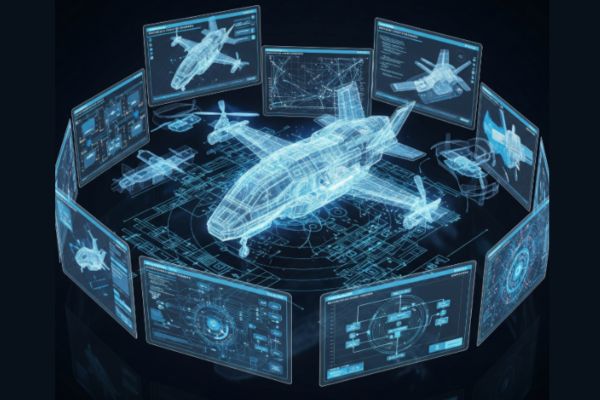
The Defense Digital-Engineering Market is rapidly evolving as armed forces around the world embrace advanced technologies to enhance operational efficiency, reduce costs, and improve decision-making processes. Digital engineering combines simulation tools, modeling, and data analytics to streamline the design, development, testing, and maintenance of defense systems.
Market Overview
The global Defense Digital-Engineering Market is witnessing substantial growth driven by the increasing need for advanced defense capabilities and faster product development cycles. Defense organizations are investing in digital twin technology, artificial intelligence (AI), and cloud computing to develop robust and adaptable systems. These solutions help reduce prototype costs and accelerate system integration while improving mission readiness.
North America and Europe remain key markets due to their strong defense budgets and focus on innovation. However, Asia-Pacific is emerging as a significant region with increasing government investments and collaborations in defense technologies. The market is also expected to benefit from growing public-private partnerships and cross-border technological exchange.
Key Drivers of Market Growth
Rising Defense Expenditure
Government spending on defense has increased in recent years, particularly in response to geopolitical tensions and emerging threats. Digital engineering tools enable military organizations to manage complex projects more effectively, justify expenses, and enhance performance without escalating costs.
Integration of AI and Machine Learning
Artificial intelligence and machine learning algorithms are transforming defense operations by enabling real-time data analysis, predictive maintenance, and autonomous systems management. Digital engineering frameworks support these technologies, providing detailed simulations that help anticipate threats and optimize equipment design.
Adoption of Cloud-Based Platforms
Cloud computing facilitates efficient data storage, real-time collaboration, and remote access to engineering tools. Defense organizations are increasingly adopting cloud platforms to manage distributed teams, share critical information, and accelerate decision-making processes.
Challenges in Adoption
Despite the promising outlook, the Defense Digital-Engineering Market faces several challenges. Security concerns related to data privacy and cyber threats remain critical, especially as defense systems become more connected. Additionally, integrating legacy systems with new digital tools can be complex and costly. Workforce training and the shortage of skilled professionals proficient in advanced simulation and AI tools further hinder adoption.
Future Opportunities
The Defense Digital-Engineering Market is poised to expand as next-generation technologies such as quantum computing and edge computing gain traction. These advancements can enhance simulation speed, data processing, and real-time decision-making, providing militaries with an edge in critical operations. Furthermore, collaborations with tech startups and academic institutions are expected to drive innovation and reduce time-to-market for new defense products.
Competitive Landscape
- BAE Systems
- Raytheon Technologies
- Lockheed Martin
- Northrop Grumman
- Boeing Defense, Space & Security
- General Dynamics
- Thales Group
- Leonardo S.p.A.
- Saab AB
- Elbit Systems
Technological Advancements
The Defense Digital-Engineering Market is being reshaped by groundbreaking technologies that enhance efficiency, precision, and responsiveness. Artificial intelligence (AI) and machine learning are at the forefront, enabling smarter simulations, predictive maintenance, and autonomous systems. These technologies help defense agencies design equipment that performs reliably under extreme conditions and adapt quickly to battlefield changes.
Future Outlook
Looking ahead, the Defense Digital-Engineering Market is expected to expand significantly as governments prioritize modernizing defense systems in response to new-age threats. The adoption of 5G networks and edge computing will further enhance real-time data processing, enabling faster and more accurate decision-making during critical operations.
Quantum computing holds promise for solving highly complex simulations in record time, pushing defense design capabilities to new heights. As these technologies mature, defense organizations are likely to invest heavily in integrating AI-driven analytics, autonomous control systems, and advanced cybersecurity frameworks to safeguard sensitive data and operational integrity.