

The global electric truck charging station market is entering a high-growth phase as logistics companies, freight operators, retailers, municipalities, and industrial fleets accelerate the transition from conventional diesel trucks to battery-electric commercial vehicles.
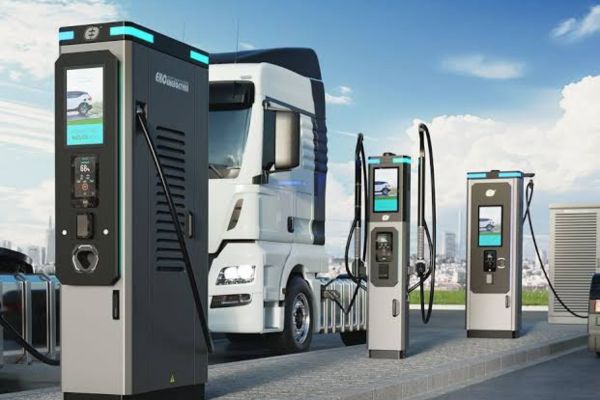
The expansion of electric truck fleets is creating a parallel need for dedicated, high-power charging infrastructure, including fleet depot chargers, public truck charging hubs, highway charging corridors, distribution-center charging systems, and next-generation Megawatt Charging Systems (MCS).
According to Cervicorn Consulting, the global electric truck charging station market was valued at approximately USD 4.10 billion in 2025 and is projected to reach USD 35.32 billion by 2035, registering a CAGR of 24.0% from 2026 to 2035.
Key Market Highlights
- Market Size, 2025: USD 4.10 Billion
- Projected Market Size, 2035: USD 35.32 Billion
- CAGR, 2026–2035: 24.0%
- Leading Region: Asia Pacific
- Asia Pacific Share, 2025: 55%
- Leading Vehicle Category: Light-Duty Electric Trucks
- Leading Charger Technology: DC Fast Charging
- Leading Deployment Type: Fleet Depot Charging
- Leading End User: Logistics & Freight
- Fastest-Growing Charger Technology: Megawatt Charging System (MCS)
- Fastest-Growing Deployment Type: Highway Corridor Charging
Government Policies Accelerate Market Development
Government initiatives are becoming an important catalyst for electric truck adoption and charging infrastructure investment.
Key initiatives highlighted in the report include:
- China: China’s 2026 New Energy Heavy-Duty Truck Scale-Up Implementation Plan targets 40% new-energy heavy-truck penetration by 2030, alongside significant expansion of electric truck charging and battery-swapping infrastructure.
- European Union: The EU’s Alternative Fuels Infrastructure Regulation (AFIR) and related funding programs are supporting the development of high-power heavy-duty vehicle charging infrastructure across member states.
- United States: The U.S. Department of Energy announced funding for medium- and heavy-duty EV charging projects targeting ports, distribution hubs, and major freight corridors.
- India: India’s PM E-DRIVE Scheme, with a total outlay of ₹10,900 crore, includes funding for electric truck incentives and public EV charging infrastructure.
Electric Truck Electrification Creates a New Infrastructure Market
- The electrification of commercial transportation is moving beyond passenger vehicles.
- Electric trucks are increasingly being deployed for last-mile delivery, regional distribution, freight transportation, municipal operations, ports, industrial applications, and logistics. As the number of electric commercial vehicles increases, charging infrastructure is becoming a critical component of fleet operations.
- Unlike passenger EV charging, electric truck charging requires infrastructure designed around vehicle size, battery capacity, route length, charging downtime, fleet schedules, power availability, and total operating costs.
- This is creating demand for charging solutions capable of delivering substantially higher power while maintaining high uptime and efficient energy management.
AI-Driven and Smart Charging Infrastructure
The next generation of electric truck charging infrastructure is moving toward intelligent energy management.
Fleet operators increasingly require charging systems that can coordinate:
- Vehicle charging schedules
- Fleet telematics
- Route planning
- Electricity pricing
- Grid capacity
- Battery state of charge
- Energy storage
- Peak-load management
- Vehicle prioritization
Smart charging platforms can help fleet operators reduce electricity costs while ensuring that vehicles are sufficiently charged before their scheduled routes.
This shift is transforming truck charging from a standalone hardware installation into an integrated energy and fleet-management ecosystem.
Megawatt Charging System Becomes a Major Growth Opportunity
One of the most important technology trends in the market is the development of Megawatt Charging Systems (MCS).
Heavy-duty electric trucks operating on long-distance routes require large battery packs and high charging power. Conventional charging systems may not always provide sufficient energy within commercially acceptable turnaround times.
MCS technology addresses this challenge by enabling charging at megawatt-scale power levels, allowing electric trucks to recharge during operational breaks, loading periods, and scheduled rest periods.
The MCS segment is expected to register the fastest growth through 2035, supported by the increasing electrification of long-haul freight transportation.
The expansion of MCS infrastructure is also creating opportunities for:
- High-power charging equipment
- Grid infrastructure
- Energy storage systems
- Power electronics
- Charging software
- Load management systems
- Charging-as-a-service providers
- Utility partnerships
Asia Pacific Dominates the Electric Truck Charging Market
Asia Pacific accounted for approximately 55% of the global electric truck charging station market in 2025, making it the leading regional market.
The region benefits from:
- Large-scale electric commercial vehicle production
- Strong battery manufacturing capabilities
- Rapid fleet electrification
- Expanding logistics networks
- Government support for zero-emission transportation
- Established EV supply chains
China Leads Regional Development
China is the dominant market for electric trucks and associated charging infrastructure.
Electric truck sales in China exceeded 400,000 units in 2025, representing more than 90% of global electric truck sales according to the Cervicorn Consulting analysis. Electric trucks also represented approximately 25% of total truck sales in the country during 2025.
China’s large commercial vehicle manufacturing base, battery ecosystem, and charging infrastructure investments provide a significant competitive advantage.
Japan, South Korea, and India are also increasingly investing in electric commercial vehicles and supporting charging infrastructure.
North America Represents a High-Growth Opportunity
North America is projected to record a 28.0% CAGR from 2026 to 2035, making it one of the fastest-growing regional markets.
The market is being supported by increasing electrification of:
- Freight fleets
- Delivery vehicles
- Port operations
- Distribution networks
- Regional trucking
- Municipal fleets
North American truck charging infrastructure is increasingly being developed as an integrated energy system rather than a standalone EV charging installation.
High-power charging can require significant investment in grid upgrades, transformers, energy storage, switchgear, cabling, and load-management systems.
This creates opportunities for companies capable of delivering complete charging and energy infrastructure solutions.
Fleet Depot Charging Remains the Largest Deployment Segment
Fleet depot charging accounted for 55% of the market in 2025, making it the largest deployment segment.
Depot charging is particularly attractive for commercial fleets because vehicles typically return to a centralized location after completing their daily routes.
This enables operators to charge trucks during predictable periods, including overnight or between shifts.
The model offers several advantages:
- Predictable charging schedules
- Centralized infrastructure management
- Better electricity procurement
- Integration with fleet-management systems
- Lower operational complexity
- Easier maintenance and monitoring
However, as long-haul electric trucking expands, demand is expected to shift increasingly toward public truck charging hubs and highway charging corridors.
Highway Charging Corridors Gain Momentum
Highway corridor charging is projected to record the fastest deployment growth, with a CAGR of 37.2% from 2026 to 2035.
Long-distance electric freight transportation requires strategically located charging infrastructure along major logistics routes.
Unlike depot charging, highway charging must support vehicles from different fleets and accommodate variable charging schedules.
Successful highway charging hubs will therefore require:
- High-power chargers
- Multiple truck charging bays
- Pull-through charging spaces
- High charger uptime
- Reliable grid connections
- Standardized payment systems
- Charging authentication
- Energy storage
- Intelligent load management
The development of these corridors will be critical to enabling electric trucks to operate economically on long-distance routes.
Electric Truck Charging Station Market by Vehicle Category
The market is segmented into:
- Light-Duty Electric Trucks
- Medium-Duty Electric Trucks
- Heavy-Duty Electric Trucks
Light-Duty Electric Trucks
Light-duty electric trucks represented the largest vehicle category, with a 36% market share in 2025.
Their early adoption is supported by applications such as:
- Last-mile delivery
- Urban logistics
- Retail distribution
- Service fleets
- Local transportation
These vehicles typically operate on predictable routes and return to depots regularly, making depot charging particularly practical.
Heavy-Duty Electric Trucks
Heavy-duty electric trucks represented approximately 30% of the market in 2025 and are expected to experience the fastest growth during the forecast period.
The segment is being supported by:
- Long-haul freight electrification
- Stricter emissions regulations
- Increasing battery capacity
- Falling battery costs
- Development of high-power charging
- Fleet decarbonization targets
The growth of heavy-duty trucks will be closely connected to the availability of MCS and high-power charging infrastructure.
Electric Truck Charging Station Market by Charger Technology
The market includes:
- AC Charging
- DC Fast Charging
- High-Power DC Charging
- Megawatt Charging System (MCS)
DC Fast Charging
DC fast charging held the largest share at 40% in 2025.
- Its established commercial availability and ability to significantly reduce charging time make it an attractive solution for commercial fleets.
- DC fast charging is particularly suitable for regional routes where vehicles require faster turnaround but do not necessarily require megawatt-level charging.
Megawatt Charging System
- MCS is expected to be the fastest-growing charger technology through 2035.
- The technology is particularly important for heavy-duty trucks because it can provide the high charging power needed to recharge large battery packs within operationally acceptable timeframes.
- The expansion of MCS is expected to accelerate the development of electric long-haul freight corridors and high-utilization truck charging hubs.
Logistics & Freight Leads the End-User Segment
The logistics & freight segment accounted for 40% of market revenue in 2025, making it the largest end-user category.
Freight operators typically operate vehicles for long distances and high utilization cycles, making fuel and energy costs significant components of total fleet operating expenses.
Electric trucks can provide opportunities to reduce fuel and maintenance costs, but these benefits depend heavily on reliable charging infrastructure.
For logistics companies, charging infrastructure is therefore becoming part of broader fleet optimization and operational planning.
Retail & E-Commerce
Retail and e-commerce accounted for the second-largest end-user share at 20% in 2025.
The growth of online commerce is increasing demand for last-mile and regional delivery vehicles.
Electric trucks are particularly suitable for these applications because delivery routes are often predictable and vehicles regularly return to distribution centers.
Retailers and e-commerce companies can therefore integrate charging infrastructure directly into:
- Fulfillment centers
- Distribution hubs
- Warehouses
- Retail distribution facilities