

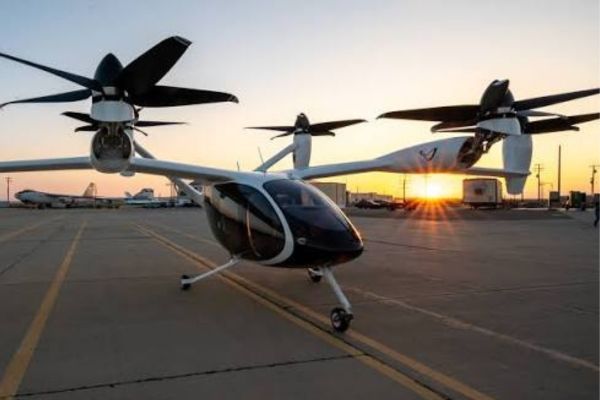
The global eVTOL aircraft market is entering a critical phase as electric aviation moves from prototype development and flight testing toward certification, commercial deployment, and scalable advanced air mobility (AAM) operations. Increasing urban congestion, demand for faster point-to-point transportation, advances in electric propulsion and batteries, and growing investment in next-generation aviation infrastructure are accelerating the development of electric vertical takeoff and landing aircraft.
According to Cervicorn Consulting, the global eVTOL aircraft market was valued at approximately USD 2.8 billion in 2025 and is projected to exceed USD 51.21 billion by 2035, expanding at a CAGR of 37% from 2026 to 2035. The market is expected to benefit from increasing deployment of air taxi networks, airport shuttle services, cargo transportation, emergency response aircraft, defense applications, and other advanced air mobility solutions.
Unlike conventional aircraft, eVTOL aircraft can take off and land vertically without conventional runways. They combine electric propulsion, distributed propulsion architectures, lightweight aerostructures, advanced avionics, sophisticated flight-control systems, high-performance batteries, and increasingly autonomous technologies. These capabilities make eVTOL aircraft particularly attractive for short- and medium-distance transportation in densely populated urban and suburban environments.
eVTOL Aircraft Market Overview
The transition toward sustainable aviation is creating new opportunities across the aerospace, automotive, energy, software, infrastructure, and mobility industries. Aircraft manufacturers, technology companies, battery developers, infrastructure providers, mobility operators, and governments are increasingly collaborating to establish the ecosystem required for commercial eVTOL operations.
The market is developing around several major use cases, including:
- Urban air taxis and on-demand passenger transportation
- Airport-to-city shuttle services
- Intercity and regional transportation
- Cargo and last-mile delivery
- Medical evacuation and emergency response
- Disaster relief and search-and-rescue operations
- Military logistics and defense applications
- Infrastructure inspection and surveillance
- Tourism and recreational aerial mobility
The development of vertiports, charging infrastructure, digital air traffic management, flight corridors, certification frameworks, and fleet-management platforms will be equally important to aircraft development in determining the pace of market commercialization.
eVTOL Aircraft Market Highlights
- The global eVTOL aircraft market is projected to exceed USD 51.21 billion by 2035.
- The market is expected to expand at a 37% CAGR between 2026 and 2035.
- North America currently represents the leading regional market due to its established aerospace ecosystem, high investment levels, technology capabilities, and progress toward regulatory frameworks for advanced air mobility.
- Asia Pacific is expected to be among the fastest-growing regional markets, supported by rapid urbanization, smart-city development, transportation congestion, and increasing interest in electric aviation.
- Fully electric propulsion remains a major technology segment as manufacturers seek lower operating emissions, improved energy efficiency, and reduced operating costs.
- Battery technology, electric motors, avionics, autonomous flight systems, and lightweight composite structures are among the most important technology areas shaping eVTOL development.
- Passenger transportation, cargo logistics, emergency services, and defense applications are creating multiple commercialization pathways.
eVTOL Aircraft Infrastructure and Deployment
Commercial eVTOL operations require considerably more than aircraft availability. The development of a reliable AAM infrastructure ecosystem is essential for large-scale deployment.
Vertiports are emerging as critical infrastructure nodes for passenger boarding, aircraft turnaround, charging, maintenance, and airspace coordination. Early deployments are concentrated in major metropolitan areas where traffic congestion, high passenger demand, airport connectivity requirements, and government support create favorable conditions for advanced air mobility.
Key infrastructure components include:
- Vertiports and landing pads
- High-speed aircraft charging systems
- Battery-management and energy-storage systems
- Passenger terminals and boarding facilities
- Digital air traffic management platforms
- Navigation and communication systems
- Aircraft maintenance infrastructure
- Fleet-management software
- Weather monitoring and safety systems
- Ground transportation integration
The successful integration of these components will determine how quickly eVTOL services can move from demonstration projects to commercially viable transportation networks.
Key Growth Factors Driving the eVTOL Aircraft Market
Growing Urban Air Mobility Demand
Rapid urbanization and increasing road congestion are creating demand for faster and more flexible transportation alternatives. eVTOL aircraft can provide point-to-point transportation while avoiding heavily congested ground routes, making them particularly relevant to major metropolitan areas.
Advancements in Battery and Electric Propulsion Technology
Improvements in energy density, charging technology, thermal management, electric motors, power electronics, and battery-management systems are improving the performance of electric aircraft. Continued innovation in these areas is essential for increasing range, payload capacity, reliability, and commercial viability.
Growing Investment in Advanced Air Mobility
The eVTOL ecosystem is attracting investment from aerospace manufacturers, mobility companies, technology firms, infrastructure developers, venture capital firms, and strategic investors. Partnerships across these industries are helping accelerate aircraft development, certification, manufacturing, infrastructure deployment, and commercial operations.
Increasing Regulatory Progress
Certification and airworthiness requirements remain among the most important factors influencing eVTOL commercialization. Aviation authorities are developing frameworks covering aircraft certification, pilot requirements, operational standards, vertiports, airspace integration, and autonomous flight.
Greater regulatory clarity can reduce uncertainty for manufacturers and operators while supporting long-term investment in the sector.
Demand for Sustainable Aviation
The aviation industry is under increasing pressure to reduce emissions and improve energy efficiency. Battery-electric and other low-emission propulsion technologies offer the potential to reduce operational emissions and noise compared with conventional aviation technologies, particularly for short-distance missions.
Development of Autonomous Flight Technologies
Artificial intelligence, advanced sensors, computer vision, flight-control software, navigation systems, and real-time data processing are increasing the automation capabilities of eVTOL aircraft. Over time, these technologies could support highly automated operations and potentially reduce pilot-related operating costs.
Latest Trends in the eVTOL Aircraft Market
Transition from Prototypes to Commercial Operations
The industry is gradually moving beyond technology demonstrations toward certification, manufacturing readiness, infrastructure deployment, and commercial service planning. This transition is shifting competitive priorities from simply developing aircraft to building complete AAM ecosystems.
Strategic Partnerships and Industry Consolidation
Partnerships between aerospace companies, technology providers, mobility operators, infrastructure developers, and defense organizations are becoming increasingly important. Recent industry activity also demonstrates growing strategic consolidation around autonomous flight, airspace management, and eVTOL technologies.
Expansion of Cargo and Logistics Applications
Cargo eVTOLs can provide faster delivery services in congested cities, remote regions, islands, and locations where conventional road infrastructure is limited. Logistics applications may provide an important early commercialization pathway because they can operate without passenger-related requirements.
Increasing Focus on Autonomous eVTOL Aircraft
Autonomy is becoming a major area of research and development. Advanced flight-control systems, artificial intelligence, sensors, obstacle detection, and automated navigation are expected to improve operational efficiency while supporting future pilot-optional and autonomous applications.
Development of Hydrogen and Hybrid Propulsion
Although fully electric propulsion is central to the current eVTOL market, hybrid-electric and hydrogen-electric technologies are attracting attention for applications requiring greater range, endurance, payload capacity, or faster refueling.
Integration with Smart Cities
eVTOL networks are increasingly being considered as part of broader smart-city transportation systems. Future AAM networks could integrate aircraft operations with airports, metro systems, ride-hailing platforms, public transportation, digital navigation systems, and urban infrastructure.
eVTOL Aircraft Market Dynamics
Drivers
- Advancements in AI and Autonomous Flight: Rapid development of artificial intelligence, sensors, navigation systems, and autonomous flight-control technologies is improving the potential safety, efficiency, and scalability of eVTOL operations.
- Growing Demand for On-Demand Transportation: Consumers and businesses increasingly seek faster, flexible, point-to-point transportation. eVTOL air taxis could provide premium mobility services between city centers, airports, business districts, and suburban locations.
Restraints
- Complex Certification Requirements: eVTOL aircraft must meet stringent aviation safety and certification requirements. Extensive testing, validation, and regulatory approval can increase development timelines and costs.
- High Development and Infrastructure Costs: Advanced batteries, electric propulsion systems, avionics, lightweight materials, software, manufacturing facilities, and vertiports require significant capital investment.
Opportunities
- Emergency Medical and Disaster Response: The vertical takeoff and landing capability of eVTOL aircraft can enable rapid deployment in areas affected by natural disasters, infrastructure failures, or medical emergencies.
- Tourism and Premium Mobility: Scenic flights, luxury transportation, resort connectivity, and island-to-island transportation could create specialized high-value applications for eVTOL operators.
- Cargo and Last-Mile Logistics: Cargo eVTOLs can address delivery challenges in dense cities and geographically difficult locations while reducing dependence on conventional road transportation.
Challenges
- Airspace Integration: Integrating large numbers of eVTOL aircraft with conventional aviation, drones, helicopters, and existing air traffic systems will require advanced traffic-management technologies and standardized operating procedures.
- Public Acceptance and Safety: Passenger confidence will be essential for commercial adoption. Manufacturers and operators must demonstrate high safety standards, reliability, low noise levels, and operational transparency.
Regional Analysis
North America eVTOL Aircraft Market
North America is currently the leading eVTOL market, supported by a mature aerospace ecosystem, significant private investment, technology capabilities, and active development of advanced air mobility frameworks.
The United States is particularly important because it combines major aerospace manufacturers, eVTOL startups, technology providers, infrastructure companies, and aviation regulators. Major metropolitan regions are emerging as potential early markets for air taxi and AAM services.
The region is also benefiting from increasing collaboration between aircraft developers, airlines, airports, mobility operators, defense organizations, and technology companies.
Asia Pacific eVTOL Aircraft Market
Asia Pacific is expected to experience rapid eVTOL market growth over the coming years. High population density, rapid urbanization, severe traffic congestion, smart-city initiatives, and increasing investment in next-generation transportation are creating favorable conditions for advanced air mobility.
China, Japan, India, Singapore, South Korea, and other regional markets are exploring applications ranging from passenger transportation and air taxis to cargo logistics and emergency response.
Asia Pacific also presents significant opportunities for eVTOL manufacturers because many cities are actively seeking alternatives to congested ground transportation systems.
Europe eVTOL Aircraft Market
Europe represents an important market for eVTOL development due to its strong aerospace capabilities, sustainability objectives, advanced transportation infrastructure, and ongoing regulatory development.
The region is focusing on integrating eVTOL aircraft into broader sustainable mobility networks while addressing certification, noise, infrastructure, and urban airspace requirements.
Middle East and LAMEA eVTOL Market
The Middle East is emerging as a high-potential market for premium air mobility, tourism, airport connectivity, and smart-city transportation. Significant investment in futuristic urban infrastructure and transportation systems is creating opportunities for early eVTOL deployment.
Latin America and Africa also offer longer-term opportunities, particularly for emergency response, cargo delivery, regional connectivity, and transportation services in areas where conventional infrastructure is constrained.