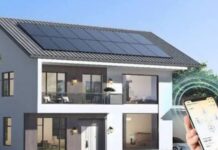
The future no longer exists without a concept or design of a smart home, and it is not a distant futuristic science fiction but is developing into a reality every day. Millions of homes globally are integrating voice-activated assistants, automated heating and cooling systems, smart security systems and more. As technology continues to advance and urban challenges continue to increase, a major shift is taking place in the real estate industry.
The next major technological innovation is quickly expanding past individual residential boundaries. Smart home technology will soon no longer be identified solely with individual homes but rather will enable the creation of entire smart communities. The way we connect, socialise and thrive within our cities will be completely transformed as this new evolution of smart living develops.
Shifting from Individual Luxury to Shared Efficiency
The early concept of smart living was based entirely on the convenience of individuals, like scheduling when to turn the heating or lights on or off in your home via an app on your phone or automated systems. The smart community will scale to a more efficient program, such as using the same technology to create solutions for common human and environmental issues.
Utilising the power of IoT, predictive AI and consolidated data networks, developers can transform the traditional design of a neighbourhood into a living, breathing ecosystem.
Decentralised Grids and Sustainable Resource Management
One of the most immediate, tangible benefits of this evolution is the revolution in resource management and sustainability. In a standard smart home, a property owner monitors their own solar panels or smart battery storage in a silo. In a true smart community, these individual units link together to create decentralised micro-grids. If a single home generates excess energy, then it can be smoothly routed to a neighbouring property experiencing peak demand. AI-based smart grids analyse consumption patterns of an entire community in real time. It helps in curbing waste, lowering utility costs and reducing the aggregate carbon footprint on a bigger scale.
Intelligently Linking Mobility and Infrastructure
Furthermore, community infrastructure is becoming deeply intertwined with modern mobility. The smart communities of tomorrow will link residential spaces directly with public and private transportation networks. This includes smart parking systems that automatically guide drivers to an open spot before they arrive at a neighbourhood commercial hub. It also involves EV charging stations that optimise charging schedules based on grid load and personal calendar events. Cities can actually minimise traffic gridlock, eliminate commuter difficulties and establish cleaner and pedestrian-friendly neighbourhoods by matching the data of a community with personal transit preferences.
Elevating Collective Safety and Proactive Healthcare
Safety and public health also undergo a massive transformation when expanding the focus from the home to the broader community. For instance, when someone has a smart home, it notifies a single owner of a water leak or a security breach. However, a smart community can use smart devices to provide the entire community with protection.
Predictive maintenance can alert you that a water or electrical service is about to fail before it actually does and disrupts the whole neighbourhood. For ageing or vulnerable residents, this neighbourhood-wide connectivity serves as a critical lifeline. Smart homes also employ non-invasive health monitoring tools in order to provide fast communication with local health care facilities in the event of a health emergency, so that emergency responders can arrive quickly.
Breaking Silos for a Connected Tomorrow
To achieve this greater vision, digital silos that have traditionally constrained technology must be eliminated. Additionally, the success of smart communities and their effectiveness depend directly on interoperability. In order to achieve interoperability, developers, planners and tech providers working within the industry must work together to adopt open standards for universal communication protocols. This enables a smooth exchange of information among smart appliances, public infrastructure, and personal mobility devices, regardless of the brand or manufacturer involved.

The evolution from smart homes to smart communities also reflects a shift in philosophy. While contemporary developments are necessarily creating resilient, highly-efficient and intensely human-centred urban environments, the industry must continue to innovate through the advancement of connected living. This will ensure that sustainable living is not exclusively about creating smart homes but also about creating vibrant communities.
By Vijay Kumar Aggarwal, Founder and Chairman of Yugen Infra