
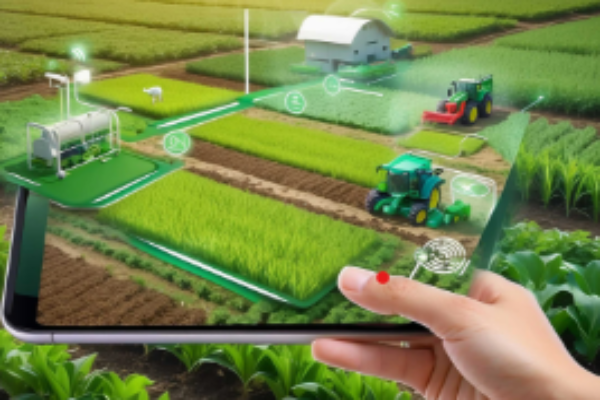
Agriculture is entering a new phase where fields are no longer isolated plots of land but data-rich, connected systems. Smart agriculture and connected farms are bringing sensors, software, analytics, and automation into everyday farm operations, helping farmers make faster, better, and more precise decisions.
This shift matters because farming must deliver more output with less water, less waste, fewer chemicals, and greater resilience to climate stress. In India, where farming supports millions of livelihoods and weather volatility increasingly shapes outcomes, connected agriculture is becoming less of an experiment and more of a necessity.
What is Smart Agri?
Smart agriculture is the use of digital tools to improve how food is grown, monitored, harvested, stored, and sold. It combines IoT sensors, satellite imagery, drones, AI, cloud platforms, and mobile apps to turn scattered farm data into practical decisions.
Connected farms take this a step further by linking equipment, sensors, software, and people into a continuous network. That means soil moisture readings, weather alerts, crop health indicators, and irrigation controls can all feed into one digital loop, giving farmers a clearer picture of what is happening in real time.
The Inception of Connected Farms
The biggest advantage of connected farming is precision. Instead of applying water, fertilizer, or pesticides across an entire field on a fixed schedule, farmers can target inputs only where and when they are needed.
That improves efficiency, cuts input costs, and reduces environmental pressure. It also supports better planning by helping farmers respond to changing weather, pest outbreaks, or crop stress earlier than traditional observation methods allow.
Technologies Driving The Shift
A connected farm is usually built on a stack of technologies rather than a single device. Soil sensors measure moisture and nutrient conditions, weather stations track microclimate changes, and machine vision can help detect disease or crop stress before it becomes visible to the human eye.
AI and analytics then convert that data into recommendations. Cloud platforms can forecast irrigation needs, optimize harvesting windows, or flag supply-chain bottlenecks, while edge computing helps process data closer to the field for faster action.
Where The Value Shows Up
The value of smart agriculture is not limited to yield improvement. It also helps reduce water consumption, improve fertilizer efficiency, strengthen traceability, and reduce post-harvest losses across the farm-to-market chain.
For producers of fruits, vegetables, dairy, and high-value crops, connected systems can also improve quality consistency. In market-linked farming, that can directly improve price realization, lower rejection rates, and make it easier for buyers to trust the supply.
India Market Potential
India is one of the most promising markets for smart agriculture because the need is large and the digital foundation is improving quickly. A recent market outlook from Grand View Research estimates the India smart agriculture market at USD 101.4 million in 2025, with a projected value of USD 357.9 million by 2033, implying strong growth over the forecast period.
Other industry forecasts are even more aggressive, showing a multi-billion-dollar opportunity as adoption widens across precision farming, connected equipment, and analytics-driven farm services. The exact number varies by methodology, but the direction is clear: India is moving from isolated pilot projects toward scale.
Policy Tailwinds In India
The biggest policy driver is the Digital Agriculture Mission, approved in September 2024 with an outlay of Rs. 2,817 crore. The mission is designed to build digital public infrastructure for agriculture, including AgriStack, the Krishi Decision Support System, and soil fertility and profile mapping.
The government has also outlined a target to create digital identities for 11 crore farmers over three years and to roll out the Digital Crop Survey nationwide. These steps matter because they create the data backbone that agritech companies, lenders, insurers, and advisory platforms need to serve farmers at scale.
Key Initiatives To Watch
India’s connected farming ecosystem is being shaped by a mix of government-led digital infrastructure and private-sector innovation. AgriStack is the central platform concept because it can connect farmer identity, land, crop, and service data in one ecosystem.
The Digital Crop Survey is another important layer because it improves crop visibility at scale and can support better planning, insurance, procurement, and advisory services. Together, these initiatives reduce fragmentation and create a foundation for more accurate, personalized, and timely farming support.
Emerging Companies In India
India’s agritech landscape is being led by a cluster of startups that focus on different parts of the value chain. DeHaat offers a full-stack farming platform, Ninjacart focuses on supply-chain digitization, CropIn provides farm digitization and analytics, Fasal delivers IoT-based precision farming support, and AgroStar builds input and advisory services.
Other names shaping the sector include Arya.ag for grain commerce and warehousing, AgNext for quality assessment, and several newer platforms working on traceability, farm finance, and digitized procurement. This diversity is important because smart agriculture is not one market; it is a layered ecosystem spanning input, production, storage, logistics, and finance.
The Roadblocks Ahead
Despite the promise, connected farming still faces real barriers. Rural connectivity, device cost, fragmented landholdings, uneven digital literacy, and low awareness can slow adoption, especially for small and marginal farmers.
There is also the question of interoperability, meaning whether different sensors, platforms, and databases can work together without creating new silos. Data privacy and ownership are equally important because farm data is becoming a strategic asset, not just a technical input.
What Success Will Require
The next phase of smart agriculture in India will depend on affordable hardware, stronger rural connectivity, and farmer-friendly interfaces in local languages. It will also depend on stronger partnerships between government, startups, FPOs, agri-input firms, and financial institutions.
Most importantly, technology must prove itself on the ground. Farmers adopt tools that save time, cut costs, reduce risk, or improve income, not tools that look impressive in a demo but fail in seasonal conditions.
Visibility, Faster Response Evitable
The future of farming is likely to be hybrid, with human judgment strengthened by machine intelligence. Smart agriculture will not replace farmers; it will give them better visibility, faster response, and more control over uncertain conditions.
For India, the opportunity is larger than just digitizing farms. If policy, connectivity, and startup innovation align, connected agriculture can improve productivity, strengthen climate resilience, and make the entire farm economy more efficient.
India Market Report
India’s smart agriculture market is at an early but high-potential stage, with growth supported by policy reform, startup activity, and the need for better farm productivity. Forecasts vary, but recent estimates point to a market moving from the low hundreds of millions of dollars toward several hundred million dollars by the early 2030s, with some broader market studies placing the opportunity much higher depending on category definitions.
The strongest near-term demand is likely to come from precision farming, crop advisory, supply-chain digitization, and farm data platforms. Public digital infrastructure such as AgriStack and the Digital Crop Survey should accelerate adoption by making farmer data more structured and service delivery more targeted.
The most important emerging companies in the space include DeHaat, Ninjacart, CropIn, Fasal, AgroStar, Arya.ag, and AgNext, alongside a wider field of agritech startups focused on logistics, finance, input commerce, and traceability. The next winners will likely be the companies that combine field-level utility with scale, affordability, and deep farmer trust.