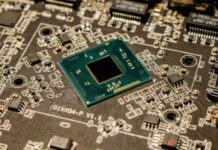
India is entering a transformative phase in its industrial and technological evolution – the rise of domestic semiconductor manufacturing. Once reliant almost entirely on imports, the country is now building a comprehensive ecosystem for chip fabrication, packaging, and design. Backed by the government’s ₹76,000-crore semiconductor mission and rising private investments, India’s semiconductor revolution is poised to redefine its position in the global electronics supply chain. This new wave of chip manufacturing is not only about building fabs – it’s about establishing technological sovereignty, industrial competitiveness, and a foundation for the next era of digital innovation.
Strategic Foundations: Policy, Infrastructure, and Incentives
At the heart of India’s semiconductor drive lies the Semicon India Programme, launched to catalyze end-to-end manufacturing capabilities. Through a combination of fiscal incentives, infrastructure support, and skill development initiatives, the policy aims to create a globally competitive semiconductor ecosystem. States such as Gujarat, Karnataka, and Tamil Nadu have emerged as leading contenders for hosting fabrication and assembly facilities, supported by robust logistics, power availability, and access to skilled engineering talent.
The government’s Design Linked Incentive (DLI) and Production Linked Incentive (PLI) schemes have already begun attracting global partnerships. Major players such as Micron Technology, Tata Electronics, and Vedanta-Foxconn have announced multi-billion-dollar investments in fabrication and packaging units. These developments are laying the groundwork for establishing India’s first commercial semiconductor fabs, expected to produce memory and logic chips catering to the automotive, telecom, and consumer electronics sectors.
Technology Focus: From Wafer Fabrication to Advanced Packaging
India’s semiconductor strategy goes beyond wafer fabrication – it encompasses the entire value chain, including design, assembly, testing, and advanced packaging. With the complexity of chip manufacturing increasing at sub-10nm process nodes, India’s immediate focus lies on mature process technologies (28nm and above), which are essential for automotive ECUs, power management ICs, and IoT chipsets.
Simultaneously, investments in ATMP (Assembly, Testing, Marking, and Packaging) and OSAT (Outsourced Semiconductor Assembly and Test) facilities are gaining momentum. These facilities bridge the gap between design and final product readiness, providing value-added services like wafer bumping, 3D packaging, and system-in-package (SiP) solutions. Such advancements not only reduce dependency on offshore processing but also enhance the competitiveness of India’s semiconductor exports.
Moreover, Indian design houses – supported by global EDA (Electronic Design Automation) leaders – are developing expertise in AI accelerators, automotive-grade chips, and RF semiconductors. This design-led approach positions India as a potential global hub for chip innovation and custom SoC development.
Collaborations, Skill Development, and Ecosystem Synergy
The success of India’s semiconductor revolution hinges on collaboration – between government, academia, and industry. Strategic partnerships with global technology providers are ensuring knowledge transfer in areas such as lithography, metrology, and material engineering. Simultaneously, academic institutions including IITs and IISc are expanding semiconductor research programs and establishing Chip Design Centres of Excellence to build a skilled workforce.
Semiconductor manufacturing demands specialized expertise in process integration, cleanroom operations, and yield optimization – areas where India is actively investing in human capital development. Initiatives like India Semiconductor Mission (ISM) and Chips to Startup (C2S) are cultivating the next generation of semiconductor engineers, ensuring long-term ecosystem sustainability.
Conclusion:
India’s semiconductor revolution represents more than an industrial milestone – it marks the dawn of a new technological self-reliance. With a strong policy framework, increasing private investment, and rapid ecosystem development, India is positioning itself as a credible alternative in the global chip supply chain. While challenges remain – particularly in technology transfer, ecosystem maturity, and supply chain localization – the momentum is undeniable. The convergence of innovation, infrastructure, and policy is setting the stage for India to emerge as a global semiconductor powerhouse – driving the next generation of intelligent, connected, and sustainable technologies.