



A smart medical patch may look like a small adhesive device, but it can contain an entire electronic system designed to collect, process and transmit health information. Sensors capture signals from the body, chips process them, wireless technologies move the data, and AI can help turn those signals into meaningful insights.
As healthcare moves toward continuous and remote monitoring, smart patches are becoming an important area in smart medical devices.

According to Towards Healthcare Research and Consulting, the global smart medical devices market size is calculated at US$ 26.62 billion in 2025, grew to US$ 28.55 billion in 2026, and is projected to reach around US$ 53.65 billion by 2035. The market is expanding at a CAGR of 7.26% between 2026 and 2035.

What Is a Smart Medical Patch?
A smart medical patch is a lightweight electronic device designed to remain attached to the skin while monitoring one or more physiological or biochemical parameters.
Unlike conventional monitoring equipment that can require wires, electrodes and larger machines, a patch can be designed for greater mobility and longer periods of use.
The device can contain sensors, electrodes, flexible circuits, processing chips, wireless connectivity and a power source. Together, these components create a miniature system that can continuously collect information from the body.
How Does a Smart Medical Patch Work?
The process begins when sensors detect a biological or physical signal. Depending on the design, the patch may measure heart activity, temperature, movement, pressure, respiration or chemical compounds in sweat.
The signal is then converted into electronic data and processed by the device’s electronics. The resulting information can be stored locally or transmitted to another connected device.
A smartphone, healthcare platform or clinical monitoring system can then receive the information. This creates a simple data pathway:
Body → Sensor → Signal Processing → Chip → Wireless Connectivity → Healthcare Platform
The Role of Sensors in Smart Medical Patches
Sensors are the most important interface between the human body and the electronic system.
Biopotential electrodes can capture electrical signals associated with the heart and muscles. Temperature sensors can identify changes in body temperature, while pressure and strain sensors can track physical movement.
Some patches use electrochemical sensors to examine biomarkers in sweat. These systems are being explored for monitoring substances such as electrolytes and other biochemical signals.
Using several sensors together can provide a more complete picture of a person’s physiological state than a single measurement.
The Role of Semiconductor Chips
Sensors generate signals, but those signals need to be converted, processed and managed. Semiconductor chips perform much of this work.
An analog-to-digital converter (ADC) converts analog signals into digital data. A microcontroller unit (MCU) can manage sensors, control device functions and coordinate data processing.
More advanced systems can incorporate low-power processors, memory and AI accelerators. These components allow some analysis to happen closer to the sensor instead of sending every piece of raw data to the cloud.
For manufacturers, this makes low-power semiconductor design particularly important. The chip needs to provide enough computing capability without quickly exhausting the patch’s limited energy supply.
The Role of Wireless Connectivity
Wireless connectivity allows information collected by the patch to move beyond the device.
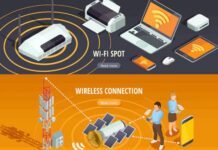
Bluetooth Low Energy (BLE) can connect a patch with smartphones or nearby monitoring equipment while keeping energy consumption relatively low. NFC can support short-range communication in applications where close proximity is sufficient.
The choice of connectivity depends on factors such as range, power consumption, data volume and device design.
Once transmitted, health information can be displayed through an application or integrated into a broader digital healthcare platform, supporting remote monitoring workflows.
The Role of AI and Edge Computing
A smart patch can generate large amounts of data, particularly when monitoring continuously. AI can help identify patterns within those signals.
For example, algorithms can analyze physiological signals and distinguish meaningful changes from normal variations or sensor noise.
Edge computing can allow some processing to happen on the device or a nearby connected system. This can reduce the amount of raw information transmitted, potentially lowering latency and communication-related power consumption.
However, AI-generated insights need appropriate testing and clinical validation before they are used to support medical decisions.
Where Are Smart Medical Patches Used?
Smart patches have applications across several areas of healthcare.
In cardiac monitoring, patches can capture ECG and heart-rate information. In rehabilitation, motion and muscle sensors can track physical activity and recovery.
Other applications include remote patient monitoring, postoperative observation, wound monitoring, respiratory monitoring, temperature tracking and sweat-based biochemical analysis.
Their wearable form can allow patients to move more freely while information is collected over longer periods.
Advantages of Smart Medical Patches
The main advantage is continuous monitoring in a small form factor. A patient does not necessarily need to remain connected to large clinical equipment for every measurement.
Other potential benefits include:
- Lightweight and relatively unobtrusive design
- Continuous collection of physiological data
- Wireless transmission to connected devices
- Greater mobility for patients
- Potential support for remote healthcare
- Ability to combine multiple sensors
- Opportunity for real-time data analysis
These advantages make smart patches particularly interesting for healthcare models that depend on longitudinal patient data.
- Limitations and Disadvantages
Smart patches also have practical limitations.
Long-term skin contact can create issues involving sweat, irritation, adhesion and biocompatibility. Movement can introduce signal noise, while repeated stretching may affect flexible electronic components.
Battery life is another major concern. Continuous sensing, processing and wireless communication consume energy, making power-efficient chips and improved battery technologies essential.
There are also concerns around data security, privacy, sensor accuracy, calibration and clinical validation. A patch must provide reliable information in real-world conditions, not only in controlled laboratory environments.
What Technologies Are Used in Smart Medical Patches?
Smart medical patches combine several technologies to sense, process and transmit health data.
- Flexible and printed electronics: Keep the patch thin, lightweight and comfortable on the skin.
- MEMS and electrochemical sensors: Measure movement, pressure, temperature and biochemical signals.
- Biopotential electrodes: Capture electrical activity from the heart and muscles.
- Microcontrollers and low-power processors: Process and manage sensor data.
- AI and edge computing: Analyze signals locally and identify important patterns.
- Bluetooth Low Energy and NFC: Transfer data to smartphones and connected healthcare systems.
- Flexible batteries and energy harvesting: Provide power for continuous monitoring.
Together, these technologies turn a simple-looking patch into a connected healthcare device capable of sensing, processing and communicating health information in real time.