


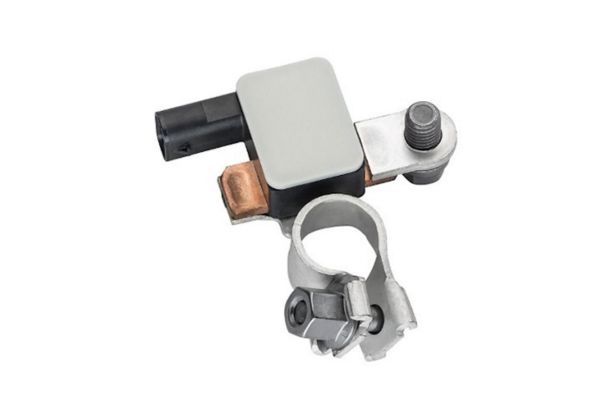
The global intelligent battery sensor (IBS) market, valued at USD 7.96 billion in 2024, is forecast to reach USD 22.44 billion by 2034, growing at a CAGR of 10.92% from 2025 to 2034. The surge in electrified mobility, AI-enabled predictive analytics, and renewable energy expansion is transforming intelligent battery sensors into a mission-critical component across automotive, energy, and industrial ecosystems.

As vehicle electrification accelerates and smart grids reshape energy consumption, IBS devices are becoming indispensable. They provide real-time diagnostics of voltage, current, and temperature, extend battery lifespan, and enable manufacturers to meet stringent emission and sustainability targets.

Quick Insights
- Market Value (2025): USD 8.83 Billion
- Forecast Value (2034): USD 22.44 Billion
- CAGR (2025–2034): 10.92%
- Top Region (2024): Asia Pacific with 33% revenue share
- Fastest-Growing Region: Asia Pacific (CAGR 11.07%)
- Dominating Region (Forecast): North America
- Top Sensor Type: Integrated sensors held 42% share in 2024
- High-Growth Sensor Type: Voltage sensors
- Leading Sales Channel: OEM segment in 2024
- Fastest-Growing Sales Channel: Aftermarket segment
- Key Application: Battery Management Systems (BMS)
- High-Growth Application: Telematics
- Top End Use: Automotive manufacturers
- Fastest-Growing End Use: Renewable energy providers
Is Next-Gen Mobility Creating New Opportunities for IBS?
Accelerating Adoption Fueled by Electrification Trends
As governments mandate lower emissions and automakers pivot to electrified platforms, IBS technology becomes a non-negotiable component for both conventional and electric powertrains. Today’s vehicles, especially EVs, plug-in hybrids, and start-stop models, require advanced battery health monitoring to deliver improved fuel economy, superior performance, and increased safety.
Key opportunities stem from:
- Expanded deployment in renewable energy storage for solar, wind, and industrial UPS units.
- Adoption in smart grid infrastructure for seamless energy flow.
- Integration into telematics, enabling fleet-wide battery diagnostics and remote management.
- Growth in aftermarket solutions, as fleet operators retrofit legacy vehicles for efficiency and reliability.
Expert Perspective
“The next decade belongs to intelligent sensing technologies. Intelligent battery sensors, powered by AI and integrated into smart energy ecosystems, are no longer just monitoring tools—they are strategic enablers of electrification and efficiency. From EV manufacturers to renewable energy providers, IBS adoption is a critical investment in performance, safety, and sustainability.”
— Dr. Aditi Menon, Principal Consultant, Precedence Research
Intelligent Battery Sensor Market Scope
| Report Coverage | Details |
| Market Size by 2034 | USD 22.44 Billion |
| Market Size in 2025 | USD 8.83 Billion |
| Market Size in 2024 | USD 7.96 Billion |
| Market Growth Rate from 2025 to 2034 | CAGR of 10.92% |
| Dominating Region | North America |
| Fastest Growing Region | Asia Pacific |
| Base Year | 2024 |
| Forecast Period | 2025 to 2034 |
| Segments Covered | Authentication, Component, Deployment, Application, and Region |
| Regions Covered | North America, Europe, Asia-Pacific, Latin America, and Middle East & Africa |
Segmentation Insights:
- By Sensor Type: Integrated sensors hold the dominant position, offering comprehensive monitoring and simplified installation. Shunt sensors also play a crucial role, having held approximately 37% market share in 2024 due to their high accuracy in current flow measurement by identifying voltage drops. Other types include Hall effect sensors, current monitoring sensors, voltage monitoring sensors, temperature monitoring sensors, and multi-parameter sensors (for State of Charge/State of Health).
- By Sales Channel: The Original Equipment Manufacturer (OEM) segment dominated the market in 2024, reflecting the direct integration of IBS into new vehicle production lines and energy storage systems. However, the aftermarket segment is anticipated to grow at the fastest CAGR from 2025 to 2034, driven by increasing demand for battery diagnostics and replacement solutions for existing vehicles and systems.
- By Application: Battery Management Systems (BMS) constitute the largest application segment, holding a significant market share in 2024. BMS are critical for the safe and efficient operation of battery packs in EVs, renewable energy storage, and industrial applications. Telematics applications are expected to grow at a rapid pace, leveraging IBS data for remote monitoring, fleet management, and predictive maintenance. Start-stop systems and energy recovery also represent vital applications.
- By End-Use: Automotive manufacturers remained the dominant end-users in 2024, given the imperative for sophisticated battery management in modern vehicles. However, the renewable energy providers segment is expected to grow at the highest CAGR, driven by the increasing integration of intelligent battery sensors into solar, wind, and grid-scale energy storage solutions. Other key end-users include fleet operators, telecommunications companies, and aerospace & defense.
Asia-Pacific: The Powerhouse of Intelligent Battery Sensor Innovation
Asia Pacific Intelligent Battery Sensor Market Growth (2025 to 2034)
Asia Pacific intelligent battery sensor market size was USD 2.63 billion in 2024 and is predicted to be worth around USD 7.52 billion by 2034, at a CAGR of 11.07% from 2025 to 2034.

Asia-Pacific dominates the Intelligent Battery Sensor market, accounting for a commanding 33% share in 2024. The region’s leadership is anchored by China’s vast electric vehicle ecosystem, which benefits from generous government subsidies and aggressive decarbonization targets. China’s scale of battery manufacturing and adoption of green mobility policies makes it a magnet for both domestic and international players seeking rapid growth. Japan and South Korea stand out for their technological expertise, with longstanding leadership in battery research, sensor innovation, and high-quality OEM partnerships. India, meanwhile, is emerging as a dynamic market thanks to rapid urbanization and ambitious national EV infrastructure rollouts. The region’s collaborative landscape, spanning tech startups, automotive giants, and government-backed initiatives, has accelerated competitive pricing and innovation, making Asia-Pacific the ideal launchpad for next-generation IBS adoption.

North America: Forging Ahead Through Electrification and Artificial Intelligence
North America is experiencing a significant boost in IBS demand due to the continent’s accelerating transition toward EVs and intelligent, connected vehicles. The United States, in particular, is seeing massive investments in electric vehicle manufacturing plants and battery research, supported by strong federal and state-level regulatory incentives for clean energy technologies. Fleet electrification is a major trend, especially among logistics and public transportation, increasing the need for advanced battery monitoring and predictive management tools. The adoption of AI-driven sensor technologies is rising quickly, enabling North American automakers and energy providers to proactively manage battery health and optimize performance. Canada is also investing in renewable energy and grid modernization, creating further opportunities for IBS solutions in energy storage and industrial applications.
Intelligent Battery Sensor Market Key Players
- Robert Bosch GmbH
- Continental AG
- HELLA GmbH & Co. KGaA
- NXP Semiconductors N.V.
- Midtronics, Inc.
- Valence Technology, Inc.
- Texas Instruments Inc.
- DENSO Corporation
- Analog Devices, Inc.
- Infineon Technologies AG
- TE Connectivity Ltd.
- Eberspaecher Vecture Inc.
- Current Ways Inc.
- Murata Manufacturing Co., Ltd.
- Delphi Technologies
Recent Developments
- In December 2024, Butlr announced the launch of a wireless and anonymous AI sensor featuring a multi-year battery life, scalability, and real-time ultra precise insights into how people interact in their environments. Data from Butlr sensors is used to transform buildings into adaptive, data-driven spaces that enhance human experience while improving operational efficiency.
- In November 2023, the United Safety & Survivability Corporation announced the launch of its latest innovation, a Lithium-Ion Battery Failure Detection Sensor. This groundbreaking product sets a new standard for safety for electric vehicles across industries.