


The adoption of IoT-based instrumentation is transforming healthcare, safety, and industrial automation by enabling accurate data acquisition, real-time process oversight, and anticipatory intelligence. By connecting devices and systems, organisations can seamlessly capture, transmit, and analyse operational data, supporting informed and timely decision-making while mitigating risk. WIKA has shown how IoT integrations can be applied in operational environments of complexity providing resilient platforms to control critical infrastructure. With these interlinked systems, IoT promotes efficiency, continuity in operations, and safety in the field of healthcare and industry.
Healthcare Optimisation Through IoT
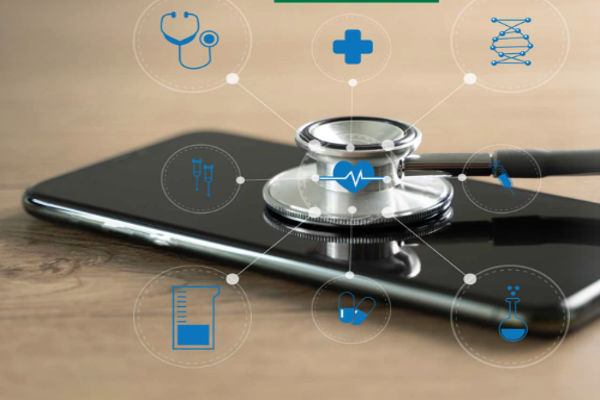
IoT instrumentation in healthcare improves reliability, patient safety, and operational consistency. Devices continuously monitor equipment performance, environmental conditions, and workflow efficiency, generating actionable insights for timely intervention. Anticipatory algorithms detect potential deviations early, enabling proactive adjustments and maintenance scheduling. Integrating automation and analytics minimises downtime, strengthens compliance with regulatory standards, and optimises resource allocation across hospitals, laboratories, and pharmaceutical production. These capabilities safeguard patient welfare while supporting operational excellence, demonstrating IoT’s strategic value in healthcare environments.
Industrial Safety and Risk Mitigation
IoT measurement in the industry can improve safety, as it is able to record the conditions of the environment and operations in real-time. The pressure, temperature, and humidity metrics are used to give early warnings of anomalies and prevent equipment failures and injuries to personnel. Facilities handling high-voltage installations, chemical processes, or hazardous materials particularly benefit from these systems. By combining continuous monitoring with automated alerts, organisations can mitigate risks, maintain compliance, and sustain safe operations without disrupting production. IoT enables proactive risk management that directly aligns with operational integrity objectives.
Automation and Process Control
The IoT-based solutions enable systems to operate with automation because they are integrated in the centralised control systems, and they do not rely heavily on manual control. Real-time changes maximise resource use, improve the consistency of processes, and maintain high-end quality standards. Automated instrumentation is used in the manufacturing of pharmaceuticals and industry to maintain the operational parameters with the support of regulatory compliance. The IoT solutions provided by WIKA represent an example of how control based on analytics can help to connect the data with the operational changes, enhancing the accuracy and stability of the complex systems’ functions.
Predictive Maintenance and Operational Continuity
Connected IoT devices provide anticipatory maintenance capabilities that safeguard operational continuity. Continuous monitoring identifies deviations before they escalate into failures, while analytic systems guide maintenance planning and resource allocation. This proactive approach extends equipment lifecycles, minimises unexpected downtime, and sustains high performance across healthcare, energy, and industrial sectors. By linking operational data with intelligent decision-making, organisations can reinforce resilience and reduce costs without compromising safety or efficiency.
Connectivity and Data Integration
Seamless connectivity is critical for effective IoT deployment. Secure cloud solutions with wireless protocols including LPWAN enable scalable data communication, synchronisation of devices and combined management of various sites. Edge computing enables quick local processing, which means instant response to the change in operations. Interoperability is guaranteed by compatibility with the existing infrastructure, whereas integrated management platforms enable organisations to streamline their workflows, retain operational control, and maintain the safety standard. The basis of all other functions in the IoT is intelligent connectivity, which is the basis of the reliable operation of the system on data.
Real-Time Analytics for Operational Optimisation
Advanced analytics transform raw IoT data into actionable intelligence, enabling proactive interventions and process optimisation. Continuous monitoring provides insights into trends, resource use, and potential inefficiencies. Platforms incorporating digital twins and algorithmic analysis allow organisations to simulate and assess operational scenarios, facilitating informed decision-making. By converting data into decision-ready insights, IoT systems empower organisations to improve compliance, strengthen safety protocols, and enhance operational control across healthcare and industrial environments.
Energy Efficiency and Resource Management
The IoT instrumentation supports specifically focused energy management and resource optimisation through the analysis of consumption trends, equipment operation, and its regulations. These insights enable operators to implement interventions that reduce waste, lower costs, and enhance overall efficiency. Integration with advanced analytics ensures compliance with sustainability targets and regulatory standards, while platforms provide precise oversight of energy flows, materials, and process outputs. Through data-driven control and operational intelligence, IoT facilitates safe, efficient, and long-term sustainable practices by using complex healthcare and industrial facilities.
Advanced Process Oversight
High-quality IoT platforms allow detailed monitoring of the key processes, give an opportunity to see the operational parameters, the situation in the environment, and the performance of equipment. Deviations are detected early by automated analysis and corrective actions are directed, ensuring that short-term interventions are facilitated and that the process is optimised in the long run. Integrating these systems into the work processes enhances transparency, boosts decision-making, and encourages proactive management, keeping the complex processes safe, effective, and compliant with regulatory requirements.
Integration and Scalability
An effective implementation of IoT must be easily integrated with the current infrastructure and scalable system architecture. Modular platforms and middleware solutions are compatible with the previous systems in addition to supporting future growth. Edge computing applications allow local data analysis and response in real time, and scalable designs can support network expansions without affecting the performance. Incremental adoption enables organisations to install IoT instrumentation over time in an efficient, efficient, reinforcing, and safe way and ensures that there is monitoring in the changing healthcare and industrial environments.
Future Trends in IoT Instrumentation
New technologies of 5G connectivity, AI-based analytics, and digital twins are defining the future of IoT instrumentation in the field of healthcare, safety, and industrial automation. Dense deployment of devices and rapid response is possible with the high-speed networks, enhancing the operation accuracy and continuity. Machine learning provides predictive information to be used in maintenance and process optimisation, and digital twins can model physical systems in real time to facilitate informed decision-making. All these technologies contribute to efficiency, safety and automation that can enable organisations to match changing operational requirements and regulatory compliance, and adaptability.
Conclusion
Connected IoT-based instrumentation is revisiting the operational practice in the fields of healthcare, safety and automation of industry with integrated data analytics, anticipatory systems, and intelligent control. Connected platforms increase resource utilisation, the consistency of the processes, and compliance with regulations, strengthening operational effectiveness. The practical implications of the IoT in complex settings can be reflected by the fact that WIKA is an expert in implementing integrated solutions based on the IoT. With the further improvement of connectivity, analytics, and automation, the instrumentation of IoT will become more efficient, safer, and more sustainable, creating a framework for streamlined future operations in healthcare and industry