


The expansion of renewable energy, rising electricity demand, and the need for a more flexible power grid are accelerating the deployment of on-grid battery energy storage systems worldwide.
The global energy landscape is undergoing a major transformation. Solar and wind power are being deployed at an increasing pace, but their variable generation creates new challenges for electricity grids. At the same time, growing electrification, industrial activity, data centers, electric vehicles, and distributed energy resources are increasing the need for reliable and flexible power infrastructure.
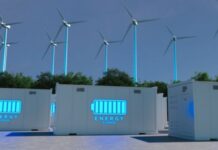
On-grid battery energy storage systems (BESS) are emerging as an important technology for addressing these challenges. Connected directly to electricity networks, these systems can store electricity when supply is available and release it when demand increases or renewable generation declines.
According to Cervicorn Consulting, the global on-grid battery energy storage systems market was valued at USD 33.12 billion in 2025 and is projected to reach nearly USD 141.99 billion by 2035, representing a CAGR of 15.6% between 2026 and 2035.
Why On-Grid Battery Storage Is Becoming More Important
Traditional power grids were largely designed around centralized generation and predictable electricity demand. The increasing contribution of renewable energy is changing that model.
Solar generation can peak during daylight hours, while electricity demand may remain high after sunset. Wind generation can also fluctuate according to weather conditions. Battery storage can help bridge these timing differences by absorbing electricity when supply exceeds immediate demand and delivering it when additional power is required.
On-grid BESS can support several grid functions, including:
- Peak-demand management
- Renewable energy integration
- Frequency regulation
- Energy shifting
- Grid balancing
- Congestion management
- Backup and resilience
- Reduction of renewable-energy curtailment
This flexibility is particularly important as utilities add larger quantities of variable renewable generation.
Market Growth Driven by Renewable Energy Integration
The expansion of solar and wind generation is one of the key factors supporting the on-grid BESS market. Batteries can capture excess renewable electricity and discharge it during periods when generation falls or electricity demand rises.
Cervicorn Consulting notes that approximately 80% of newly deployed global battery storage capacity in 2025 was utility-scale, highlighting the increasing role of grid-connected storage in power-system development.
Grid modernization is another important factor. Aging transmission and distribution infrastructure, increasing electricity demand, and growing renewable-energy connection requirements are creating demand for technologies that can improve grid flexibility.
Battery systems can respond rapidly to changes in supply and demand, allowing grid operators to manage short-term fluctuations without relying exclusively on conventional generation or immediate infrastructure expansion.
Falling Battery Costs Support Large-Scale Deployment
The economics of battery storage have improved as battery manufacturing has expanded and technology has advanced.
According to the Cervicorn Consulting analysis, battery storage project costs declined significantly during 2024, while global battery storage additions reached a record level in 2025. Lower costs can improve the economic case for utility-scale projects and encourage developers to consider storage alongside renewable generation.
However, the economics of an individual BESS project depend on more than battery prices. Developers must also account for power-conversion systems, transformers, grid interconnection, land, controls, fire protection, installation, financing, and long-term maintenance.
Revenue models are another consideration. Grid-scale batteries can generate income through energy arbitrage, capacity services, ancillary services, and congestion management, but market rules and electricity pricing structures vary across regions.
Front-of-the-Meter Systems Lead Deployment
Front-of-the-meter (FTM) systems represented approximately 80% of the global on-grid BESS market in 2025, according to Cervicorn Consulting. Behind-the-meter (BTM) systems accounted for the remaining 20%.
FTM systems are generally deployed at utility or grid scale and can provide services across transmission and distribution networks. Their applications include renewable-energy integration, peak management, frequency support, and grid balancing.
BTM systems are installed closer to electricity consumers and can be used by commercial facilities, industrial sites, and residential customers. These systems can support energy management, backup power, rooftop solar integration, and electricity-cost optimization.
The continued development of both configurations will depend on electricity-market structures, distributed-energy adoption, renewable penetration, and the value assigned to different grid services.
LFP Technology Gains Ground in Stationary Storage
Battery chemistry is another important area of development.
Cervicorn Consulting estimates that Lithium Iron Phosphate (LFP) batteries represented 62% of the on-grid BESS market in 2025. Flow batteries accounted for approximately 14%, while NMC batteries represented about 7%.
LFP technology has attracted significant interest for stationary storage because of its long cycle life and characteristics suited to large-scale applications. Its use is expanding across utility-scale energy storage projects where operators require durable systems capable of frequent charging and discharging.
Flow batteries are also gaining attention for applications requiring longer-duration energy storage. Their ability to support extended discharge periods makes them relevant to grid applications where electricity needs to be shifted over longer time intervals.
Future technology development is likely to include improvements in battery chemistry, thermal management, power electronics, battery-management systems, and system-level integration.
Medium and Large-Scale Storage Projects Expand
The 100–<500 MWh capacity segment accounted for 38% of the on-grid BESS market in 2025, according to Cervicorn Consulting. The 10–<100 MWh segment represented approximately 25%.
Medium and large-scale systems can support utility requirements ranging from renewable integration to grid balancing and electricity supply management.
The growth of large solar and wind projects is also encouraging developers to consider battery storage as part of integrated renewable-energy infrastructure.
Hybrid projects that combine renewable generation with battery storage can help shift electricity production toward periods of higher demand and improve the utilization of renewable assets.
Asia-Pacific Leads the Global Market
Asia-Pacific accounted for approximately 38% of the global on-grid battery energy storage systems market in 2025, according to Cervicorn Consulting. The region’s market development is supported by renewable-energy deployment, electricity demand growth, grid modernization, industrialization, and investment in large-scale battery storage projects.
China and India are among the major markets contributing to the region’s energy-storage development, while other countries across Asia-Pacific are also increasing investment in renewable power and grid infrastructure.
Cervicorn Consulting estimates the Asia-Pacific on-grid BESS market at USD 12.59 billion in 2025 and projects it to reach approximately USD 48.28 billion by 2035.
The Middle East and Africa region is also emerging as an important market for battery storage. Cervicorn Consulting projects a 20.9% CAGR from 2026 to 2035 for the region, supported by renewable-energy investment, energy diversification, grid resilience requirements, and solar and wind integration.
India Strengthens Its Battery Storage Ecosystem
India is increasingly incorporating energy storage into its renewable-energy and electricity-system planning.
Government measures have included financial-support mechanisms for BESS projects and updates to the regulatory framework governing energy storage systems. Cervicorn Consulting’s research notes several developments during 2025, including changes to the viability gap funding framework and amendments intended to provide greater flexibility around the development, ownership, leasing, and operation of energy storage systems.
These measures are relevant to the development of utility-scale and grid-connected storage because the initial capital requirements of large battery projects remain a significant consideration.
India’s rapidly expanding renewable-energy capacity also creates a need for technologies capable of improving dispatchability and managing fluctuations in electricity generation.
Recent Industry Developments Highlight Market Momentum
Recent projects illustrate the expanding role of battery storage in renewable-energy and grid infrastructure.
In September 2026, ACME Solar commissioned 66.68 MW of solar capacity and 300 MWh of BESS capacity in Rajasthan, combining renewable generation with battery storage.
During the same month, DTEK secured U.S. DFC financing for a 200 MW/400 MWh battery storage project in Ukraine, involving six sites designed to support electricity-system resilience.
Also in September 2026, Premier Energies and RCT India announced plans for a 12 GWh BESS manufacturing facility in Telangana, with the first phase planned at 6 GWh.
Such developments demonstrate that the market is expanding beyond individual battery installations toward integrated storage projects, domestic manufacturing, renewable-energy infrastructure, and grid-resilience applications.
Challenges Remain for Grid-Scale Battery Storage
Despite strong deployment prospects, several challenges must be addressed.
- High Initial Investment: Large BESS projects require substantial investment across batteries, power-conversion systems, transformers, grid connections, controls, safety infrastructure, land, and installation.
- Grid Interconnection Delays: Battery projects can face lengthy interconnection studies, permitting requirements, transmission limitations, and connection queues. These factors can delay project commissioning even when storage demand is strong.
- Battery Degradation: Repeated charging and discharging gradually reduces battery capacity. Developers must therefore consider degradation when selecting battery chemistry, determining system size, planning operating strategies, and estimating long-term project economics.
- Safety and Thermal Management: Large battery installations require advanced monitoring, thermal-management, fire-detection, ventilation, and emergency-response systems. As project sizes increase, safety engineering becomes increasingly important.
- Supply Chain Considerations: Battery cells, materials, power electronics, transformers, and other specialized components are essential to BESS projects. Concentration of manufacturing capacity in particular regions can expose developers to procurement delays, price fluctuations, logistics challenges, and trade-related risks.
Long-Duration Storage Opens New Opportunities
The increasing penetration of renewable electricity is creating demand for storage systems capable of shifting energy over longer periods.
Cervicorn Consulting notes that the average duration of utility-scale battery projects commissioned globally increased to approximately three hours in 2025 from around two hours in 2023. This indicates a shift toward longer-duration applications.
Long-duration storage can become particularly relevant when electricity generated during periods of high solar or wind production needs to be delivered several hours later.
Hybrid renewable-energy projects represent another area of development. Combining solar or wind generation with batteries can improve renewable utilization and provide electricity during periods when renewable output is lower.
The Road Ahead for On-Grid BESS
The development of on-grid battery energy storage is closely connected to the broader transformation of electricity infrastructure.
As renewable generation expands, grids will need greater flexibility to manage changes in supply and demand. Battery systems can provide rapid-response capabilities while supporting renewable integration, peak management, and grid balancing.
At the same time, advances in battery chemistry, energy-management software, power electronics, system integration, and long-duration storage are expected to influence the next stage of market development.
The combination of falling technology costs, renewable-energy expansion, grid modernization, and increasing electricity demand is creating a growing role for on-grid BESS in the global energy ecosystem.
According to Cervicorn Consulting, the global on-grid battery energy storage systems market is projected to increase from USD 33.12 billion in 2025 to nearly USD 141.99 billion by 2035, with a 15.6% CAGR during 2026–2035.
As utilities, renewable developers, businesses, and governments continue investing in flexible electricity infrastructure, on-grid battery storage is becoming an increasingly important component of the evolving power system.