According to Cervicorn Consulting, the organic electronics market size reached at USD 112.68 billion in 2025 and is anticipated to grow around USD 685.34 billion by 2035, reflecting a CAGR of 19.8% from 2026 to 2035.
The global organic electronics market is emerging as one of the most transformative segments within the electronics industry, driven by increasing demand for lightweight, flexible, energy-efficient, and cost-effective electronic devices. Organic electronics utilize carbon-based semiconducting materials to create advanced electronic components that offer superior flexibility, lower manufacturing costs, and enhanced design possibilities compared to traditional silicon-based technologies.
Market Overview
The rapid adoption of next-generation consumer electronics, wearable devices, flexible displays, smart packaging, and renewable energy solutions is accelerating the commercialization of organic electronic technologies. As industries increasingly seek sustainable and high-performance alternatives to conventional electronic materials, organic electronics are gaining significant traction across consumer electronics, healthcare, automotive, aerospace, and energy sectors. The growing emphasis on environmentally friendly technologies and low-energy manufacturing processes further supports long-term market expansion.
Key Takeaway
- North America dominated the global organic electronics market with a 37.9% market share, supported by strong OLED adoption, advanced semiconductor research, and growing demand for wearable electronics.
- By material, Semiconductor was the leading segment with a 41.8% market share, owing to its extensive use in OLED displays, organic photovoltaics (OPVs), transistors, and sensors.
- By application, Displays held the largest share at 52.7%, fueled by rising adoption of OLED technology in smartphones, televisions, laptops, wearables, and automotive displays.
- By end-use industry, Consumer Electronics captured 46.9% of the market, supported by strong demand for smartphones, smartwatches, tablets, foldable devices, and premium display technologies.
Key Growth Drivers
Rising Demand for OLED Displays: Organic Light-Emitting Diode (OLED) technology remains one of the strongest growth catalysts for the market. OLED displays provide superior image quality, enhanced color accuracy, higher contrast ratios, and lower power consumption compared to traditional display technologies. The widespread adoption of OLED panels in smartphones, televisions, laptops, smartwatches, and automotive displays continues to fuel market growth globally.
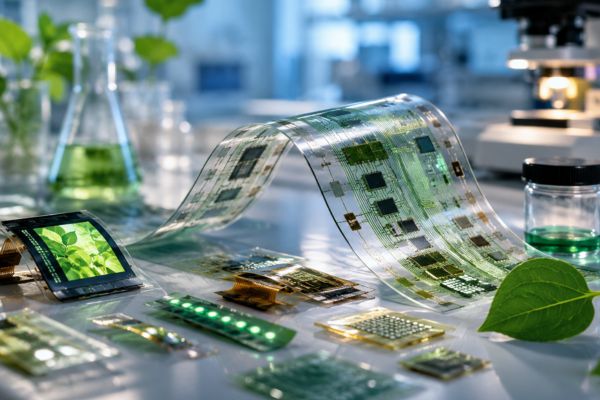
Expansion of Flexible and Wearable Electronics: The growing popularity of foldable smartphones, wearable health monitoring devices, smart textiles, and flexible sensors is creating substantial opportunities for organic electronics manufacturers. Organic materials enable the development of ultra-thin, lightweight, and bendable electronic components that can be integrated into innovative product designs.
Growing Adoption of Organic Solar Cells: Increasing global investments in renewable energy technologies are driving demand for organic photovoltaic (OPV) solutions. Organic solar cells offer advantages such as flexibility, lightweight construction, semi-transparency, and lower production costs, making them attractive for building-integrated photovoltaics, portable power systems, and wearable energy applications.
Advancements in Printed Electronics: Technological innovations in printed electronics and conductive inks are enabling cost-effective, large-scale manufacturing of organic electronic components. These advancements are accelerating applications in RFID tags, smart labels, sensors, packaging solutions, and Internet of Things (IoT) devices.
Emerging Applications Reshaping the Industry
Organic electronics are rapidly expanding beyond traditional display applications into several high-growth sectors:
- Flexible and foldable consumer electronics
- Smart healthcare monitoring systems
- Organic photovoltaic energy solutions
- Automotive interior displays and lighting
- Smart packaging and RFID technologies
- Industrial sensors and IoT devices
- Advanced biomedical and neuro-electronic applications
The unique combination of flexibility, biocompatibility, and energy efficiency positions organic electronics as a critical enabling technology for future digital ecosystems.
Regional Insights
Asia-Pacific Leads Global Growth
- Asia-Pacific is expected to dominate the organic electronics market due to strong consumer electronics manufacturing capabilities, increasing OLED production capacity, expanding semiconductor investments, and rising demand for advanced display technologies. Countries such as China, Japan, South Korea, and Taiwan continue to lead innovation and commercialization efforts across the region.
North America Maintains Strong Market Position
- North America remains a key market driven by substantial investments in advanced materials research, flexible electronics development, renewable energy technologies, and healthcare innovation. The presence of leading technology companies and research institutions continues to support market expansion.
Europe Accelerates Sustainable Electronics Adoption
- Europe is witnessing increasing adoption of organic electronic technologies due to stringent sustainability goals, growing renewable energy deployment, and strong investments in flexible electronics research and development. The region’s focus on green technologies is creating favorable conditions for market growth.
Competitive Landscape and Future Opportunities
Market participants are increasingly focusing on material innovation, OLED advancements, printed electronics manufacturing, and organic photovoltaic technologies to strengthen their competitive position. Strategic partnerships, research collaborations, and investments in large-scale production facilities are expected to accelerate commercialization efforts over the coming decade.
As demand for sustainable, lightweight, and intelligent electronic systems continues to rise, organic electronics are expected to play a pivotal role in shaping the future of consumer devices, smart infrastructure, renewable energy systems, and next-generation healthcare technologies. The convergence of flexible electronics, IoT, artificial intelligence, and advanced materials science is expected to unlock substantial growth opportunities across the global organic electronics market.