What Are Wearable Medical Devices?
Wearable medical devices are electronic systems designed to be worn on or attached to the body to collect health-related information. They include smart patches, medical watches, continuous glucose monitors, ECG monitors, smart rings and other sensor-based devices.
Unlike traditional medical equipment that patients may use only during a clinical visit, wearables can collect physiological information during daily activities. Digital health technologies combine sensors, computing, connectivity and software to monitor health outside conventional clinical settings.

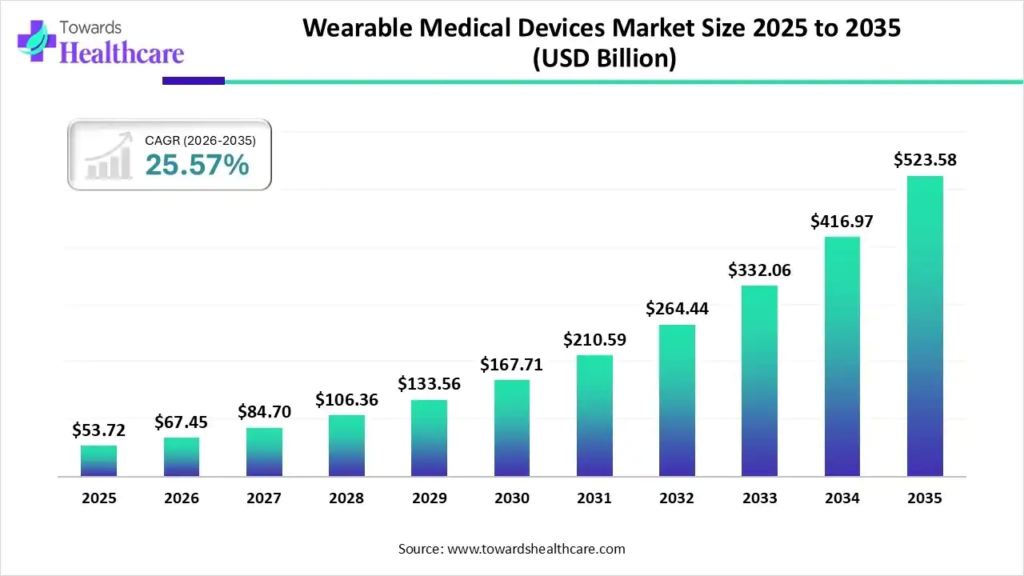
According to Towards Healthcare research and Consulting, the global wearable medical devices market size is calculated at USD 53.72 billion in 2025, grew to USD 67.45 billion in 2026, and is projected to reach around USD 523.58 billion by 2035. The market is expanding at a CAGR of 25.57% between 2026 and 2035.
What Electronics Are Inside a Wearable Device?
A wearable medical device typically combines several electronic components that work together.
The main components include:
- Sensors – detect physiological signals such as heart rate, temperature, movement or glucose levels.
- Microcontroller or processor – processes the signals collected by the sensors.
- Memory – temporarily stores measurements and device data.
- Wireless communication module – transfers information using technologies such as Bluetooth, Wi-Fi or cellular connectivity.
- Battery or power-management system – supplies and controls electrical power.
- Software – interprets the collected information and presents useful results to the user or healthcare professional.
Research on medical wearables identifies sensors such as optical sensors, electrodes, temperature sensors, accelerometers, gyroscopes, pressure sensors and chemical sensors as important components of these systems.
How Do Wearable Medical Devices Work?
The working process generally starts with sensing.
A sensor continuously interacts with the body or measures a physiological parameter. For example, an optical sensor can detect changes associated with blood flow, while electrodes can capture electrical signals from the heart.
Step 1: Sensors Collect Health Data
The sensors convert physical or biological changes into electrical signals.
A wearable may use multiple sensors simultaneously to measure different parameters. A single device could therefore monitor heart activity, movement and temperature at the same time.
Step 2: The Processor Analyzes the Signals
The device sends the sensor signals to a microcontroller or processor.
The processor filters unwanted noise, organizes the measurements and performs calculations. More advanced devices can also use algorithms or AI to identify patterns in the collected information.
Step 3: Data Is Stored or Transmitted
After processing, the device can store the information locally or transmit it wirelessly.
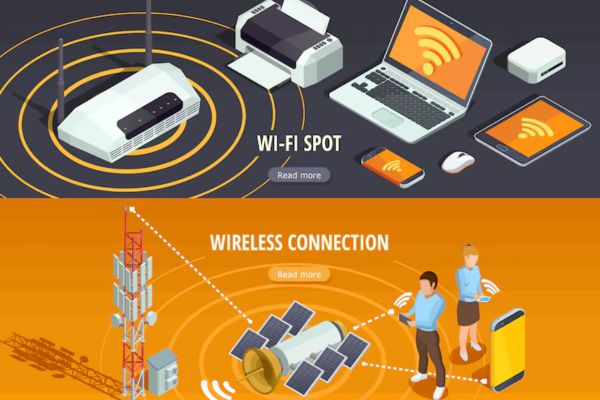
Bluetooth, Wi-Fi and cellular technologies can connect medical devices with smartphones, cloud platforms or healthcare systems. The FDA specifically identifies wireless communication as a way to transfer patient data and support remote monitoring.
Step 4: Users or Healthcare Professionals Receive the Information
The processed information can appear on a smartphone, application or healthcare platform.
This allows patients and healthcare professionals to observe changes over time rather than relying only on occasional measurements.
Where Are Wearable Medical Devices Used?
Wearable electronics are becoming useful across several healthcare applications.
Common applications include:
- Heart-rate and ECG monitoring
- Blood oxygen monitoring
- Continuous glucose monitoring
- Activity and movement tracking
- Sleep monitoring
- Temperature monitoring
- Remote patient monitoring
- Chronic disease management
- Post-treatment monitoring
For example, continuous glucose monitoring systems can use a wearable sensor to detect glucose levels and transmit information to another device for monitoring and treatment decisions.
Role of IoT in Wearable Medical Devices
IoT takes wearable devices beyond standalone monitoring.
When a wearable connects with smartphones, cloud platforms and other healthcare systems, it becomes part of a connected healthcare ecosystem. This allows health data to move between devices and platforms for monitoring and analysis.
The FDA also notes that wireless medical devices can support remote patient monitoring and allow healthcare professionals to access patient information without being physically present.
Advantages of Wearable Medical Devices
- Continuous monitoring: Collects health information throughout the day.
- Remote healthcare: Allows healthcare professionals to monitor patients outside hospitals.
- Patient mobility: Wireless connectivity reduces dependence on wired monitoring systems.
- Early detection: Continuous measurements can help identify changes that may require attention.
- Personalized monitoring: Devices can generate individual health trends over time.
- Real-time connectivity: Data can move quickly between the device, smartphone and healthcare platform.
- Convenience: Compact devices can integrate monitoring into everyday activities.
Disadvantages and Challenges
- Battery limitations: Continuous sensing and wireless communication require power.
- Data privacy: Wearables can collect sensitive health information that requires strong protection.
- Cybersecurity risks: Connected devices can introduce security vulnerabilities.
- Sensor accuracy: Measurements can be affected by movement, device placement and environmental conditions.
- Wireless interference: Other wireless devices can potentially disrupt communication.
- Interoperability: Different devices and healthcare systems may not always communicate seamlessly.
- User comfort: Long-term wear requires lightweight, ergonomic and skin-friendly designs.
What Comes Next?
The future of wearable medical electronics will depend on making devices smaller, smarter and more energy efficient.
Advances in miniaturized sensors, low-power processors, wireless communication, flexible electronics and AI could allow wearables to collect more health information while consuming less power.
The bigger shift is from simple health tracking toward connected, continuous and intelligent monitoring. As wearable electronics become increasingly integrated with IoT and healthcare platforms, they could become an important part of how patients and healthcare professionals manage health outside the traditional clinical environment.
About Author Payal Rabde is a Healthcare Market Research Analyst at Towards Healthcare Research & Consulting with over 4+ years of experience in pharmaceutical, biotechnology, medical device, and healthcare market research. She holds an MBA in Pharmaceutical- Biotechnology Management and a B.Pharm, specializing in market analysis, forecasting, competitive intelligence, and strategic healthcare insights.