
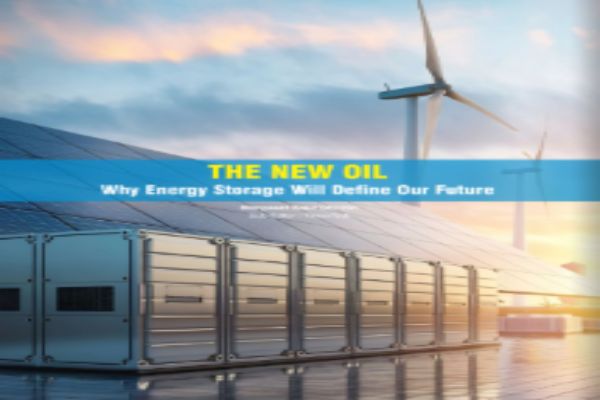
Energy is one of the most important foundations of modern civilization. Almost every aspect of our daily lives, including transportation, communication, healthcare, education, agriculture, industries, and technology, depends on a reliable supply of electricity. As the world’s population grows and technological development accelerates, the demand for energy continues to increase. At the same time, dependence on fossil fuels such as coal, petrol, diesel, and natural gas contributes to air pollution, greenhouse gas emissions, and climate change.
In this situation, Energy Storage and Battery Optimization are emerging as essential technologies for building a cleaner, more efficient, and more reliable energy future. These technologies can help us store energy when it is available, use it when it is needed, and reduce unnecessary energy losses.
Imagine a world where the extra electricity generated by solar panels during the day can power homes at night. Imagine electric vehicles that travel farther on a single charge, hospitals that maintain essential services during power interruptions, and industries that use electricity more efficiently. These possibilities demonstrate why energy storage and battery optimization are becoming increasingly important.
These technologies are not simply about developing better batteries. They represent a fundamental change in how humanity produces, stores, distributes, and consumes energy. Their development could influence the global economy, environmental protection, transportation, employment, and the quality of life of future generations.
What Is Energy Storage?
Energy storage refers to the storage of energy generated at one point in time for usage at a later time. This helps bridge the gap between the generation and consumption of energy.
For instance, solar panels generate electricity during the day, but energy needs to be generated during the night. In such a case, any excess electricity generated during the day will be stored in batteries, allowing people to use the electricity at night. Excess electricity produced through wind turbines can also be stored.
The major types of energy storage include:
- Battery Energy Storage: Storing energy in the form of batteries (including lithium-ion and sodium-ion).
- Pumped Hydropower Storage: This involves the use of excess energy to pump water to a higher level and using the gravitational pull to generate electricity from the flow of water.
- Thermal Energy Storage: This type of energy storage involves storing heat and cold energy for future use.
- Hydrogen Energy Storage: Storing hydrogen from electricity for use at a later stage to generate energy.
Each method has different advantages, costs, and limitations. The most suitable technology depends on how much energy must be stored, how long it needs to be stored, and how frequently it will be used.
The main purpose of energy storage is to make energy available at the right time, even when its original source is not producing enough power.
What Is Battery Optimization and Why Is It Important?
Battery optimization refers to improving the performance, efficiency, safety, and useful lifespan of batteries. Its goal is to obtain the best possible performance from a battery while minimizing energy losses, unnecessary degradation, and safety risks.
A battery’s performance depends on several factors, including its chemical composition, temperature, charging speed, discharge rate, and operating conditions. Over time, repeated charging and discharging can gradually reduce its capacity.
Modern battery optimization uses technologies such as artificial intelligence (AI), machine learning, sensors, and Battery Management Systems (BMS) to monitor and control battery performance.
For example, an electric vehicle’s battery management system can monitor temperature, voltage, and charge levels. If the battery becomes too hot, the system may adjust cooling or limit power to help keep the battery within safe operating conditions.
Like this, intelligent software can calculate energy needs and aid the decision about whether the battery needs to be charged or discharged. When used in large energy storage systems, it will lower electricity expenses and increase the stability of the energy supply.
Optimization of batteries is crucial as it is costly and resource-consuming to make advanced batteries. This way, their performance and service life are improved, thus decreasing replacement costs and material consumption.
In other words, energy storage lets us store energy for the future, whereas battery optimization makes us utilize the stored energy more effectively.
What Will Energy Storage and Battery Optimization Achieve in the Future?
Energy storage is expected to become increasingly important as renewable energy expands and electricity demand grows. According to the International Energy Agency (IEA), global additions of battery storage capacity reached approximately 108 GW in 2025, representing an increase of around 40% compared with 2024. This growth demonstrates the expanding role of battery storage in modern energy systems.
In the coming decades, energy storage and battery optimization could contribute to several major developments.
First, they could improve electricity reliability. Energy storage systems can provide electricity during periods of high demand or temporary interruptions, depending on their capacity and design.
Second, they could support renewable energy. Solar and wind power depend on weather conditions and the time of day. Storing electricity generated during periods of high production can make these sources more useful when production decreases.
Third, they could improve energy efficiency. Intelligent energy management systems can predict demand, coordinate storage, and reduce unnecessary energy consumption.
Fourth, they could support more sustainable transportation. Improvements in battery performance could help electric vehicles become more practical by increasing their usable range, improving charging management, and reducing battery degradation.
Finally, they could encourage technological innovation. Research into new battery materials, safer battery designs, and more efficient recycling methods could create new opportunities for scientists, engineers, businesses, and governments.
However, these benefits are not guaranteed. Their scale will depend on technological progress, affordability, infrastructure, government policies, and responsible implementation.
Major Applications of Energy Storage and Battery Optimization
Homes and Smart Cities
In the future, more homes may combine rooftop solar panels with battery storage systems. Electricity generated during the day could be stored and used in the evening or at night.
This could help households reduce electricity bills in suitable circumstances and maintain power for essential appliances during outages.
Smart cities could also use large battery systems to support street lighting, public services, local electricity networks, and emergency infrastructure. Intelligent systems could coordinate energy use across buildings and facilities, helping cities operate more efficiently.
However, installing batteries will not be economical for every household. The benefits will depend on electricity prices, local weather, installation costs, and the reliability of the existing power grid.
Electric Vehicles and Transportation
Electric vehicles are among the most important applications of battery technology. Electric cars, buses, motorcycles, scooters, and delivery vehicles all depend on batteries to store the energy required for transportation.
Battery optimization could improve electric vehicles in several ways:
- Increasing the distance a vehicle can travel on a charge, where battery and vehicle improvements permit.
- Improving charging efficiency and thermal management.
- Helping batteries maintain useful capacity for longer.
- Improving safety through continuous monitoring.
- Predicting maintenance requirements before serious problems occur.
These improvements may make electric cars more convenient to use and may even lessen the need for petrol and diesel.
Electric Transport
Electric transport may help in improving the urban pollution because there are no exhaust emissions in electric cars while they operate. Nevertheless, there will be a certain influence on the environment depending on how the electricity is produced and what methods are used in battery production and recycling.
Agriculture and Rural Development
Agriculture relies on energy in order to irrigate fields, process food, and refrigerate it. In rural locations where the availability of electricity is unpredictable, the right battery system may be used to power water pumps and small grids.
Energy storage may also be used for preserving the cold chain in order to preserve the quality of agricultural goods including milk, fruit, vegetables and so forth.
Hospitals and Healthcare
Power is needed for medical devices, labs, monitoring, communication tools, and even lighting.
Battery storage or an uninterruptible power supply (UPS) system could offer some form of temporary back-up power when there are disruptions. They could help power equipment until other sources of back-up power kick in.
In the case of remote healthcare centers, solar power and battery storage could assist in powering up refrigeration units used to store medical products that require controlled temperature levels.
Therefore, energy systems that are reliable are not only technologically beneficial but also help in maintaining medical services.
Industries and Manufacturing
For remote villages, renewable energy combined with battery storage may provide lighting, communications, educational institutions, and even small companies with access to energy.
This type of application may be especially helpful for India. Industrial factories, data centers, warehouses, and manufacturing facilities require a lot of electricity, and any disruption can affect the production, disrupt sensitive processes, and increase costs.
A battery storage system can assist certain industries to stabilize the unexpected changes in electricity demand, improve power quality, and even supply electricity to certain pieces of equipment.
Companies can save money on electricity by storing the electricity when it is cheap and using the stored electricity at more expensive times. Such practice can be effective when there is enough difference between the price and efficiency of the system.
Moreover, battery storage can allow industries to utilize renewable electricity and minimize the dependence on traditional electricity sources.
Mobile Phones, Laptops, and Consumer Electronics
Mobile phones, laptops, tablets, smartwatches, and other gadgets became an integral part of people’s lives.
Battery optimization can help them to use energy more efficiently. Operating systems can detect resource-intensive programs, cut down unnecessary background activities, and set the performance level.
Possible advancements in the fields of battery chemistry, electronics, and power management may lead to increased usage and charging efficiency.
Such advancements will be helpful for those who rely upon digital devices for learning, communicating, working, and information access.
Space Exploration and Telecommunications
Satellites, spacecrafts, telecommunications towers, and remote stations demand reliable energy solutions.
The combination of solar panels and batteries may produce electrical power in the absence of sunlight or in case of inability to receive electrical power from conventional sources.
For space exploration, batteries should function in harsh conditions; therefore, energy efficiency and reliability become crucial factors.
Batteries’ optimization may help with future space exploration, scientific researches, and remote communication infrastructure.
Why is this technology important for the future of India?
There is increasing demand for electricity due to the growth of the cities, industrial sector, digital economy, and number of electric vehicles in the country. At the same time, India has considerable potential in both solar and wind energy generation.
The energy storage and battery optimization technologies could allow India to cope with the aforementioned challenges more efficiently.
Decreasing dependency on fuel imports: Increased usage of electric vehicles and renewable electricity could lead to lower demand for imported fuels in the long term, but the exact amount will depend on many factors.
Supporting renewable energy sources: The batteries could enable access to the electricity generated from solar and wind power outside peak hours.
Increasing electricity reliability: The energy storage systems could facilitate balancing electricity generation and consumption, as well as stabilize the electricity grid.
Creating jobs: The manufacture of batteries, electrical engineering, software programming, energy management, research, installation, and recycling may all contribute to job creation in new and novel ways.
Assisting rural populations: Renewable energy and battery storage technologies may help with electrification in isolated regions as well as agricultural activities, learning, and small business enterprises.
India’s future success in this area depends on research, infrastructure, trained workers, proper mineral sourcing, and recycling technology.
Energy storage can only be part of the answer to energy issues. It must be used in conjunction with good electricity grids, efficient appliances, renewable energy production, and supportive policies.
What Are the Disadvantages of Energy Storage and Battery Optimization?
However, even if these technologies have many advantages, they face some environmental, economic, and technical issues.
High Costs of Installation
Large-scale battery storage technologies can be costly. The overall cost will consist of batteries, inverters, cooling units, protection units, installation, and maintenance.All these expenses will prevent households, small enterprises, and rural areas from implementing the technology.Prices for batteries will decrease because of mass production, but the economical feasibility of a project will depend on the location, power price, working conditions, and life cycle of batteries.
Dependency on Natural Resources
Some types of batteries use materials like lithium, graphite, nickel, and other mineral resources. The extraction and purification of such materials involve the usage of water, pollution of land and environment, destruction of ecosystems, and creation of waste. Besides that, the supply of minerals depends on certain countries.It is necessary to conduct researches in order to develop an alternative chemistry of batteries and responsible mining of materials.
Battery Deterioration
The capacity of batteries is slowly reduced by the process of aging. Some other processes which lead to a faster reduction include repeated charging and discharging, high temperatures, inappropriate charging, and other reasons.Battery optimization can delay this process but cannot stop ageing of batteries completely. In some cases, batteries might need replacement or could be used for lower requirements. This leads to increased costs and the need for proper planning.
Fire Hazard
Certain battery chemistries can lead to the occurrence of fire or overheating when the batteries get damaged, are not manufactured properly, are charged inappropriately or are used under inappropriate circumstances. Proper engineering, temperature control, protection equipment, installation, and emergency plans need to be made for large scale storage facilities. Fire hazard can be reduced by proper design and planning, but it cannot be neglected at all.
Battery Waste and Recycling
With increasing usage of EVs and stationary storage, the number of waste batteries will rise.Improperly disposing of batteries poses potential risks to the environment as well as increased risks of fire. Recycled batteries provide an opportunity to obtain useful materials; however, proper collection, transportation, processing, and material extraction require appropriate infrastructure.This means that development of a viable battery recycling business will be necessary to make this technology more sustainable.
Energy Losses During Storage
Energy storage is never completely efficient since some of the energy gets wasted through the conversion process, storage and later conversion into usable energy. It is for this reason that the economic and environmental benefit of storage will depend on where the electricity comes from, the efficiency of the system, as well as how it operates. Not all requirements for energy will be solved using batteries as there are other storage techniques like pumped hydropower, thermal storage etc.
Uneven Distribution and Skill Gap
Advanced energy technologies demand certain investments and infrastructural capacity. The adoption of the technology by wealthier regions and firms is likely to happen before those by poorer households.The adoption of automation technology may change nature of some existing occupations.
Innovative Advances that Would Revolutionize Battery Technology
- Solid-State Batteries In a solid-state battery, the electrolyte is solid rather than liquid, unlike in the regular lithium-ion batteries. The battery type would have high energy density and better safety in certain models. Manufacturing cost, reliability, and scalability are issues.
- Sodium-Ion Batteries Sodium-ion batteries might lower the need for lithium in some situations. Sodium-ion batteries may be used in stationary storage and in certain automobiles despite the need to evaluate the energy density, cost, and performance.
- AI-Enabled Battery Management Systems AI technology would help in determining the battery condition, maintenance requirements, charging, and abnormal operation.
- Second-Life Batteries An electric vehicle battery that is not capable of meeting the performance criteria any longer is still good enough for stationary battery applications following proper testing. Repurposing batteries is another way to increase their life cycle before recycling.
- All these advances can have a significant impact on the future of energy storage. However, it all will depend on safety, cost-effectiveness, efficiency, durability, and scalable production of these technologies.
The Impact on the Global Economy and Employment
Energy storage and optimization of batteries have opened up new possibilities that go way beyond the energy industry. As the need for batteries increases, nations may develop and enhance their industries related to battery production, materials, recycling, renewable energy infrastructure, and intelligent power systems.
Possible job opportunities might arise in the areas of:
- Batteries and electrical engineering.
- Artificial intelligence and machine learning.
- Renewable energy projects.
- Testing of batteries.
- Recycling and materials recovery.
- Smart grids and energy management software.
- Batteries’ installation, maintenance, and safety.
Nations that are able to establish effective research and manufacturing capacity could become more competitive in the international clean-energy market environment.
Nevertheless, the scale and quality of new jobs would depend on the level of investments, governmental policies, technology advancement, and market demand. Training and education would play an important role in preparing people for new employment opportunities.
What Will Be the Effect of This Technology on the Future?
Storage and optimization of batteries could bring about new perspectives for the way society approaches electricity. Until now, many efforts have been concentrated on the problem of energy production. However, in the future, the efficient storage and distribution of electricity will become crucial as well. The use of solar panels along with electricity optimization technologies might become widespread in households. The development of electric cars might make driving less wasteful and environmentally harmful. Industries could use electricity more effectively, and rural populations could receive better access to it. On a bigger scale, energy storage could assist in the integration of renewable energy into the national power grids by reducing reliance on fossil fuel. However, all of these will not just happen automatically. Collaboration is needed among governments, scientists, businesses, engineers, and the community to make sure that the technology is affordable, safe, and eco-friendly.
Without such collaboration during development, concentrating solely on battery production without regard for mining minerals, waste generation, recycling, and safety issues, there might be new challenges created. It takes a sustainable approach to consider the full life cycle of the battery. And the ultimate success will not just be energy storage itself but energy management in general.
Conclusion
Energy Storage and Battery Optimization are examples of technologies that may be very important for creating the future of humanity. These technologies have a potential of increasing electricity availability, promoting renewable sources of energy, improving electric mobility, contributing to health care infrastructure development, and making the process of energy consumption more efficient. On the other hand, issues such as high initial expenses, reduction in efficiency of batteries, mineral mining, waste disposal, fires, and unequal access should be solved. The significance of the technologies is due to the idea that future energy development will be defined not only by quantity of electricity production, but also by efficiency, safety, and responsibility in its consumption. However, for both India and the world at large, it is crucial that there is investment in research, sustainable manufacturing, recycling, and education in technology. While better batteries won’t be able to solve all the energy problems that are encountered, they have the potential to contribute greatly towards the solution when used in conjunction with renewables, efficient energy distribution systems, and appropriate policies. Finally, Energy Storage and Battery Optimization can play an instrumental role in creating a future that is characterized by sustainable energy production, efficient distribution and utilization of energy.