


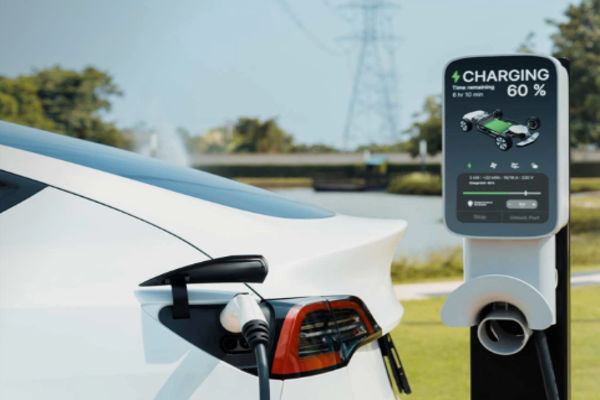
The electrification of transport is reshaping the global energy landscape. Electric vehicles (EVs) are no longer just modes of transportation, they are mobile energy reservoirs capable of integrating with the grid. Through Vehicle-to-Grid (V2G) systems, EVs can become active components of modern power systems, balancing demand, supporting renewable energy, and enhancing resilience.
At the heart of this capability lies power electronics. Without advanced converters, inverters, and control systems, the bidirectional exchange of energy between EV batteries and the grid would not be possible. For industrial stakeholders, V2G represents both an opportunity and a technical challenge, demanding careful consideration of converter designs, market mechanisms, and operational frameworks.
Power Electronics as the Core
EV batteries store energy as direct current (DC), while power grids operate on alternating current (AC). This mismatch requires sophisticated bidirectional power electronics that can manage charging and discharging seamlessly.
Two main architectures dominate industrial discussions. Onboard bidirectional chargers give flexibility to end-users but increase vehicle complexity and cost. Offboard bidirectional chargers, located at depots or charging hubs, centralize power conversion, simplify maintenance, and can scale up to multi-megawatt capacities for fleet applications.
Converter designs in V2G systems are evolving quickly. Dual-active bridge DC/DC converters provide galvanic isolation, while multilevel inverter topologies, such as Neutral Point Clamped (NPC) and Modular Multilevel Converters (MMC), reduce harmonics and improve grid compliance. Resonant converters are also gaining attention, as they lower electromagnetic interference through soft switching.
Wide bandgap semiconductors are accelerating this shift. Silicon carbide (SiC) and gallium nitride (GaN) enable higher switching speeds, reduced energy losses, and smaller form factors. For industrial operators, this translates into compact, efficient V2G systems that can deliver grid-scale services without prohibitive costs.
Services V2G Can Deliver
From the grid’s perspective, EV fleets are more than a distributed storage system, they are a flexible, dynamic resource capable of providing multiple ancillary services.
- Frequency Regulation: EVs can absorb or inject power in real time to maintain grid frequency. Large fleets can provide hundreds of megawatts of regulation capacity, rivaling traditional power plants.
- Voltage Support and Reactive Power: With high penetration of solar PV, voltage fluctuations are common in distribution networks. V2G inverters can stabilize voltage by injecting or absorbing reactive power.
- Peak Shaving and Load Shifting: EV fleets can discharge during peak demand and recharge off-peak, reducing the need for costly grid reinforcements.
- Black-Start Potential: Though still experimental, V2G-enabled fleets may support grid restoration after outages by acting as distributed black-start units.
For industrial players, the value lies not only in grid stabilization but also in monetizing these services through participation in ancillary markets.
The Battery Question
One of the most frequently debated topics in V2G adoption is the impact on battery life. From an industrial standpoint, this is not a trivial issue, batteries are the costliest component of EVs.
Cycle aging is often raised as a concern. However, V2G operations typically use shallow cycling, about 10–20% of capacity, which contributes far less to wear compared to full-depth cycles. Some pilot projects even suggest V2G can extend battery life by maintaining state-of-charge levels within safer mid-ranges.
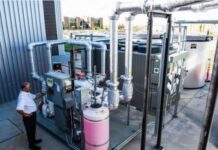
The more pressing issue is thermal management. Bidirectional operation places additional heat stress on both cells and power electronics. To mitigate this, industrial deployments increasingly rely on liquid cooling systems for fleet depots and high-capacity chargers.
Ultimately, the key lies in intelligent control. Algorithms that monitor State of Charge (SOC) and State of Health (SOH) can protect batteries while still allowing profitable participation in grid services.
Deployment Models Emerging in Industry
Industrial adoption of V2G is emerging in three dominant models:
- Aggregator-Based Models
- Aggregators pool thousands of EVs, turning fragmented storage into a virtual power plant (VPP).
- They negotiate with utilities and energy markets to deliver services like frequency regulation and demand response.
- Fleet-Centric Models
- Bus and logistics fleets are particularly suited due to predictable schedules and long idle times.
- School buses in California, for example, discharge during peak hours and recharge overnight, supporting the grid and lowering fleet costs.
- Microgrid Integration
- Industrial sites integrate EV fleets with rooftop solar and stationary storage.
- Here, power electronics play a dual role: grid synchronization when connected, and seamless transition to islanded operation when the grid fails.
These models highlight how industrial use cases vary depending on whether the focus is grid support, cost savings, or resilience.
Economics: Industrial Incentives
The economics of V2G must be viewed across multiple layers.
For individual users, financial benefits remain modest but meaningful. Pilot projects in the UK have demonstrated savings of £400–£500 annually per car. For households, this can offset charging costs or vehicle leasing fees.
For fleets, the economics are much stronger. A single electric bus with a 350 kWh battery can generate significant revenue from frequency regulation and peak shaving. When multiplied across dozens or hundreds of buses, fleet depots essentially become large-scale distributed energy plants.
For utilities, V2G represents a way to defer costly infrastructure upgrades. Instead of investing in peaking plants or substation reinforcements, utilities can tap into distributed EV storage, saving millions annually.
Still, industrial economics are constrained by regulatory clarity. Questions remain about tariff structures for bidirectional flows, revenue-sharing between aggregators and owners, and how grid codes should adapt. The lack of harmonized standards slows investment, though momentum is building in Europe, Japan, and parts of North America.
Challenges on the Road Ahead
Despite promising results, scaling V2G requires overcoming several industrial challenges:
- Interoperability: Competing charging standards (CHAdeMO, CCS, GB/T) limit global adoption. ISO 15118, with its plug-and-charge and bidirectional communication features, is emerging as the industrial backbone but is not yet universal.
- Cybersecurity: Grid-connected EVs create new vulnerabilities. Encrypted communication, authentication, and intrusion detection must be integrated at both the charger and aggregator level.
- Power Quality: Poorly controlled inverters may inject harmonics. Advanced modulation schemes and active filtering are already being deployed to meet IEEE 519 and EN standards.
- Scalability: Managing millions of vehicles requires cloud-based optimization, predictive algorithms, and digital twin models to simulate and control behavior in real time.
These issues will decide whether V2G remains confined to pilots or scales into full industrial ecosystems.
Case Studies around the World
Industrial projects around the globe provide practical insights:
- Denmark: The Frederiksberg project showed EVs could profitably provide frequency regulation services, with measurable grid benefits and minimal battery degradation.
- United Kingdom: Powerloop aggregated Nissan Leafs, demonstrating both household savings and system-wide balancing.
- Japan: Nissan’s Leaf-to-Home initiative proved invaluable for resilience, powering households during the Fukushima disaster.
- China: Shenzhen’s fleet of over 16,000 electric buses is being integrated into local grids, testing large-scale fleet-based V2G in renewable-heavy networks.
These examples highlight not just technical feasibility but also the diversity of motivations, from economic gains in Europe to disaster resilience in Japan, and large-scale integration in China.
Outlook for the Next Decade
The next ten years will likely see V2G move from niche pilots to industrial-scale deployments. Several trends stand out:
- Semiconductor Evolution: SiC and GaN devices will dominate converter designs, lowering costs and improving performance.
- AI Integration: Predictive algorithms will optimize charging and discharging schedules, balancing profitability with battery protection.
- Market Expansion: Analysts forecast the V2G market could reach $15–20 billion by 2030, with fleet electrification as the key driver.
- Policy Push: Regulations in Europe and the U.S. are beginning to recognize V2G as a formal energy resource, paving the way for standardized adoption.
For industrial players, this outlook suggests that early movers in V2G infrastructure, fleet electrification, and aggregator services will gain a competitive edge.
Conclusion
For experts in power and energy industries, Vehicle-to-Grid systems are more than a futuristic idea, they are a strategic industrial solution. By leveraging advanced power electronics, EVs can evolve from passive loads into dynamic energy assets.
The opportunities are significant: grid stabilization, renewable integration, resilience, and cost savings. Yet challenges remain in standardization, cybersecurity, economics, and scale. Overcoming these will require collaboration across automakers, utilities, semiconductor firms, and policymakers.
The question for industry is no longer whether V2G is technically possible. The pilots have proven that. The real question is how to industrialize V2G profitably, securely, and sustainably and who will lead in shaping this new energy ecosystem.V2G Tech: Where Mobility
The electrification of transport is reshaping the global energy landscape. Electric vehicles (EVs) are no longer just modes of transportation, they are mobile energy reservoirs capable of integrating with the grid. Through Vehicle-to-Grid (V2G) systems, EVs can become active components of modern power systems, balancing demand, supporting renewable energy, and enhancing resilience.
At the heart of this capability lies power electronics. Without advanced converters, inverters, and control systems, the bidirectional exchange of energy between EV batteries and the grid would not be possible. For industrial stakeholders, V2G represents both an opportunity and a technical challenge, demanding careful consideration of converter designs, market mechanisms, and operational frameworks.
Power Electronics as the Core
EV batteries store energy as direct current (DC), while power grids operate on alternating current (AC). This mismatch requires sophisticated bidirectional power electronics that can manage charging and discharging seamlessly.
Two main architectures dominate industrial discussions. Onboard bidirectional chargers give flexibility to end-users but increase vehicle complexity and cost. Offboard bidirectional chargers, located at depots or charging hubs, centralize power conversion, simplify maintenance, and can scale up to multi-megawatt capacities for fleet applications.
Converter designs in V2G systems are evolving quickly. Dual-active bridge DC/DC converters provide galvanic isolation, while multilevel inverter topologies, such as Neutral Point Clamped (NPC) and Modular Multilevel Converters (MMC), reduce harmonics and improve grid compliance. Resonant converters are also gaining attention, as they lower electromagnetic interference through soft switching.
Wide bandgap semiconductors are accelerating this shift. Silicon carbide (SiC) and gallium nitride (GaN) enable higher switching speeds, reduced energy losses, and smaller form factors. For industrial operators, this translates into compact, efficient V2G systems that can deliver grid-scale services without prohibitive costs.
Services V2G Can Deliver
From the grid’s perspective, EV fleets are more than a distributed storage system, they are a flexible, dynamic resource capable of providing multiple ancillary services.
- Frequency Regulation: EVs can absorb or inject power in real time to maintain grid frequency. Large fleets can provide hundreds of megawatts of regulation capacity, rivaling traditional power plants.
- Voltage Support and Reactive Power: With high penetration of solar PV, voltage fluctuations are common in distribution networks. V2G inverters can stabilize voltage by injecting or absorbing reactive power.
- Peak Shaving and Load Shifting: EV fleets can discharge during peak demand and recharge off-peak, reducing the need for costly grid reinforcements.
- Black-Start Potential: Though still experimental, V2G-enabled fleets may support grid restoration after outages by acting as distributed black-start units.
For industrial players, the value lies not only in grid stabilization but also in monetizing these services through participation in ancillary markets.
The Battery Question
One of the most frequently debated topics in V2G adoption is the impact on battery life. From an industrial standpoint, this is not a trivial issue, batteries are the costliest component of EVs.
Cycle aging is often raised as a concern. However, V2G operations typically use shallow cycling, about 10–20% of capacity, which contributes far less to wear compared to full-depth cycles. Some pilot projects even suggest V2G can extend battery life by maintaining state-of-charge levels within safer mid-ranges.
The more pressing issue is thermal management. Bidirectional operation places additional heat stress on both cells and power electronics. To mitigate this, industrial deployments increasingly rely on liquid cooling systems for fleet depots and high-capacity chargers.
Ultimately, the key lies in intelligent control. Algorithms that monitor State of Charge (SOC) and State of Health (SOH) can protect batteries while still allowing profitable participation in grid services.
Deployment Models Emerging in Industry
Industrial adoption of V2G is emerging in three dominant models:
- Aggregator-Based Models
- Aggregators pool thousands of EVs, turning fragmented storage into a virtual power plant (VPP).
- They negotiate with utilities and energy markets to deliver services like frequency regulation and demand response.
- Fleet-Centric Models
- Bus and logistics fleets are particularly suited due to predictable schedules and long idle times.
- School buses in California, for example, discharge during peak hours and recharge overnight, supporting the grid and lowering fleet costs.
- Microgrid Integration
- Industrial sites integrate EV fleets with rooftop solar and stationary storage.
- Here, power electronics play a dual role: grid synchronization when connected, and seamless transition to islanded operation when the grid fails.
These models highlight how industrial use cases vary depending on whether the focus is grid support, cost savings, or resilience.
Economics: Industrial Incentives
The economics of V2G must be viewed across multiple layers.
For individual users, financial benefits remain modest but meaningful. Pilot projects in the UK have demonstrated savings of £400–£500 annually per car. For households, this can offset charging costs or vehicle leasing fees.
For fleets, the economics are much stronger. A single electric bus with a 350 kWh battery can generate significant revenue from frequency regulation and peak shaving. When multiplied across dozens or hundreds of buses, fleet depots essentially become large-scale distributed energy plants.
For utilities, V2G represents a way to defer costly infrastructure upgrades. Instead of investing in peaking plants or substation reinforcements, utilities can tap into distributed EV storage, saving millions annually.
Still, industrial economics are constrained by regulatory clarity. Questions remain about tariff structures for bidirectional flows, revenue-sharing between aggregators and owners, and how grid codes should adapt. The lack of harmonized standards slows investment, though momentum is building in Europe, Japan, and parts of North America.
Challenges on the Road Ahead
Despite promising results, scaling V2G requires overcoming several industrial challenges:
- Interoperability: Competing charging standards (CHAdeMO, CCS, GB/T) limit global adoption. ISO 15118, with its plug-and-charge and bidirectional communication features, is emerging as the industrial backbone but is not yet universal.
- Cybersecurity: Grid-connected EVs create new vulnerabilities. Encrypted communication, authentication, and intrusion detection must be integrated at both the charger and aggregator level.
- Power Quality: Poorly controlled inverters may inject harmonics. Advanced modulation schemes and active filtering are already being deployed to meet IEEE 519 and EN standards.
- Scalability: Managing millions of vehicles requires cloud-based optimization, predictive algorithms, and digital twin models to simulate and control behavior in real time.
These issues will decide whether V2G remains confined to pilots or scales into full industrial ecosystems.
Case Studies around the World
Industrial projects around the globe provide practical insights:
- Denmark: The Frederiksberg project showed EVs could profitably provide frequency regulation services, with measurable grid benefits and minimal battery degradation.
- United Kingdom: Powerloop aggregated Nissan Leafs, demonstrating both household savings and system-wide balancing.
- Japan: Nissan’s Leaf-to-Home initiative proved invaluable for resilience, powering households during the Fukushima disaster.
- China: Shenzhen’s fleet of over 16,000 electric buses is being integrated into local grids, testing large-scale fleet-based V2G in renewable-heavy networks.
These examples highlight not just technical feasibility but also the diversity of motivations, from economic gains in Europe to disaster resilience in Japan, and large-scale integration in China.
Outlook for the Next Decade
The next ten years will likely see V2G move from niche pilots to industrial-scale deployments. Several trends stand out:
- Semiconductor Evolution: SiC and GaN devices will dominate converter designs, lowering costs and improving performance.
- AI Integration: Predictive algorithms will optimize charging and discharging schedules, balancing profitability with battery protection.
- Market Expansion: Analysts forecast the V2G market could reach $15–20 billion by 2030, with fleet electrification as the key driver.
- Policy Push: Regulations in Europe and the U.S. are beginning to recognize V2G as a formal energy resource, paving the way for standardized adoption.
For industrial players, this outlook suggests that early movers in V2G infrastructure, fleet electrification, and aggregator services will gain a competitive edge.
Conclusion
For experts in power and energy industries, Vehicle-to-Grid systems are more than a futuristic idea, they are a strategic industrial solution. By leveraging advanced power electronics, EVs can evolve from passive loads into dynamic energy assets.
The opportunities are significant: grid stabilization, renewable integration, resilience, and cost savings. Yet challenges remain in standardization, cybersecurity, economics, and scale. Overcoming these will require collaboration across automakers, utilities, semiconductor firms, and policymakers.
The question for industry is no longer whether V2G is technically possible. The pilots have proven that. The real question is how to industrialize V2G profitably, securely, and sustainably and who will lead in shaping this new energy ecosystem.The electrification of transport is reshaping the global energy landscape. Electric vehicles (EVs) are no longer just modes of transportation, they are mobile energy reservoirs capable of integrating with the grid. Through Vehicle-to-Grid (V2G) systems, EVs can become active components of modern power systems, balancing demand, supporting renewable energy, and enhancing resilience.
At the heart of this capability lies power electronics. Without advanced converters, inverters, and control systems, the bidirectional exchange of energy between EV batteries and the grid would not be possible. For industrial stakeholders, V2G represents both an opportunity and a technical challenge, demanding careful consideration of converter designs, market mechanisms, and operational frameworks.
Power Electronics as the Core
EV batteries store energy as direct current (DC), while power grids operate on alternating current (AC). This mismatch requires sophisticated bidirectional power electronics that can manage charging and discharging seamlessly.
Two main architectures dominate industrial discussions. Onboard bidirectional chargers give flexibility to end-users but increase vehicle complexity and cost. Offboard bidirectional chargers, located at depots or charging hubs, centralize power conversion, simplify maintenance, and can scale up to multi-megawatt capacities for fleet applications.
Converter designs in V2G systems are evolving quickly. Dual-active bridge DC/DC converters provide galvanic isolation, while multilevel inverter topologies, such as Neutral Point Clamped (NPC) and Modular Multilevel Converters (MMC), reduce harmonics and improve grid compliance. Resonant converters are also gaining attention, as they lower electromagnetic interference through soft switching.
Wide bandgap semiconductors are accelerating this shift. Silicon carbide (SiC) and gallium nitride (GaN) enable higher switching speeds, reduced energy losses, and smaller form factors. For industrial operators, this translates into compact, efficient V2G systems that can deliver grid-scale services without prohibitive costs.
Services V2G Can Deliver
From the grid’s perspective, EV fleets are more than a distributed storage system, they are a flexible, dynamic resource capable of providing multiple ancillary services.
- Frequency Regulation: EVs can absorb or inject power in real time to maintain grid frequency. Large fleets can provide hundreds of megawatts of regulation capacity, rivaling traditional power plants.
- Voltage Support and Reactive Power: With high penetration of solar PV, voltage fluctuations are common in distribution networks. V2G inverters can stabilize voltage by injecting or absorbing reactive power.
- Peak Shaving and Load Shifting: EV fleets can discharge during peak demand and recharge off-peak, reducing the need for costly grid reinforcements.
- Black-Start Potential: Though still experimental, V2G-enabled fleets may support grid restoration after outages by acting as distributed black-start units.
For industrial players, the value lies not only in grid stabilization but also in monetizing these services through participation in ancillary markets.
The Battery Question
One of the most frequently debated topics in V2G adoption is the impact on battery life. From an industrial standpoint, this is not a trivial issue, batteries are the costliest component of EVs.
Cycle aging is often raised as a concern. However, V2G operations typically use shallow cycling, about 10–20% of capacity, which contributes far less to wear compared to full-depth cycles. Some pilot projects even suggest V2G can extend battery life by maintaining state-of-charge levels within safer mid-ranges.
The more pressing issue is thermal management. Bidirectional operation places additional heat stress on both cells and power electronics. To mitigate this, industrial deployments increasingly rely on liquid cooling systems for fleet depots and high-capacity chargers.
Ultimately, the key lies in intelligent control. Algorithms that monitor State of Charge (SOC) and State of Health (SOH) can protect batteries while still allowing profitable participation in grid services.
Deployment Models Emerging in Industry
Industrial adoption of V2G is emerging in three dominant models:
- Aggregator-Based Models
- Aggregators pool thousands of EVs, turning fragmented storage into a virtual power plant (VPP).
- They negotiate with utilities and energy markets to deliver services like frequency regulation and demand response.
- Fleet-Centric Models
- Bus and logistics fleets are particularly suited due to predictable schedules and long idle times.
- School buses in California, for example, discharge during peak hours and recharge overnight, supporting the grid and lowering fleet costs.
- Microgrid Integration
- Industrial sites integrate EV fleets with rooftop solar and stationary storage.
- Here, power electronics play a dual role: grid synchronization when connected, and seamless transition to islanded operation when the grid fails.
These models highlight how industrial use cases vary depending on whether the focus is grid support, cost savings, or resilience.
Economics: Industrial Incentives
The economics of V2G must be viewed across multiple layers.
For individual users, financial benefits remain modest but meaningful. Pilot projects in the UK have demonstrated savings of £400–£500 annually per car. For households, this can offset charging costs or vehicle leasing fees.
For fleets, the economics are much stronger. A single electric bus with a 350 kWh battery can generate significant revenue from frequency regulation and peak shaving. When multiplied across dozens or hundreds of buses, fleet depots essentially become large-scale distributed energy plants.
For utilities, V2G represents a way to defer costly infrastructure upgrades. Instead of investing in peaking plants or substation reinforcements, utilities can tap into distributed EV storage, saving millions annually.
Still, industrial economics are constrained by regulatory clarity. Questions remain about tariff structures for bidirectional flows, revenue-sharing between aggregators and owners, and how grid codes should adapt. The lack of harmonized standards slows investment, though momentum is building in Europe, Japan, and parts of North America.
Challenges on the Road Ahead
Despite promising results, scaling V2G requires overcoming several industrial challenges:
- Interoperability: Competing charging standards (CHAdeMO, CCS, GB/T) limit global adoption. ISO 15118, with its plug-and-charge and bidirectional communication features, is emerging as the industrial backbone but is not yet universal.
- Cybersecurity: Grid-connected EVs create new vulnerabilities. Encrypted communication, authentication, and intrusion detection must be integrated at both the charger and aggregator level.
- Power Quality: Poorly controlled inverters may inject harmonics. Advanced modulation schemes and active filtering are already being deployed to meet IEEE 519 and EN standards.
- Scalability: Managing millions of vehicles requires cloud-based optimization, predictive algorithms, and digital twin models to simulate and control behavior in real time.
These issues will decide whether V2G remains confined to pilots or scales into full industrial ecosystems.
Case Studies around the World
Industrial projects around the globe provide practical insights:
- Denmark: The Frederiksberg project showed EVs could profitably provide frequency regulation services, with measurable grid benefits and minimal battery degradation.
- United Kingdom: Powerloop aggregated Nissan Leafs, demonstrating both household savings and system-wide balancing.
- Japan: Nissan’s Leaf-to-Home initiative proved invaluable for resilience, powering households during the Fukushima disaster.
- China: Shenzhen’s fleet of over 16,000 electric buses is being integrated into local grids, testing large-scale fleet-based V2G in renewable-heavy networks.
These examples highlight not just technical feasibility but also the diversity of motivations, from economic gains in Europe to disaster resilience in Japan, and large-scale integration in China.
Outlook for the Next Decade
The next ten years will likely see V2G move from niche pilots to industrial-scale deployments. Several trends stand out:
- Semiconductor Evolution: SiC and GaN devices will dominate converter designs, lowering costs and improving performance.
- AI Integration: Predictive algorithms will optimize charging and discharging schedules, balancing profitability with battery protection.
- Market Expansion: Analysts forecast the V2G market could reach $15–20 billion by 2030, with fleet electrification as the key driver.
- Policy Push: Regulations in Europe and the U.S. are beginning to recognize V2G as a formal energy resource, paving the way for standardized adoption.
For industrial players, this outlook suggests that early movers in V2G infrastructure, fleet electrification, and aggregator services will gain a competitive edge.
Conclusion
For experts in power and energy industries, Vehicle-to-Grid systems are more than a futuristic idea, they are a strategic industrial solution. By leveraging advanced power electronics, EVs can evolve from passive loads into dynamic energy assets.
The opportunities are significant: grid stabilization, renewable integration, resilience, and cost savings. Yet challenges remain in standardization, cybersecurity, economics, and scale. Overcoming these will require collaboration across automakers, utilities, semiconductor firms, and policymakers.
The question for industry is no longer whether V2G is technically possible. The pilots have proven that. The real question is how to industrialize V2G profitably, securely, and sustainably and who will lead in shaping this new energy ecosystem.