


Every year, the world’s most polluted cities list features multiple Indian names — Delhi, Ghaziabad, Faridabad, Lucknow, and more. Thick smog-increasing respiratory diseases with increasing demand for electricity have made urban life increasingly unsustainable. The World Air Quality Report for 2023 claims India comprises 12 of the world’s 15 most polluted cities. Most of this pollution acts as an ingredient in fossil fuel combustion: coal power generation, diesel generators, and continuous increase in electricity demand in urban areas.
Now imagine if the very sun shining on our cities has a solution to this crisis. Solar energy, once thought to be an expensive alternative, has finally emerged as a mainstream, scalable solution to the twin issues of clean energy and urban sustainability in India.
Why Indian cities must accept solar power without a moment’s delay
The Indian cities are already consuming huge amounts of electricity, and with the coming of electric vehicles, digital lifestyles, and cooling all day long, energy demand is only going to shoot higher. Today, over 70% of electricity generation in India relies on coal, which is also a major source of carbon emissions and urban air pollution.
The shift towards solar can be promoted so that the crises may be averted through:
- Checking pollution: About 1200 tons of CO₂ per MW of solar installation is prevented every year.
- Reducing heat in urban areas and smog: Diesel-based generators, when replaced by solar rooftops, are a boon to local air purity.
- Energy security: As cities face power outages due to grid vagaries, solar-would provide valuable backup if combined with batteries.
How Solar Energy is Reshaping Indian Cities
The Rooftop Revolution
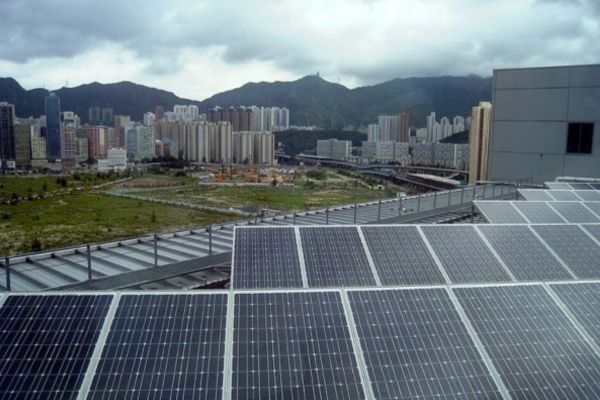
In Indian cities like Bengaluru, Pune, and Ahmedabad, commercial establishments such as residential complexes, malls, hospitals, and offices have started adopting rooftop solar systems. The Centre’s PM Surya Ghar Muft Bijli Yojana (2024) intends to deliver rooftop solar systems to 10 million households so that middle-class families and urban dwellers may be able to obtain clean energy.
The Smart Grids and Net Metering Initiative
Using the net metering policy, city households sell excess solar power to the grid, thereby lowering their bills and supporting energy efficiency across cities. In Gujarat and Delhi, solar adoption has helped many housing societies cut their electricity bills by 30-40%.
Solar Powered Public Infrastructure
Energy for metro stations in Delhi; airports in Kochi and Bengaluru; as well as railway stations throughout the country is going solar. Kochi Airport, for instance, is the world’s first airport fully powered by solar energy, preventing nearly 3 lakh tons of CO₂ emissions in its lifetime.
Solar Energy for EV Charging
With a surge in electric mobility, the demand for green charging becomes incessant. Solar-powered EV charging stations are being deployed in Delhi-NCR and Mumbai to reduce the reliance on coal-based electricity and to genuinely give clean urban transport.
Overcoming Challenges
Its full potential notwithstanding, solar adoption in urban areas is faced by various impediments:
- Space constraints: Not all buildings have the requisite rooftop space or strength for the panels.
- Financing barriers: Installation costs, despite a near 90% reduction in the last decade, discourage many households.
- Policy inconsistencies: Differences in net metering rules create confusion, especially for urban dwellers and businesses.
- Awareness gap: Many are still not able to grasp long-term cost savings from solar energy, focusing instead on conventional upfront costs.
Solutions must come in the form of innovative financing arrangements (EMIs, leasing), government incentives, and building solar missions at the city level for seamless adoption.
Economic and Social Impact
A switch to solar is not merely an environmental call — it serves as an economic opportunity.
- Lower electricity bills: With rooftop solar, families can save on electricity bills of up to ₹15,000–20,000 per year.
- Job creation: India’s solar sector may create 340,000+ new jobs in installation, maintenance, and innovation by 2030.
- Policy inconsistencies: Differences in net metering rules create confusion, especially for urban dwellers and businesses.
- Awareness gap: Many are still not able to grasp long-term cost savings from solar energy, focusing instead on conventional upfront costs.
Solutions must come in the form of innovative financing arrangements (EMIs, leasing), government incentives, and building solar missions at the city level for seamless adoption.
Economic and social impact
1.Switching on solar is not just an environmental requirement – this is an economic opportunity.
2.Low electricity bills: There can be a savings of up to ₹ 15,000-20,000 annually with roof solar in homes.
3.Job Creation: India’s solar sector can create more than 3.4 lakh new jobs by 2030 in establishment, maintenance and innovation.
4.Better Public Health: It translates to reduced air pollution and less incidence of asthma, bronchitis, and heart diseases, therefore reducing the burden on city health-care systems.
Global Lessons for Indian Cities
Germany and China have showcased examples of solar becoming a mainstream urban feature. Berlin’s raison d’etre for city-wide rooftop mandates and charging a Shenzhen solar-powered fleet of EVs are evocative examples. Indian metros also can adopt similar measures — requiring solar rooftops in new buildings, offering incentives for solar districts, and solarizing public transit.
Conclusion
As far as pollution abatement in Indian cities is concerned, air purifiers and stricter vehicular norms cannot see things through and, thus, require radical changes in the way cities generate and consume energy. Solar power is much more than the placing of units on rooftops; it is turning urban India into cleaner, healthier, and resilient ecosystems.
On a large scale, solar can keep homes, schools, metros, and EVs running while the smog-choked skyline of India can be a picture of sustainability. Solar energy can redefine city life from Delhi to Lucknow from pollution into solution, which starts with the power of sun.